Culture news and discussion on TalkFuse.
Judge schedules hearing on Paramount-Warner Bros Discovery settlement
Developed over time first seen 2 months ago
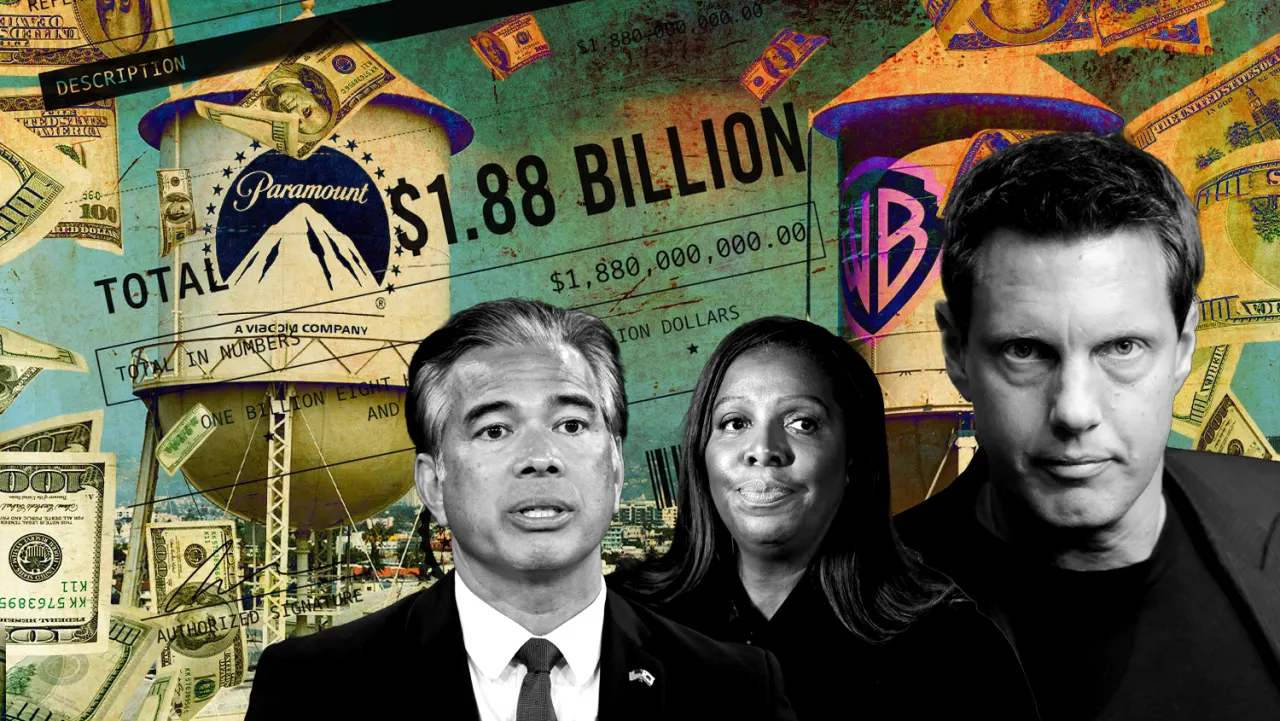
A US federal judge scheduled a hearing to examine the proposed settlement resolving state attorneys general’s lawsuit over the Paramount–Warner Bros Discovery merger. The settlement brought the antitrust dispute towards resolution, with the hearing focused on the agreement’s legal and factual basis and how its conditions would be implemented.
The terms included a commitment by Paramount to release at least 30 films a year and establish an independent board overseeing journalistic standards at CNN and CBS News. The judge cancelled a separate hearing on whether the state attorneys general should post a bond, while the Writers Guild of America separately settled its lawsuit seeking to block the merger.
- Sources
- 2
- Outlets
- 2
- Left · Centre · Right
- 0 · 0 · 0
In short
- Paramount–Warner Bros Discovery merger litigation was settled.
- Paramount must release at least 30 films annually.
- An independent board will oversee CNN and CBS News standards.
How this story developed
- 2 months ago The parties are seeking formal judicial approval of the settlement consent decree, whilst the judge will separately rule on whether to dismiss the Writers Guild of America's attempt to block the merger.
- 2 months ago The settlement is bringing the antitrust dispute towards resolution, with the Thursday hearing set to scrutinise how the agreed terms would be implemented.
- 2 months ago U.S. District Judge Araceli Martinez-Olguin has scheduled a hearing for Thursday to examine a proposed settlement between state attorneys general and Paramount-Warner Bros Discovery, which requires the company to release at least 30 films annually and establish an independent board to oversee journalistic standards at CNN and CBS News.
Full account
A federal court in the United States will hold a hearing on Thursday to scrutinise a proposed settlement between state attorneys general and the media conglomerate formed by Paramount's acquisition of Warner Bros. Discovery. U.S. District Judge Araceli Martinez-Olguin has scheduled the proceeding via videoconference at 11 a.m. Pacific time to examine the legal framework and factual basis of the agreement, as well as questions surrounding its enforcement mechanisms. The order, issued on Tuesday, follows a landmark accord reached over the weekend that would resolve the legal challenge to the $110 billion merger brought by a coalition of state regulators.
Rather than requiring the combined entity to divest assets—the conventional remedy in antitrust settlements—the deal establishes a five-year operating agreement to be overseen by the court. Under its terms, the studios must distribute at least 30 theatrical films annually for the first two years, rising to 32 per annum thereafter. The arrangement stipulates that no fewer than half of these releases must be produced wholly or jointly by the merged company, whilst independent and wide-release films must maintain minimum distribution thresholds. Additionally, the studios must conduct basic-cable licensing negotiations separately, and must establish an independent five-member board—to be selected by Paramount—to monitor editorial standards at CNN and CBS News.
The settlement incorporates oversight provisions that grant state attorneys general and an appointed independent monitor ongoing visibility into the combined company's compliance with these obligations. Paramount will be required to provide regular reports and information necessary to assess adherence to the settlement's requirements. Should the company breach specified terms, the consent decree provides for financial penalties and, in more serious cases, compulsory asset sales. Violations of the theatrical release quotas, for instance, could force Paramount to divest its stake in Miramax, whilst breaches of the cable-negotiation separation provisions could trigger divestment of channels including BET, VH1 and Comedy Central. However, flagship assets such as CNN and New Line Cinema are explicitly exempted from potential divestiture orders.
The settlement has attracted criticism from some quarters for what observers characterise as insufficient protections for press independence. The New York City Mayor, Zohran Mamdani, issued a statement expressing concern that the merger undermines media competition and accountability. Meanwhile, Judge Martinez-Olguin has cancelled a separate hearing on whether the state attorneys general should post a performance bond, and has deferred a decision on the Writers Guild of America's concurrent legal challenge to the merger, which has separately settled with Paramount.
Where outlets differ
From the full account, which is AI-written from the sources:
Source 1 emphasises procedural aspects of the hearing and mentions the Writers Guild settlement separately; Source 2 focuses extensively on the substance of the settlement terms and oversight mechanisms
Source 2 explicitly states the acquisition value ($110 billion) and that the settlement was reached 'over the weekend'; Source 1 is less specific about timing and valuation
Source 2 provides detailed breakdowns of film distribution requirements, cable-negotiation separation, and the divestiture framework; Source 1 mentions only the headline commitment of 30 films annually and the oversight board
Source 2 includes criticism and a direct quote from the NYC Mayor regarding media independence concerns; Source 1 does not address critical commentary
Source 2 emphasises the absence of traditional divestitures as notable; Source 1 does not highlight this as a distinguishing feature of the deal
Explained simply
Paramount and Warner Bros Discovery are two of America's largest media companies, owning television networks, film studios and news outlets. State attorneys general filed a lawsuit last July to block a merger between them, arguing that combining these companies could reduce competition and harm consumers' choice.
To resolve the legal challenge, the companies have proposed a settlement that requires Paramount to release at least 30 films annually and to establish an independent board overseeing editorial standards at its news operations. These commitments are meant to address concerns that a merged company might have too much power over what programmes and films are available to audiences.
A federal judge will examine the proposed settlement at a hearing to decide whether it adequately protects competition. The Writers Guild of America has also raised separate objections to the merger, though the union has reached its own settlement with Paramount that the court will later review.
Coverage · 2 sources
Read the full article at the source →
Originally published by Deadline as “Judge Sets Hearing On State AGs’ Settlement With Paramount-Warner Bros Discovery”.