US investigates broadcasters over suspension of shared White House coverage
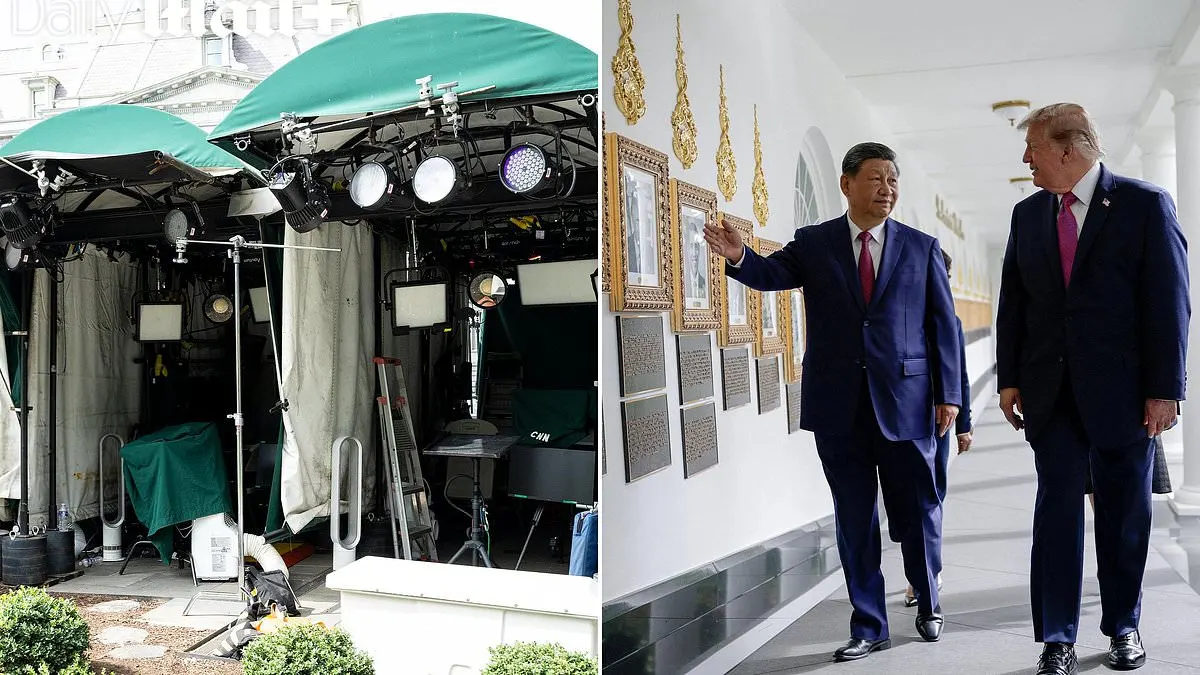
The US Justice Department is investigating ABC, CBS, CNN, NBC and Fox News over whether they unlawfully agreed to suspend shared coverage of White House events. The inquiry matters because it could test whether news organisations’ cooperation in a longstanding press arrangement crossed the line into an anti-competitive agreement.
The networks temporarily stopped providing footage through the White House television pool after the administration restricted access for journalists from CNN, Politico and MS NOW. As a result, footage of President Donald Trump greeting Chinese President Xi Jinping at a meeting was not distributed through the usual arrangement. Officials have requested internal communications and documents; the investigation is at a preliminary stage, and the Justice Department says it is examining possible violations of the Sherman Act.
- The Justice Department is probing five networks over shared White House coverage.
- The networks paused pool coverage after journalists were barred.
- The inquiry is preliminary and centres on US competition law.
New here? Start with this
The White House television pool is a longstanding arrangement where major news broadcasters share footage of White House events. Rather than each network maintaining its own camera crew at every presidential event, they cooperate to distribute footage to all outlets, making coverage more efficient and cost-effective.
The networks temporarily suspended their participation in this pooled coverage after the Trump administration restricted press access for certain outlets including CNN. The Justice Department is now investigating whether this suspension by five major broadcasters — ABC, CBS, CNN, NBC and Fox News — constituted unlawful collusion.
The investigation examines whether news organisations' cooperation on coverage arrangements, which is normally lawful, crossed into unlawful anti-competitive agreement under American competition law, specifically the Sherman Act. Whilst organisations routinely cooperate on shared resources, authorities are determining whether this particular action violated the law.
Both sides, in good faith
The strongest fair case each way — we don't pick a winner.
The case for
The networks' suspension of pool coverage was a principled act of solidarity against government censorship and an unlawful restriction on press access. Competitors collaborating to defend press freedom and the public's right to information is fundamentally different from anti-competitive cartel behaviour motivated by profit; the networks were exercising their editorial discretion to protest government overreach, not fixing prices or dividing markets. Subjecting this joint expression of journalistic principle to antitrust liability would chill legitimate press cooperation and undermine the First Amendment's core purpose.
The case against
Regardless of noble motives, the Sherman Act prohibits competing firms from coordinating to restrict output or supply. Under antitrust law, the networks' agreement to withhold shared coverage—a coordinated reduction in service to the market—raises genuine competition concerns, particularly given their collective market power. Allowing major corporations to escape antitrust scrutiny whenever they claim political principle creates a problematic precedent and undermines the rule of law. The Justice Department's duty is evenhandled enforcement; exempting competitors based on their stated motivations would weaken competition law's fundamental protections.
Art Culture Entertainment TV World
Read the full article at the source →
Originally published by Daily Mail as “Justice Department is investigating major TV networks including Fox News, CNN, NBC, ABC, and CBS, over Trump coverage boycott”.