Ken Russell’s ‘The Devils’ Feels More Relevant Than It Did 55 Years Ago. That’s Because It’s About a World Gone Mad
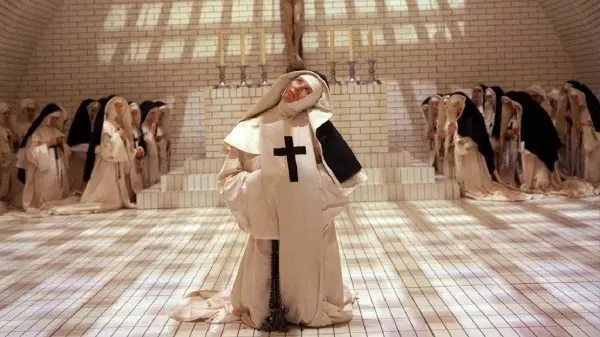
A critic argues that Ken Russell’s 1971 film *The Devils* feels newly relevant, as audiences return to a restored, uncut version in cinemas. Its near $2 million opening weekend across 350 theatres suggests that a once-scandalous art film can now draw a broad crowd, and the writer sees its themes as speaking to the present.
Set in 17th-century France, the film follows priest Urbain Grandier, whose belief in personal freedom brings him into conflict with King Louis XIII and Cardinal Richelieu. The authorities exploit accusations involving the Ursuline nuns to move against him, while the film’s mix of religious provocation, political repression and a morally flawed central character complicates easy judgements. The article links its appeal to a culture increasingly drawn to rebellion and to art once censored or banned.
In short
- A restored, uncut *The Devils* drew nearly $2 million in its opening weekend.
- The 1971 film’s political and religious themes feel newly resonant to its critic.
- Its revival has brought crowds to a once-scandalous art film.
Steelman: both sides, in good faith
The strongest fair case each way — we don't pick a winner.
The case for
The film’s renewed appeal can be read as evidence that its critique of authorities using public fear and moral accusations to suppress personal freedom still resonates. Its return in an uncut restoration also invites audiences to reconsider how censorship shapes art, while its flawed hero and provocative style make that critique more complicated than simple nostalgia for a banned work.
The case against
A strong alternative reading is that the film’s box-office success shows renewed interest in a once-scandalous work, but does not establish that its themes are more relevant now than before. Drawing a direct parallel between seventeenth-century religious and political repression and present-day culture may overstate the connection, while the film’s sensational treatment of its subject can distract from the historical and moral complexities.
Explained simply
Ken Russell’s 1971 film The Devils is set in 17th-century France, where church and state authorities compete for power. It follows Urbain Grandier, a priest whose views and personal conduct bring him into conflict with King Louis XIII and Cardinal Richelieu.
Accusations involving a group of Ursuline nuns become a means for the authorities to pursue Grandier. The film draws on real events but uses them to explore religious authority, political repression and personal freedom, while leaving its central character morally complicated.
The film was controversial for its treatment of religion and sexuality, and versions of it were censored. Its renewed cinema audience has prompted discussion about why older works that challenge authority can speak to viewers in different eras.
Americas Entertainment Film Fitness Health Horror World