Kids’ Content Is Deeply Broken. A New Platform Wants to Fix It
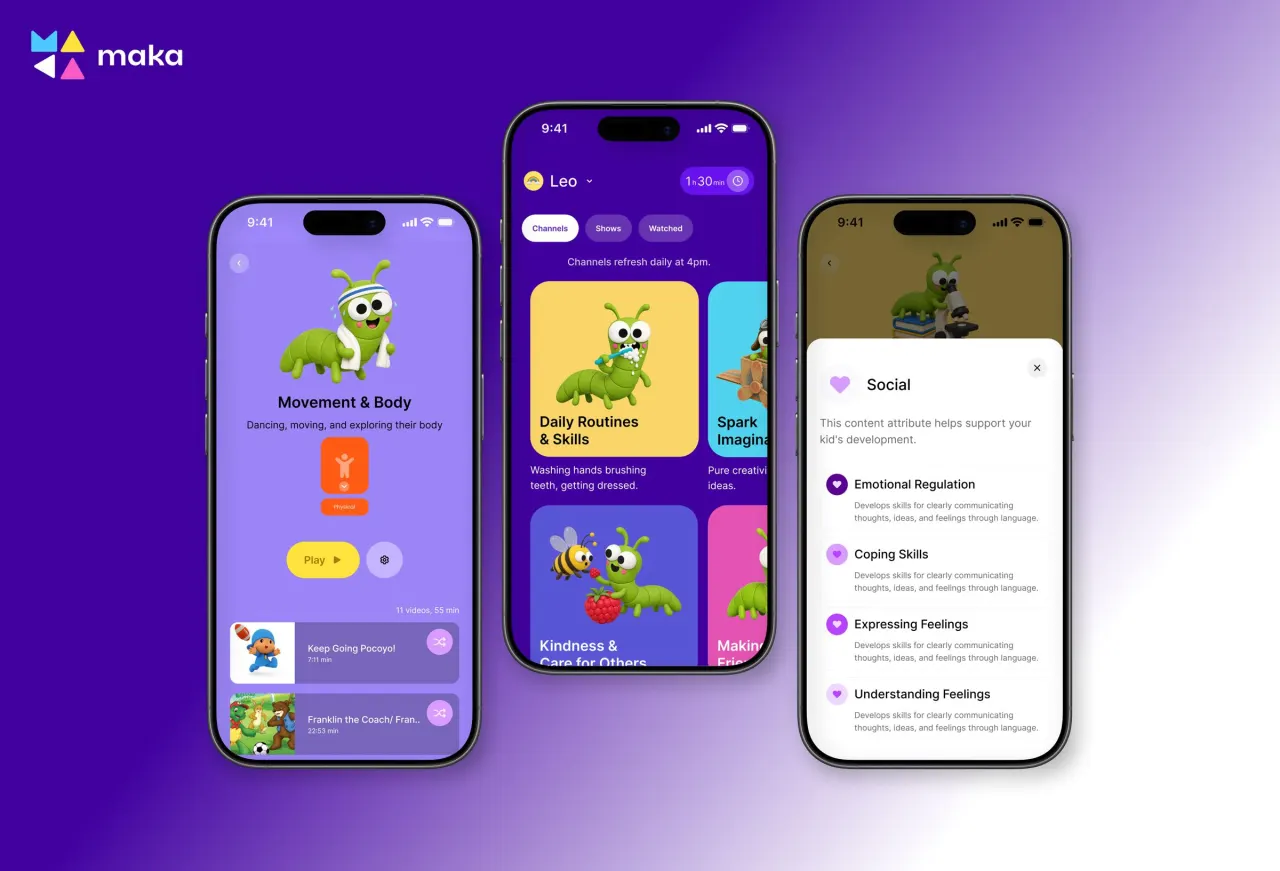
Maka, a new streaming app for children aged 0 to 6, is launching with a model designed to avoid the attention-grabbing features common on other platforms. It has no adverts, autoplay or endless scrolling, and its algorithms are not designed to maximise viewing time, addressing concerns about unsuitable and low-quality children’s videos.
The service offers 25 curated shows, including *Franklin*, *The Wiggles*, *Pocoyo*, *Vida the Vet* and *Sesame Street*, for $15 a month or $107 a year. Each episode is assessed by child-development experts using Imprint, a framework developed with researchers at the Yale Child Study Center that considers seven areas of development. The article notes that a 2020 Common Sense Media study found 75 per cent of YouTube videos watched by young children had weak or no educational value.
- Maka launches a subscription streaming app for children aged 0 to 6.
- It offers 25 shows with no adverts, autoplay or endless scrolling.
- Experts assess episodes using a child-development framework.
New here? Start with this
Video apps for young children can make money by showing adverts or encouraging viewers to keep watching. This has raised concerns about what children see online and how much time they spend with screens.
Maka is a subscription streaming service for children aged up to six, offering a selected range of programmes. Its approach reflects wider efforts by parents, researchers and media companies to assess whether children’s content is suitable and supports their development.
The issue matters because very young children are still developing skills such as language, attention and social understanding. Research cited in the story found that many YouTube videos watched by young children offered little educational value.
Both sides, in good faith
The strongest fair case each way — we don't pick a winner.
The case for
Maka’s design responds to concerns that advertising, autoplay and endless feeds can encourage young children to watch more than intended, while exposing them to material of uneven quality. A small, expert-reviewed catalogue and a development-focused framework may help parents choose age-appropriate programmes, and a subscription model avoids advertising incentives.
The case against
A curated service may offer reassurance, but parents can already limit viewing and choose suitable programmes on existing platforms; Maka’s $15 monthly price may put it beyond some families. Its 25-show catalogue is also narrow, and expert assessment cannot settle every family’s view of what is educational or appropriate, so the service’s safeguards may not justify the cost or replace parental judgement.