Labour leader of cash-strapped town hall spent £700 on a door sign and £600 on personalised greeting cards, new Tory successor reveals
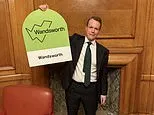
A Conservative politician who took over leadership of a financially struggling council has accused their Labour predecessor of wasteful spending, highlighting a £700 outlay on a door sign and £600 spent on personalised greeting cards. The disclosure comes amid wider scrutiny of local authority finances, with councils across England facing severe budget pressures, and is likely to fuel political criticism of how public money was managed under the previous Labour administration.
Specific figures cited include roughly £700 for a door sign and around £600 for bespoke greeting cards, expenses singled out by the new Tory leader as examples of poor financial stewardship at a council already under fiscal strain. The full article text was not available beyond the headline details, so further context on the council involved, the total budget shortfall, or any response from the former Labour leader could not be confirmed.
- Tory council leader reveals predecessor's spending at cash-strapped town hall
- Labour leader spent £700 on a door sign
- £600 also spent on personalised greeting cards
New here? Start with this
Labour has controlled the council for some time, and like many local authorities in England it has been under significant financial strain, with tight budgets and pressure to cut costs. Earlier this year, the council's leadership changed hands, with a new Conservative leader taking over from the outgoing Labour leader.
Councils are funded largely through local taxes and central government grants, and their spending on day-to-day items is generally a matter of public record, which can be scrutinised by opposition politicians, auditors or journalists. Disputes over how councils spend money, especially on things seen as non-essential, often become politically charged, particularly when a council is already struggling financially or having to make cuts elsewhere.
Claims about wasteful spending by a predecessor are a familiar feature of local politics, especially after a change of leadership or control, and can be used to draw contrasts between the outgoing and incoming administrations. Such claims typically prompt a response from those named, and readers should bear in mind that figures and framing put forward by a political rival are not necessarily the full picture.
Both sides, in good faith
The strongest fair case each way — we don't pick a winner.
The case for
Those who see the disclosure as fair scrutiny argue that when a council is genuinely cash-strapped, every item of discretionary spending deserves examination, however small it may seem next to the total budget. They contend that £700 on signage and £600 on personalised cards are the kind of costs a prudent administration would query before approving, and that highlighting them sends a signal about the culture of financial discipline needed when frontline services are being cut elsewhere. On this view, transparency about how public money was spent, even on modest items, is a legitimate part of holding a predecessor to account.
The case against
Those more sympathetic to the previous Labour administration would argue that these figures are trivial relative to a council's overall budget and that singling them out risks being political point-scoring rather than serious fiscal analysis. They would note that signage and stationery are routine, largely unavoidable administrative costs common to any council of any political colour, and that focusing on them can distract from the deeper structural pressures, such as reduced central government funding and rising demand for social care, that actually drive local authority shortfalls. Without fuller context on the reasoning behind these purchases, they would caution against treating isolated line items as proof of mismanagement.