Statue of an obese, naked Donald Trump goes on display at European Parliament with the title ‘Orange Plague’
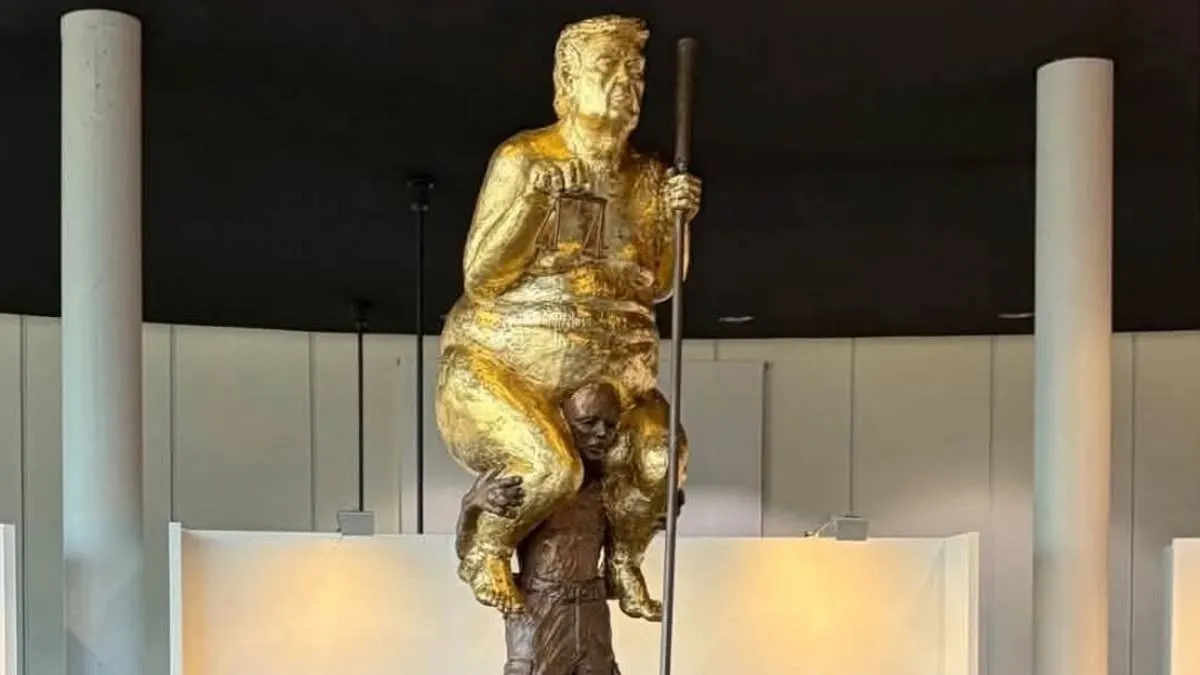
A gold-coated statue caricaturing Donald Trump has gone on display in the European Parliament building in Strasbourg. Titled “Orange Plague” and also known as the “King of Injustice”, the artwork criticises Trump’s approach to climate change and what its Danish artist describes as the US assault on the green transition and the rule-based world order.
The 2.5-metre sculpture depicts Trump naked and overweight, holding a gold club while sitting on a shorter man’s shoulders; it is coated in 23-karat gold leaf. Its accompanying text describes a burdened man and a ruler who refuses to step down. It is due to remain at the Parliament until Thursday, has appeared in other European cities and at last year’s COP30 in Brazil, and is expected to travel to COP31 in Turkey in November.
- Satirical Trump statue displayed at the European Parliament.
- The artist says it criticises US climate policy.
- The sculpture is due to travel to COP31 in November.
New here? Start with this
A sculpture depicting Donald Trump has been displayed at the European Parliament building in Strasbourg. The artwork, titled "Orange Plague" and created by a Danish artist, presents an exaggerated caricature of Trump covered in gold leaf.
The artist made the sculpture as a critique of Trump's policies on climate change and international environmental agreements. The work reflects concerns about environmental protection and America's role in global efforts to address climate issues.
Climate change is a priority for many European policymakers and voters. The sculpture reflects disagreements between the United States and Europe about how to address environmental challenges and whether to work together through international agreements.
Both sides, in good faith
The strongest fair case each way — we don't pick a winner.
The case for
The sculpture represents legitimate artistic expression and political satire, deeply rooted in democratic tradition. The work engages substantive policy critiques regarding climate action and international order rather than mere personal insult, and democratic institutions must accommodate diverse viewpoints, including critical ones, if they are to remain meaningfully democratic; restricting such expression risks setting a troubling precedent for institutional control over acceptable speech.
The case against
Whilst free speech is fundamental, there is a meaningful distinction between protecting expression and determining what is appropriate for official institutions to host. The sculpture's crude depiction of nakedness and obesity represents personal mockery rather than thoughtful political critique, and maintaining institutional decorum and standards—distinct from censorship—serves productive democratic discourse and respects the dignity expected in such spaces.