World news and discussion on TalkFuse.
Last UK and US troops leave Iraq as anti-Islamic State mission ends
Developed over time first seen 2 months ago
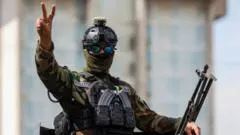
The last British and American troops have left Iraq, ending the international coalition’s military mission against the Islamic State group after more than a decade. Iraq’s government says its security forces can now take full responsibility for the country’s security, marking a shift towards security co-operation under Iraqi leadership.
Around 100 British personnel left Irbil in the Kurdistan region alongside US forces, in line with a withdrawal agreement between Washington and Baghdad. Although Iraq declared Islamic State defeated in 2017, coalition troops stayed to guard against its return; a recent UN report said the group now has several hundred fighters capable of only unsophisticated operations. Iraq also faces the challenge of Iran-backed militias, which have resisted Prime Minister Ali al-Zaidi’s pledge to bring all weapons under state control.
- Sources
- 2
- Outlets
- 2
- Left · Centre · Right
- 0 · 2 · 0
In short
- The final UK and US troops have left Iraq.
- The withdrawal ends the coalition’s anti-Islamic State mission.
- Iraq now leads security efforts amid threats from militants and militias.
How this story developed
- 2 months ago The last British and US troops have left Iraq, ending the coalition’s military mission against Islamic State and transferring primary responsibility for security to Iraqi forces.
- 2 months ago The last British and American troops have departed Iraq, ending a military presence spanning over a decade as part of the international coalition that fought the Islamic State group.
- 2 months ago The last British and American troops have left Iraq, ending the international coalition’s military mission against the Islamic State group after more than a decade.
Steelman: both sides, in good faith
The strongest fair case each way — we don't pick a winner.
The case for
Ending the mission honours Iraq’s claim to sovereignty and its assessment that national forces can take full responsibility for security. It also moves co-operation onto an Iraqi-led footing, while the reported reduced capabilities of Islamic State may make a large foreign military presence less necessary.
The case against
With Islamic State still reported to have fighters capable of attacks, withdrawing troops could reduce a safeguard against the group rebuilding or exploiting gaps in security. Iraq also faces armed militias that resist state control, so critics may doubt whether its forces can manage both threats without the coalition’s military support.
Explained simply
The United States and United Kingdom have maintained military forces in Iraq for over a decade as part of an international coalition fighting the Islamic State group, a militant organization that controlled large areas of the country before being militarily defeated. These forces have now fully withdrawn, with Iraq's government saying its own security forces are ready to take complete responsibility for the country's defence.
Islamic State was largely defeated militarily in 2017, but the international coalition remained stationed in Iraq to prevent the group from regrouping and to assist in training Iraqi forces. Although Islamic State still operates with several hundred fighters, they are now considered incapable of large-scale operations, making the international military presence less essential than it was at the height of the conflict.
The withdrawal reflects a shift towards Iraqi-led security, though the country faces other stability challenges beyond Islamic State. Iran-backed militias that operate within Iraq have resisted the government's attempts to centralise control of all armed groups, which complicates Baghdad's efforts to establish full security authority across the country.
Coverage · 2 sources
Bias meters
From 2 rated sources.
Americas Government Politics UK World