Entertainment news and discussion on TalkFuse.
Lego’s latest Nintendo collab is a playable Donkey Kong arcade machine
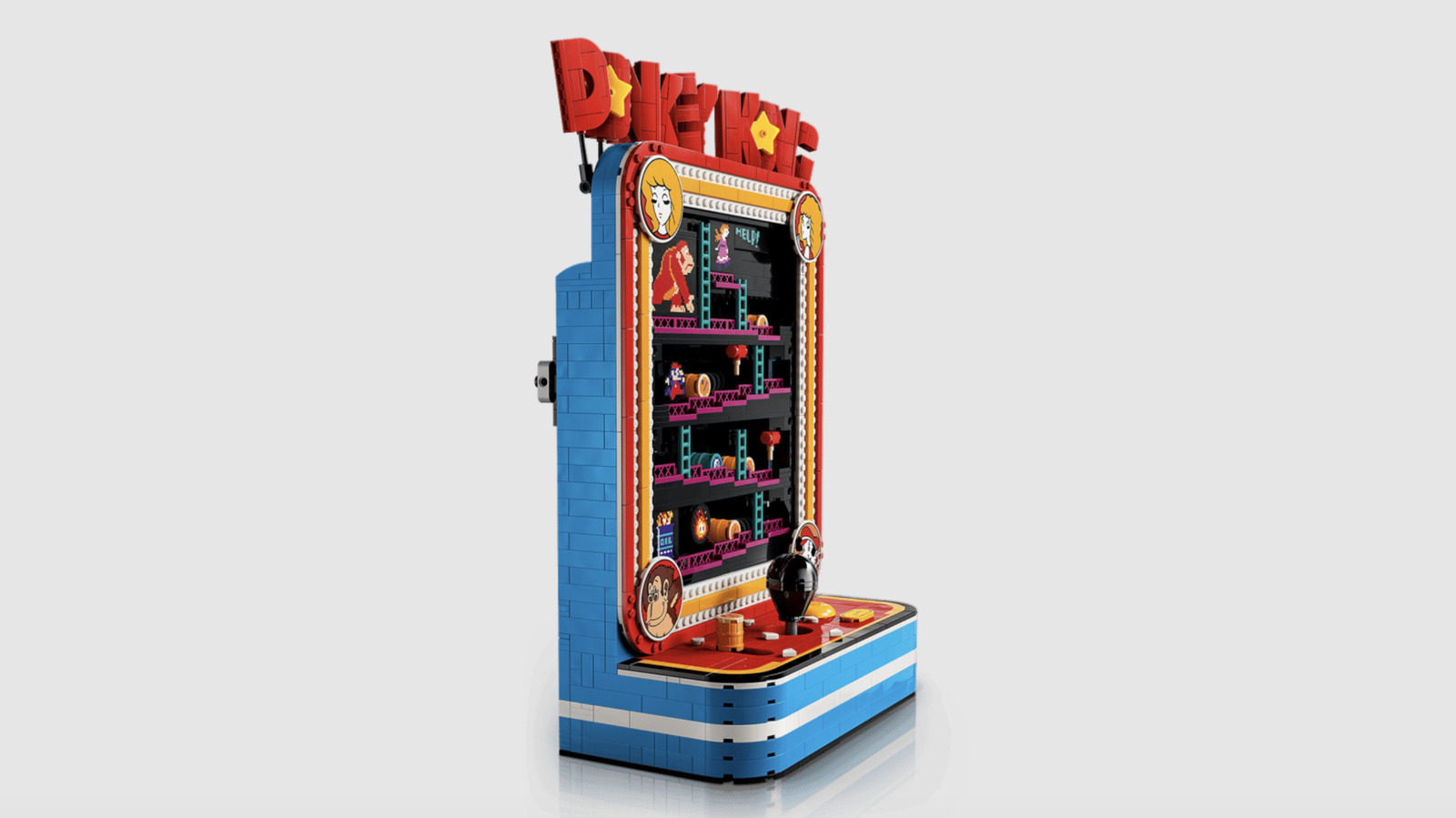
Lego and Nintendo have unveiled a new set in their ongoing partnership: a 1,371-piece buildable replica of the original Donkey Kong arcade cabinet that is actually playable. The set continues a collaboration that has already produced sets such as a buildable NES and a posable Bowser, and is aimed chiefly at nostalgic adult fans rather than children, offering a physical, mechanical way to relive the arcade classic without needing coins or electricity.
The model features a working lever that releases one of 21 included barrels, plus a joystick and button that let users guide Jumpman (Mario's original name) past obstacles, closely mirroring the mechanics of the 1981 arcade original in simplified brick form. It faithfully recreates the game's iconic scaffolding and ladders, and includes minifigures of Jumpman, Donkey Kong and "Lady", the character who later became Pauline, alongside a visible barrel-shifting mechanism on the reverse. The Lego Donkey Kong Arcade costs $200, launches on 1 August 2026, and is available for pre-order now.
In short
- Lego and Nintendo unveil a playable Donkey Kong arcade brick set
- 1,371 pieces, working lever, joystick and barrel mechanism
- Costs $200, releases 1 August, pre-orders open now
Explained simply
Lego and Nintendo have collaborated on several buildable sets over recent years, targeting adult collectors and nostalgic fans rather than young children. Previous partnerships have produced working models based on classic gaming franchises, including a buildable NES console. These premium products celebrate video game history for collectors who grew up with these iconic brands.
Donkey Kong is one of gaming's earliest and most iconic arcade classics, released in 1981 and introducing the character who would later become Mario. The game remains instantly recognisable across generations and is celebrated as a cornerstone of video game history.
The latest collaboration extends beyond previous Lego-Nintendo sets by creating a physically playable recreation of the original 1981 arcade experience using moving mechanical parts and manual controls. Rather than a static display model, this approach merges the appeal of construction toys with hands-on nostalgia, offering something distinct from both traditional Lego sets and digital gaming experiences.