‘Leicester Square, please guv’: Self-driving taxis cleared for London streets ‘later this summer’
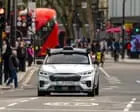
Uber and the London-based technology firm Wayve have been granted the first minicab licences in London for self-driving taxis, with paid trips due to begin "later this summer" ahead of a full public launch. A human safety driver will remain behind the wheel initially, but the move marks a significant step in London becoming one of the first cities where American and Chinese autonomous vehicle developers, including Google's Waymo and Baidu's Apollo Go, could soon operate on the same streets.
Transport for London has issued 15 private hire vehicle licences for Ford Mustang Mach-E cars fitted with Wayve's AI driving software, cameras and radar, after confirming the vehicles met required safety standards. More than 100,000 Londoners are reportedly on the waiting list. Fully driverless operation will require separate approval from the Driver and Vehicle Standards Agency, and TfL says it will monitor the vehicles closely, citing its Vision Zero goal of eliminating road deaths and serious injuries by 2041. Wayve has tested its technology on London roads since 2018, while Uber, having dropped its own self-driving programme in 2020, now partners with firms such as China's WeRide, which already runs driverless taxis in Abu Dhabi.
In short
- Uber and Wayve win first London licences for self-driving taxis
- Trips start this summer, but with a human safety driver initially
- Over 100,000 Londoners are on the waiting list
Steelman: both sides, in good faith
The strongest fair case each way — we don't pick a winner.
The case for
Proponents contend that autonomous vehicles address genuine urban challenges with measurable safety improvements, since AI eliminates human error—the primary cause of road accidents—whilst maintaining perfect consistency without fatigue, distraction or impairment. They emphasise that London's measured approach, with safety drivers present and Transport for London oversight, represents responsible deployment of a technology offering substantial benefits: reduced congestion, lower emissions, improved mobility for elderly and disabled passengers, and considerable economic value through a growing industry.
The case against
Sceptics argue that whilst the technology shows promise, autonomous vehicles remain insufficiently tested in the complex, unpredictable real-world environment of London's streets, where human drivers handle countless subtle situations daily. They highlight genuine unknowns including how AI responds to edge cases, adverse conditions, and novel scenarios; unresolved questions of liability when accidents occur; and significant employment implications for London's taxi workforce, contending that regulatory approval reflects commercial momentum rather than proven readiness for public deployment.
Explained simply
A self-driving taxi uses cameras, radar and artificial intelligence to navigate roads, but it still needs regulatory approval before it can operate without a human driver. Wayve, a London-based technology company, has been testing its driving software on local roads since 2018; Uber is partnering with Wayve to offer the rides.
Transport for London licenses private hire vehicles and checks that they meet safety standards. The licensed cars will initially have a human safety driver, and a separate approval from the Driver and Vehicle Standards Agency is needed before they can run fully driverless.
The plans form part of a wider race among technology and transport companies to offer autonomous taxi services. If more operators enter London, regulators will need to oversee how the vehicles share busy streets with other road users.
Americas Business Companies Software Technology World