LinkedIn says its AI slop button is working
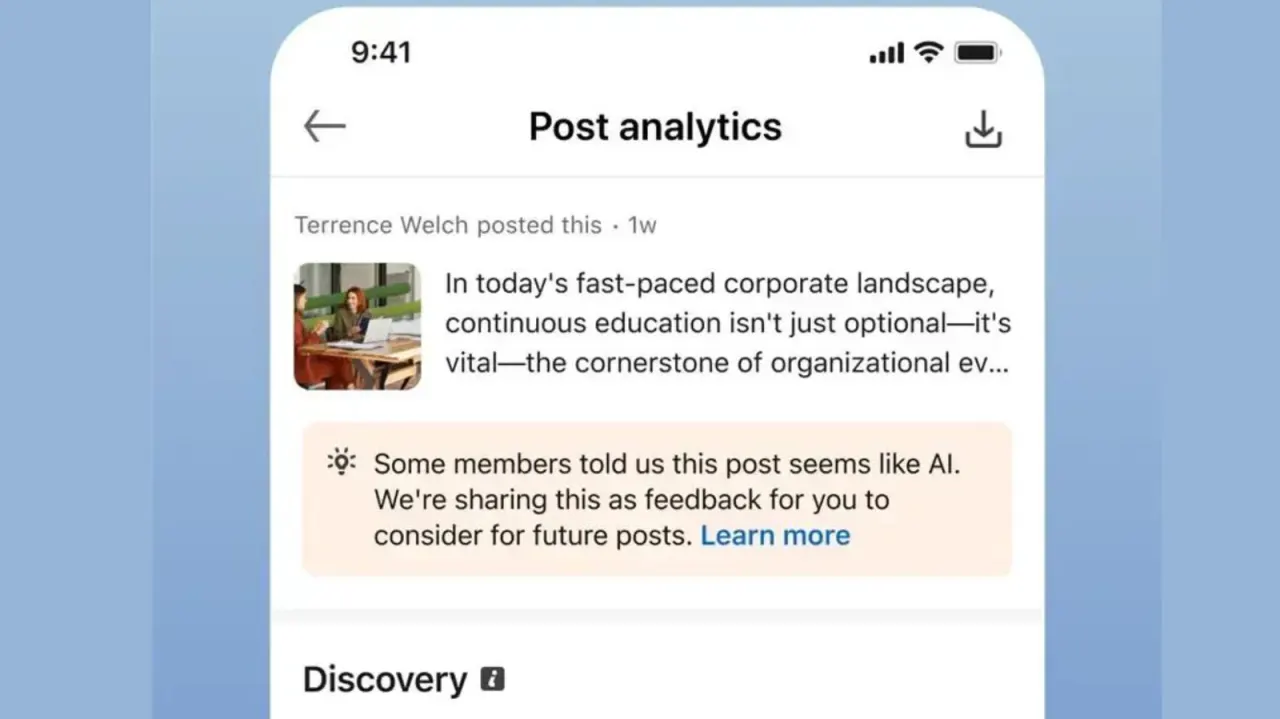
LinkedIn says its "seems like AI slop" reporting button, introduced a few weeks ago, is already reducing the amount of low-quality AI-generated content users see. Chief Product Officer Hari Srinivasan said the tool has been used more than a million times, resulting in a 40% drop in views of posts the platform classifies as AI slop, suggesting the crowdsourced reporting approach is having a measurable effect on feed quality.
LinkedIn has not fully explained how user reports feed into its ranking system, saying only that it relies on "many signals" and has safeguards to stop individual reports being used to unfairly target other members. The platform is now adding a notification, visible via "post analytics", that tells users when their own posts have been reported as AI slop. The move comes after research from AI detection firm Pangram found over 40% of longform LinkedIn posts were likely AI-generated; LinkedIn, owned by Microsoft, had previously promoted AI writing tools itself but has since removed a feature that let users "enhance" posts with AI.
- LinkedIn's AI slop reporting button used over a million times already.
- Company says flagged posts now get 40% fewer views.
- New feature will notify users when their posts are reported as slop.
New here? Start with this
LinkedIn is a professional networking website, owned by Microsoft, where users post updates, articles and career-related content. In recent years, many users have used generative artificial intelligence tools to write their posts, and some have complained that this has flooded people's feeds with generic, low-value content, often referred to informally as "AI slop". LinkedIn has tried various ways to address this, including changes to how content is ranked and shown to users.
Earlier this year, research from an AI-detection company called Pangram suggested that a large proportion of longer LinkedIn posts were likely written, at least in part, by AI. This was notable partly because LinkedIn had itself previously offered a tool letting users get AI help to "enhance" their posts, a feature it later withdrew. The company's approach to AI-generated content has therefore shifted over time, from encouraging its use to taking steps that discourage it.
A few weeks before this story, LinkedIn introduced a button allowing users to flag posts they believe are "AI slop", feeding that feedback into how the platform decides what to show people. The company's product leadership, including Chief Product Officer Hari Srinivasan, has been reporting on how this tool is performing. This matters because it touches on wider questions about the volume of AI-generated content across social platforms, and how much control users and companies have over shaping what appears in their feeds.
Both sides, in good faith
The strongest fair case each way — we don't pick a winner.
The case for
LinkedIn and its supporters would argue that a crowdsourced flagging tool respects both member agency and free expression: rather than the platform unilaterally deciding what counts as "slop" via opaque algorithms alone, it lets users collectively signal quality, and the reported 40% drop in views suggests the feed genuinely improves for people who value authentic, human-written professional content. Combined with safeguards against report abuse and pairing the button with transparency for authors (via post analytics), this looks like a proportionate, iterative response to a real and measurable problem of feed degradation, especially given LinkedIn already retreated from promoting its own AI writing tools once the downside became apparent.
The case against
Critics who value due process and algorithmic accountability could reasonably worry that a crowdsourced reporting system, layered onto an unexplained ranking model that relies on "many signals," risks being gamed or applied inconsistently, potentially penalising legitimate writers whose style merely resembles AI output or who use AI as a drafting aid rather than a replacement for genuine thought. They might also note the irony and incentive conflict in Microsoft-owned LinkedIn now policing AI content it recently encouraged users to generate, and argue that without clearer disclosure of how reports translate into visibility penalties, users reported as posting "slop" have little real ability to understand or contest the judgement against them.