Business news and discussion on TalkFuse.
‘Los Vampires’ Review: Dueling Draculas Spar in an Alluring if Unevenly Executed Flashback to Early-Talkie Hollywood
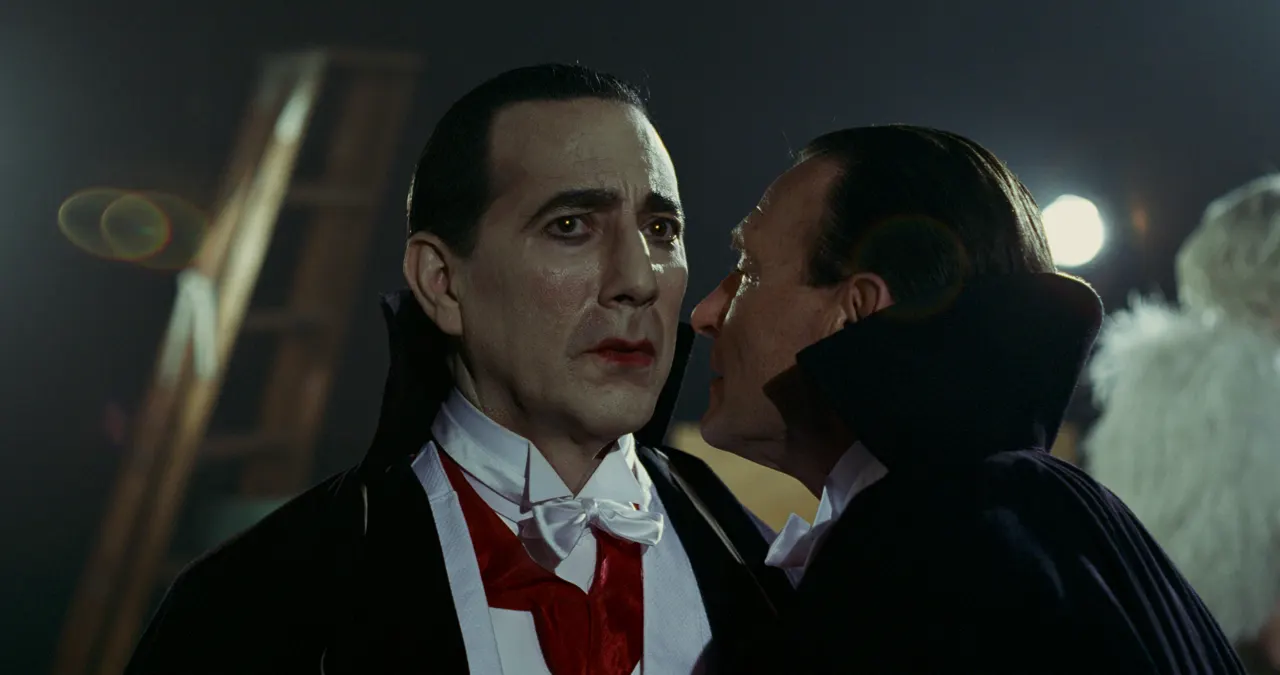
Craig Mitchell’s “Los Vampires” imagines tensions and sinister events during Universal’s unusual 1930 production of “Dracula”, which used the same sets for separate English- and Spanish-language versions. The film pits fictionalised counterparts of Bela Lugosi and Carlos Villarias against each other before their rivalry becomes entangled with fears of murder and vampirism, creating an affectionate but uneven early-Hollywood mystery.
Henry Ian Cusick plays Spanish actor Luis de Ossario, who resists being told to copy the English-language performance exactly for the night-time Spanish shoot, while Thomas Kretschmann’s Romanian star Kurt Orlov faces the same instruction. The review says the film draws appeal from its period setting, horror elements and cinematic-history premise, though its mixture of homage, mystery and horror is not always well balanced; it also references the Spanish “Dracula”, restored in the 1990s after decades of obscurity.
In short
- A fictional mystery unfolds during Universal’s dual-language “Dracula” production.
- Rival actors resist copying each other’s performances.
- The historical premise is compelling, despite uneven execution.
Explained simply
In 1930, Universal Pictures undertook an unusual production: two versions of "Dracula" filmed simultaneously on the same sets, one in English with actor Bela Lugosi and one in Spanish with Carlos Villarias. Each version had its own director and crew, and because the English version filmed during the day whilst the Spanish version shot at night, the two productions operated largely separately.
The unconventional arrangement created significant friction on set. Actors were sometimes told to replicate performances exactly, which sparked resistance from performers who wanted creative autonomy, and the intensity of running two productions at once fostered tensions and rumours amongst the cast and crew.
The Spanish "Dracula" was largely forgotten after its initial release and remained obscure for decades until its restoration and discovery in the 1990s. Film historians have long been fascinated by this lost production and the dynamics of the dual-shoot, making it fertile ground for fictional retellings of what may have occurred behind the scenes.