LS Lowry review – matchstick men, or the broken denizens of a smog-filled hellscape?
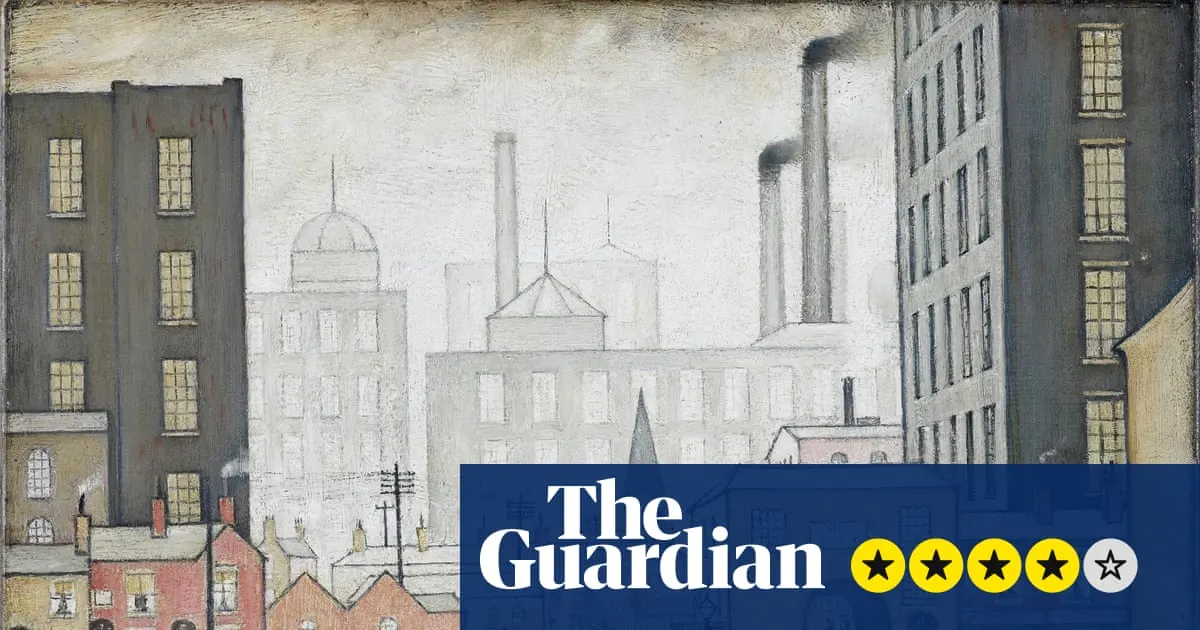
An exhibition at MK Gallery in Milton Keynes presents LS Lowry as a more complex artist than the maker of familiar “matchstick men”. The review argues that his scenes of industrial northern England are especially powerful for the way they convey people’s exhaustion and isolation beneath the scale of mills and factories.
Lowry was born in 1887 and spent 41 years working as a rent collector around Greater Manchester, observing its people and places. The exhibition includes his 1930 painting *Coming from the Mill*, a bleak view of workers leaving a factory, and *The River Irwell at the Adelphi*, with polluted water, decaying buildings and smoke-filled skies. It also shows less familiar work, including a desolate Lake District landscape and *In a Park* (1963), whose depiction of disabled people raises questions about how the work should be interpreted.
In short
- MK Gallery presents a broad survey of LS Lowry’s work.
- His industrial scenes portray workers as isolated and diminished.
- Less familiar paintings raise questions about landscape and disability.
Explained simply
LS Lowry was a British painter best known for scenes of industrial towns in northern England, often populated by small figures nicknamed “matchstick men”. Born in 1887, he spent much of his working life collecting rent around Greater Manchester, where he saw the streets, factories and people that informed his art.
His paintings often show daily life alongside large mills and industrial buildings, with smoke and pollution shaping the surroundings. Lowry also painted landscapes and other subjects, and his work has prompted differing interpretations of how he depicted people, including disabled people.