World news and discussion on TalkFuse.
Magnitude 7.3 earthquake quake strikes off Mexico coast
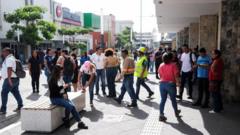
A magnitude 7.3 earthquake struck off the southern coast of Mexico on Friday, prompting a tsunami warning for parts of the Pacific coastline, though no fatalities or significant damage were reported in Mexico or Guatemala. The quake was also felt in El Salvador, where buildings shook and residents were evacuated, underlining the widespread reach of the tremor across Central America even though its impact proved relatively limited.
The quake struck near the fishing town of Puerto Madero at 08:49 local time (14:49 GMT) at a depth of 15.2km, according to the US Geological Survey. Small tsunami waves of around 0.3m above tide level were recorded in Puerto Madero and Chiapas, lasting 12 and 28 minutes respectively, before the threat was declared to have passed. Several aftershocks measuring between magnitude 4.7 and 6 followed, including a 5.6 magnitude quake in Guatemala that prompted the deployment of that country's emergency management agency, while authorities across the region urged calm and caution near the sea.
In short
- Magnitude 7.3 quake hit off southern Mexico, triggering a tsunami warning
- No fatalities or major damage reported in Mexico, Guatemala or El Salvador
- Small tsunami waves recorded; aftershocks up to magnitude 6 followed
Explained simply
Mexico and Central America sit in one of the world's most earthquake-prone regions because the Earth's surface is constantly moving and colliding underneath the ground. These underground movements create pressure that builds up over time and releases suddenly in the form of earthquakes. As a result, the region experiences frequent tremors that range from barely noticeable to quite severe.
When earthquakes occur beneath the ocean near coastlines, they can push water upwards and create large waves called tsunamis. These waves can damage coastal communities, which is why authorities maintain warning systems to detect underwater earthquakes and alert residents. This monitoring is especially important given the millions of people living along these coasts and their dependence on ports and fishing industries.
The region has suffered devastating earthquakes in the past that have caused significant loss of life and destroyed homes and critical infrastructure. Because of this history, seismic activity in Mexico and Central America is treated as a serious risk by local governments and international disaster agencies. Understanding why the region is naturally earthquake-prone helps explain the urgent response when tremors occur.