World news and discussion on TalkFuse.
Malik Nabers a top Giants receiver without knowing ‘what’s a catch nowadays’
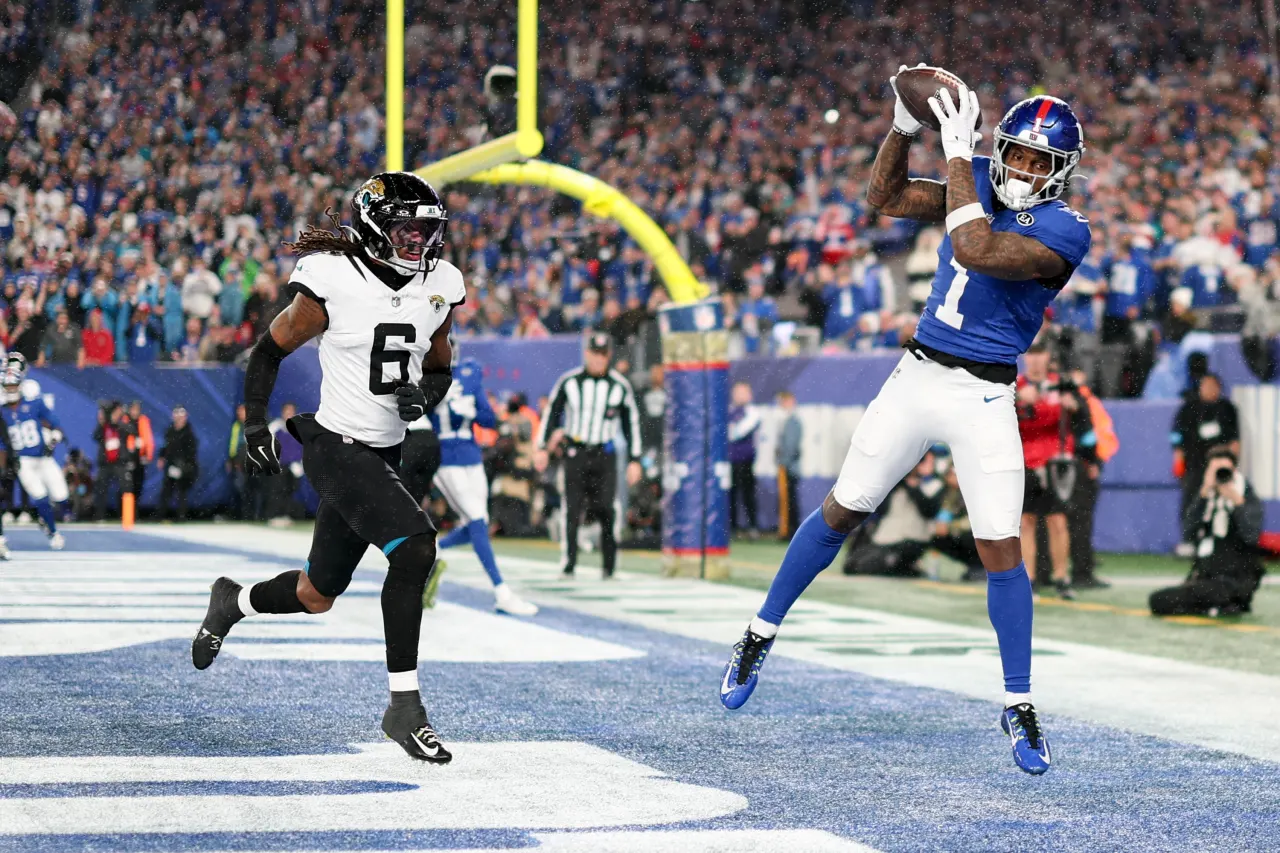
Giants wide receiver Malik Nabers says he is unsure what counts as a catch after a run of replay reviews in the NFL overturned four receptions in six days. The list includes his own lost first-down catch and a Jaguars touchdown by Parker Washington, along with calls against the Rams' Konata Mumpfield and the Chiefs' Rashee Rice. Coach John Harbaugh, whose Ravens lost to the Steelers last season after a similar ruling, said that once a play goes to replay, the rules become "all real gray".
Nabers has 65 catches for 747 yards and three drops this season, and ranks fifth in air yards per target out of the slot among receivers with at least 15 slot targets, according to NextGenStats. He has 47 percent of his receiving yards from the slot, despite 26 slot targets compared with 70 out wide. The Giants plan to keep using him inside, and he scored an easy touchdown last week after being matched against Jaguars safety Antonio Johnson.
In short
- Four NFL players lost catches to replay reviews within six days.
- Malik Nabers says he no longer knows what counts as a catch.
- Harbaugh says replay makes catch decisions "all real gray".
Steelman: both sides, in good faith
The strongest fair case each way — we don't pick a winner.
The case for
Supporters of the current standard argue that replay exists to get calls right, and that a catch should require clear control of the ball through the ground contact, since a looser definition would invite subjective judgments that vary from official to official. On this view, overturned catches show the system working as designed: a play counts as complete only when the evidence shows it fully, and the discomfort fans feel reflects how demanding that standard is rather than a flaw in it. They also argue that league-wide consistency matters more than any single result, and that a defined standard is fairer to every team than one shaped by the feel of a particular game.
The case against
Critics contend that the catch rule has grown so technical that players, coaches and fans cannot reliably predict what will count, which undermines the sense that outcomes reflect what happened on the field. They argue that a process meant to correct obvious errors has instead produced reversals of plays that looked complete to the eye, leaving the impression that the rule, rather than the football, decides the result. From this perspective, a simpler and more intuitive definition, even if it occasionally allows a debatable catch, would serve the game better than a standard that turns on fractions of a second and leaves coaches describing the outcome as grey.