Mamdani walks back pledge to arrest Netanyahu citing lack of authority
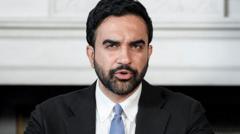
New York City Mayor Zohran Mamdani has backed away from an earlier pledge to have Benjamin Netanyahu arrested should the Israeli prime minister visit the city, saying he lacks the legal authority to do so. Instead, he is urging US federal officials to act on the International Criminal Court's outstanding arrest warrant against Netanyahu over alleged war crimes in Gaza, though the US is not an ICC member and President Donald Trump has said Netanyahu will not be arrested "in any way, shape or form" while in the country.
Mamdani made the reversal in a social media video after his team reviewed "every avenue available" under the law, concluding they lacked independent power to enforce the 2024 ICC warrant, and calling instead for the federal government to join the ICC and execute it. He said Netanyahu remains "not welcome" in New York, where the Israeli leader is expected to attend the UN General Assembly in September. The dispute follows Mamdani telling the New York Times that Netanyahu "belongs in The Hague" and is a "war criminal", prompting a sharp rebuke from Israel's UN ambassador Danny Danon, and comes amid polling showing 58% of Democrats now believe the US is too supportive of Israel, up from 45% in 2024.
In short
- Mamdani says he lacks power to arrest Netanyahu in New York
- He now urges US to join ICC and enforce warrant instead
- Trump insists Netanyahu won't be arrested while visiting the US
Steelman: both sides, in good faith
The strongest fair case each way — we don't pick a winner.
The case for
The case for enforcing the warrant rests on international accountability and the rule of law. The International Criminal Court exists precisely to prevent impunity for leaders accused of war crimes, and the investigation into alleged offences in Gaza represents the system working as intended. Supporters argue that tolerating violations by powerful allies undermines the entire framework of international justice and signals that accountability depends on political convenience rather than principle.
The case against
The case against enforcing the warrant emphasises legal realities and appropriate boundaries. The United States is not an ICC member and has never accepted the Court's jurisdiction, meaning it has no legal obligation to enforce its warrants, and Netanyahu is a democratically elected leader of an allied nation whose arrest could create dangerous diplomatic consequences. Moreover, the conflict in Gaza presents genuine military complexity; whilst civilian casualties are significant, Israel's government frames its actions as responses to the 7 October attacks, and enforcing the warrant whilst ignoring comparable situations elsewhere suggests selective justice rather than principled commitment to international law.
Explained simply
New York City’s mayor is a local official, while the US federal government handles national and foreign policy. The International Criminal Court, based in The Hague, prosecutes individuals accused of serious crimes under international law; it issued an arrest warrant for Israeli Prime Minister Benjamin Netanyahu in 2024 over alleged crimes linked to the Gaza war.
The United States is not a member of the court, and an ICC warrant does not by itself give New York City officials authority to make an arrest. The dispute matters because Netanyahu is expected to visit New York for the United Nations General Assembly, and it highlights disagreements in the US over its support for Israel and how to respond to the warrant.
Americas Government Middle East Politics World