Health news and discussion on TalkFuse.
PIP claims for anxiety and depression rise 108% since 2021 across Britain
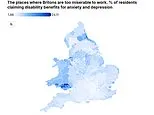
Claims for Personal Independence Payment (PIP) linked to mixed anxiety and depressive disorder have risen sharply across Britain, increasing by 108 per cent since 2021. The growth matters because psychiatric conditions now make up about 39 per cent of PIP claims in England and Wales, prompting debate over eligibility, public spending and whether the system distinguishes adequately between levels of need.
Wales has the highest rate, with 13.1 claims per 1,000 residents, while Yorkshire and the Humber, the North East and North West also record high levels. Claims remain below average in the South East and South West, although autism-related claims are particularly concentrated in some affluent areas; analysts suggest differences in diagnosis access and support may help explain the regional variations.
In short
- PIP claims for mixed anxiety and depression have risen 108 per cent since 2021.
- Wales has the highest claim rate at 13.1 per 1,000 residents.
- Psychiatric conditions account for roughly 39 per cent of PIP claims.
Steelman: both sides, in good faith
The strongest fair case each way — we don't pick a winner.
The case for
The rise may reflect more people experiencing disabling anxiety and depression, alongside better recognition and diagnosis of conditions that can substantially affect daily life. PIP is intended to support people with additional costs arising from long-term health conditions, and regional differences may reflect unequal access to diagnosis and other support rather than differences in genuine need.
The case against
A sharp rise in claims raises legitimate questions about whether eligibility assessments consistently distinguish severe, lasting functional limitations from conditions that may be less disabling or improve with treatment. With psychiatric conditions accounting for a substantial share of claims, policymakers may reasonably scrutinise assessment standards and public spending while ensuring support is focused on people with the greatest needs.
Explained simply
Personal Independence Payment, or PIP, is a benefit for people in England, Wales and Scotland whose long-term health conditions or disabilities affect daily activities or getting around. It is not means-tested, so eligibility does not depend on income or savings; an assessment looks at how a person’s condition affects their everyday needs.
The Department for Work and Pensions manages PIP in England and Wales, while Scotland has a separate benefit. Mental health conditions, including mixed anxiety and depressive disorder, can qualify when their effects meet the assessment rules. Regional claim rates can reflect differences in health, diagnosis and access to support, as well as the number of people living in each area.
The figures have drawn attention to how PIP assessments distinguish between people’s levels of need and how rising claims affect public spending. They also sit within wider discussion about access to diagnosis and support for mental health conditions.
Health Mental Health Space Technology UK World
Read the full article at the source →
Originally published by Daily Mail as “Map reveals areas of the UK where Britons are too depressed to work – as mental health benefit claims rocket 100 per cent in five years”.