World news and discussion on TalkFuse.
Martian landscapes, underground mosques and wild desert camping in Kazakhstan’s remote west
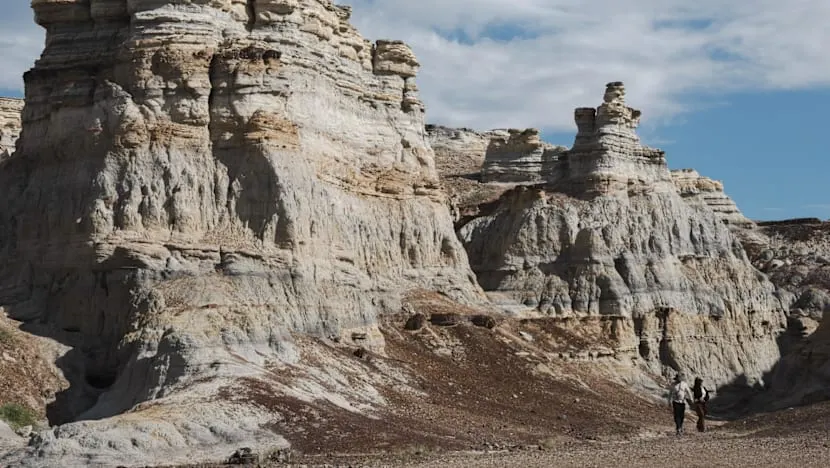
A four-day expedition through Kazakhstan’s remote Mangystau region takes travellers across striking desert scenery shaped by the remains of an ancient sea. The journey combines geological sites, historic landmarks and nights camping under the stars, showing how the region’s isolation has helped preserve its distinctive landscapes and heritage.
The route covers about 970km on roads and 230km off-road, starting from Aktau on the Caspian Sea. Highlights include the Tuzbair salt flats, spherical rock formations at Torysh and colourful Jurassic clay at Kokala, alongside Silk Road history and underground mosques. Travellers cross the region in four-wheel drives, with guides and drivers also preparing meals at remote campsites.
In short
- Mangystau’s four-day tour covers about 1,200km.
- Ancient seabeds have become salt flats and vivid rock formations.
- The journey includes desert camping and historic sites.
Explained simply
Mangystau lies in western Kazakhstan, beside the Caspian Sea, and is a long way from the country’s main cities. Its dry landscapes were shaped in part by an ancient sea, while the region’s location along historic trade routes has left traces of human settlement and religious life.
Travellers usually explore the area in four-wheel-drive vehicles because many sites are far apart and some routes leave paved roads. The region’s sights include salt flats, unusual rock formations, old trade-route landmarks and mosques carved underground. Its distance from large towns has helped preserve both its landscape and some of its heritage.