World news and discussion on TalkFuse.
Fire destroys most buildings at New York foie gras farm
Developed over time first seen 14 hours ago
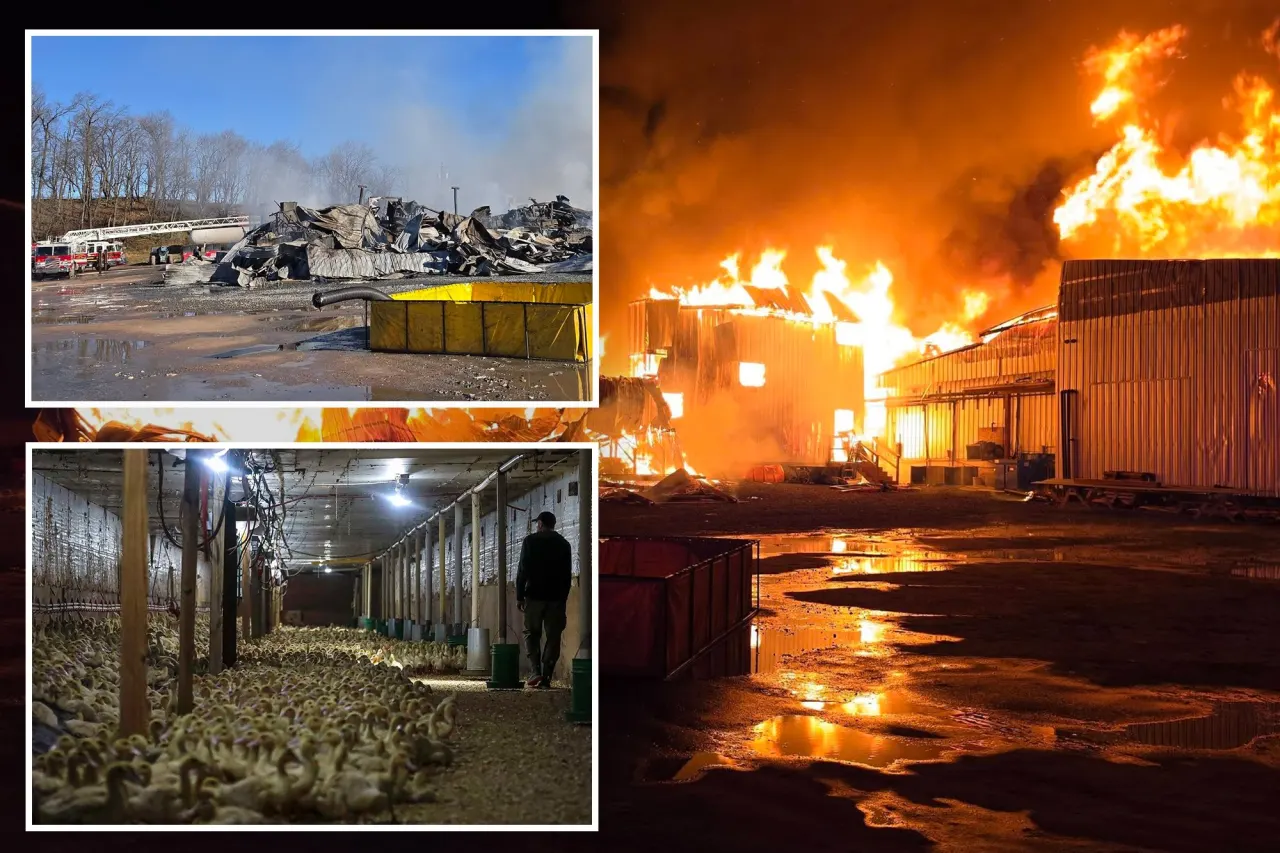
A fire destroyed most of the buildings at Hudson Valley Foie Gras in Bethel, New York, killing an unknown number of ducks and geese. Some birds, including hundreds of newly hatched animals, were rescued, and no employees or first responders were injured.
More than two dozen fire departments responded after a 1.10am emergency call, but the blaze spread too quickly for crews to enter the wood-framed buildings. An electrical malfunction is suspected, though investigators have not determined the cause. The farm is one of the United States’ two remaining foie gras producers; both are contesting New York City’s 2019 sales ban, whose enforcement remains blocked by litigation despite a March appeals court ruling that the city can regulate sales.
- Sources
- 2
- Outlets
- 2
- Left · Centre · Right
- 0 · 1 · 1
In short
- Fire destroyed most of a major Hudson Valley foie gras farm.
- The number of ducks and geese killed is unknown.
- The farm is one of two US producers challenging New York City’s ban.
How this story developed
- 6 hours ago No new casualty figures or cause were available; investigators still suspected an electrical fault, and enforcement of the city’s ban remained blocked despite a March appeals court ruling that it could regulate sales.
- 12 hours ago The farm was identified as one of only two foie gras producers left in the United States, as its fire came amid continuing litigation over New York City’s 2019 sales ban.
- 12 hours ago A fire swept through the Hudson Valley Foie Gras farm in Bethel, New York, destroying most of its buildings; some birds were rescued, but an unknown number died, while no staff or emergency workers were hurt.
Full account
A fire swept through Hudson Valley Foie Gras, a duck and goose farm in Bethel, New York, in the early hours of Thursday. The largest building was engulfed before crews could enter, and flames spread to other structures. Most of the property’s buildings were destroyed. No workers or emergency responders were reported injured, but the number of birds killed is not known.
Firefighters rescued some birds, including hundreds of hatchlings and other young birds. Manager Marcus Henley told local radio station Radio Catskill that two buildings housing ducks and geese had been destroyed. He suspected an electrical fault may have started the fire, but investigators had not established a cause. The farm’s nearby Ferndale operation processes about 6,000 ducks a week, according to Henley; the company has not disclosed how many birds it keeps at the site.
The fire comes as Hudson Valley Foie Gras and neighbouring La Belle Farm, described in one report as the country’s only two remaining foie gras producers, contest restrictions on sales in New York City. The city approved a ban in 2019 on foie gras made by force-feeding ducks and geese. Its implementation has been held up by legal challenges. The farms argue that the measure would cut them off from an important market and intrude on agricultural practices allowed under state law. A state agency sided with the producers, but an appeals court ruled in March that the city could regulate products sold by retailers and restaurants.
Foie gras is made from the enlarged liver of a duck or goose. Its production has drawn sustained criticism from animal-rights groups over force-feeding, while producers have defended their practices. PETA told the BBC it planned to put up a nearby billboard in memory of birds that died and urged the farm to send surviving birds to sanctuaries. The BBC report also noted that voters in Washington, DC, and Denver backed foie gras sales bans in that month’s midterm elections.
Where outlets differ
From the full account, which is AI-written from the sources:
The reports give different estimates of the firefighting response: Gothamist’s account cites more than two dozen departments, while the other report, citing Westchester News 12, says 37 departments and about 200 first responders attended.
They describe the legal dispute differently. One centres on New York City’s sales ban and a March appeals-court ruling; the other broadly calls it litigation with New York State and gives more attention to the farm manager’s opposition to the ban.
The first report says firefighters rescued hundreds of newly hatched birds; the second describes hundreds of young birds and hatchlings. Neither gives a confirmed death toll or cause.
Centre outlets 1
Only here: birds, killed, blaze, largest, farms
Right-leaning outlets 1
Only here: fire, destroys, buildings, york, farm
Every side used: foie, gras
Headline columns compared word for word; nothing in them is AI-written.
Steelman: both sides, in good faith
The strongest fair case each way — we don't pick a winner.
The case for
Supporters of foie gras farming can argue that a lawful, established agricultural business supports jobs, local suppliers and a specialised food tradition, and that the fire’s cause is still under investigation. They may see disputes over sales bans as questions for courts and elected officials, rather than grounds to treat the farm’s loss as deserved, while recognising the animal deaths as a serious tragedy.
The case against
Critics can argue that foie gras production raises substantial animal-welfare concerns because it involves force-feeding ducks or geese, and that the loss of a major farm may reduce a practice they consider unjustifiable. They may also support New York City’s effort to restrict sales, viewing it as a legitimate way for local government to reflect public concern about animal treatment, subject to the ongoing legal process.
Explained simply
Foie gras is a rich food made from the enlarged liver of a duck or goose, traditionally produced by feeding the birds more food than they would eat naturally. The practice is controversial: animal welfare groups oppose it, while farmers and supporters defend it as a long-standing food tradition and a source of jobs.
Hudson Valley Foie Gras, in Bethel, New York, is one of only two foie gras farms left in the United States. Its business has also been affected by a dispute over New York City’s 2019 ban on selling foie gras, which has not been enforced while legal challenges continue.
The dispute involves the city, the state courts, the farm and animal welfare groups. It matters because the courts’ decisions may affect where foie gras can be sold, while the farm’s future has consequences for its workers and the country’s remaining foie gras production.
Coverage · 2 sources
Bias meters
From 2 rated sources.
Read the full article at the source →
Originally published by New York Post as “Massive fire decimates one of America’s last two foie gras farms”.