World news and discussion on TalkFuse.
Max Olesker: Making the Cut review – up close and personal account of comic’s religious conversion
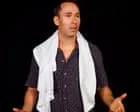
Max Olesker's solo show *Making the Cut*, playing at Pleasance Dome in Edinburgh, gives a candid account of his lengthy conversion from liberal to Orthodox Judaism, a process he undertook to marry his partner. The show, adapted from his memoir, matters as a piece of theatre because it balances comedy with a genuinely searching, ambivalent perspective on religious tradition, rather than offering a simple redemption arc.
The story begins with Olesker, formerly of the double act Max and Ivan, meeting his now-fiancée at the Edinburgh fringe; although both are Jewish, his family's informal religious background is not recognised as valid by hers, forcing him to undergo strict requirements including renouncing his surname, giving up performing, abstaining from physical contact with his partner for years, attending synagogue three times daily, and being circumcised. Much of the tension comes from his efforts to speed up the process, overseen by an authoritarian rabbinical court, so his ailing father and his partner's elderly grandmother can attend the wedding. The reviewer praises the show's humour, including a klezmer-style musical number, while noting it ultimately offers a nuanced, diplomatically framed critique of how religious rites are enforced. It runs at Pleasance Dome until 30 August, before transferring to Soho Theatre in London from 3–21 November.
In short
- Max Olesker's show recounts converting to Orthodox Judaism to marry his partner
- Process involved years of abstinence, strict rules and circumcision
- Runs in Edinburgh until 30 August, then Soho Theatre, 3–21 November
Steelman: both sides, in good faith
The strongest fair case each way — we don't pick a winner.
The case for
Religious traditions require meaningful standards to preserve their identity and ensure sincere, lasting commitment from those who join them. Orthodox Judaism's conversion requirements are grounded in centuries of halakha and theological tradition, and these demanding standards distinguish genuine conversion from mere administrative recognition whilst protecting the community's integrity and the seriousness of individuals' commitment.
The case against
The specific requirements appear to exceed what is necessary to ensure sincere commitment, targeting identity itself through demands like renouncing one's surname and enforced separation from one's partner for years. An inflexible rabbinical court system wielding sole authority creates conditions where vulnerable people, especially those under time pressure from dying relatives, cannot meaningfully consent, raising concerns that institutional control matters more than genuine spiritual commitment.
Explained simply
Max Olesker is a comedian and writer who performed as part of the double act Max and Ivan. Although he and his partner are both Jewish, their families follow different forms of Judaism, and her family’s religious authorities did not accept his upbringing as sufficient for marriage.
In Orthodox Judaism, religious practice and marriage requirements are overseen by rabbis, and conversion can involve changes to daily life and religious observance. Olesker’s experience, including the demands placed on him and his effort to meet them in time for family members to attend the wedding, forms the background to his show.
The story touches on how religious traditions shape personal relationships and how people respond to rules they find difficult or unfamiliar. It also raises questions about the place of comedy in telling a story that is both intimate and connected to a wider religious community.