Met police set strict conditions for students’ October 7 march in London
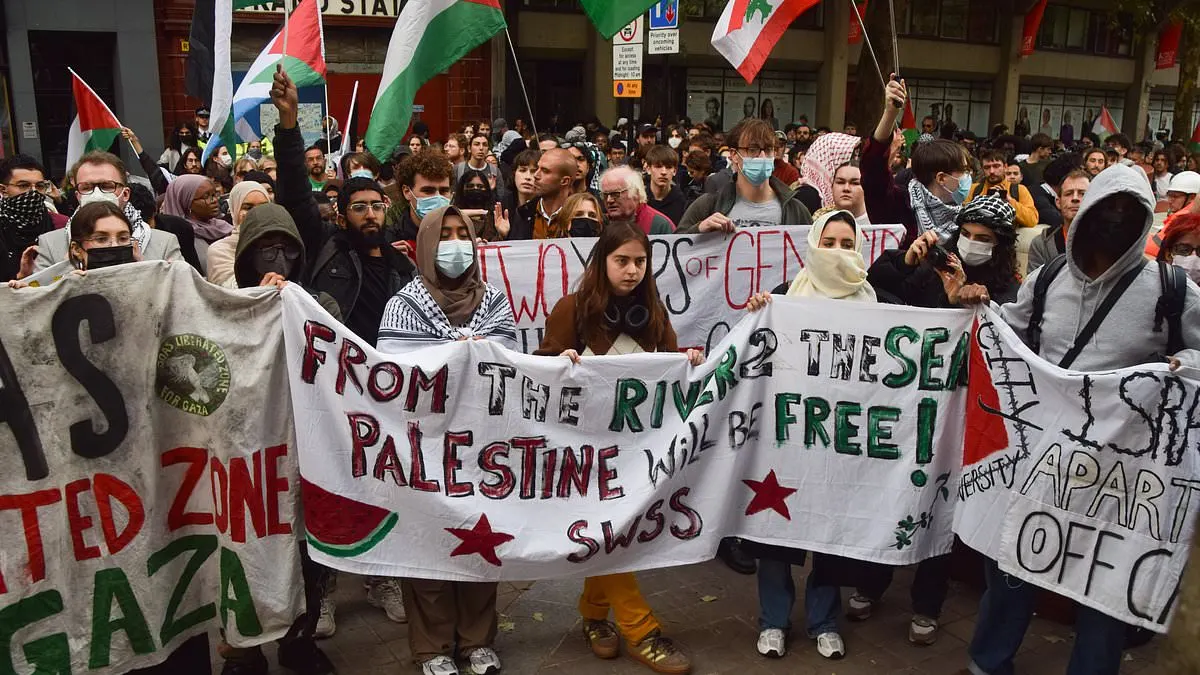
Metropolitan Police have imposed strict conditions on a pro-Palestine march scheduled for tomorrow, October 7, warning that participants will face arrest if they breach the requirements. The demonstration, which marks the third anniversary of the Hamas attack that killed over 1,200 Israeli civilians and triggered the Gaza conflict, has prompted particular concerns within London's Jewish communities about the timing and potential impact on this significant date.
An estimated 300 students plan to march from King's College London to University College London, but police require them to assemble at Lincoln's Inn Fields by 12:30pm, follow a prescribed route, and disperse by 2pm. Prohibited actions include wearing face coverings that hide identity, chanting intifada slogans, or displaying placards inciting extremism. Though organisers remain unidentified and various groups have called for the march to be banned, Deputy Assistant Commissioner James Harman stated that only the Home Secretary can impose such a ban, and the legal threshold for doing so has not been met.
- Police warn of arrests for breaching strict march conditions on October 7 anniversary
- Met imposes 12:30pm assembly, prescribed route and 2pm dispersal with no face coverings
- Home Secretary alone can ban protest; police say threshold for banning not met
New here? Start with this
The Israeli-Palestinian conflict is a long-standing dispute over territory, refugees and political sovereignty that stretches back decades. In October 2023, the militant group Hamas launched a major attack on Israel that killed over 1,200 people. Israel responded with an extensive military campaign in Gaza, resulting in significant loss of life and humanitarian suffering.
Tomorrow marks the third anniversary of the October 2023 attack, which Israelis and Jewish communities around the world observe as a day of remembrance and mourning. A pro-Palestine student march scheduled for the same day has prompted concerns in London's Jewish communities about the timing and message of the demonstration.
The police have imposed conditions on the march in an attempt to balance people's right to protest with concerns about public order and community tensions during a sensitive time. This reflects the broader challenge authorities face when managing demonstrations related to conflicts that affect different groups in the population deeply.
Both sides, in good faith
The strongest fair case each way — we don't pick a winner.
The case for
Those supporting the police conditions argue that whilst peaceful protest is fundamental to democracy, managing it responsibly—particularly on dates of significant trauma and loss—is equally essential. October 7th marks a devastating attack on Israeli civilians, and the restrictions aim to preserve public order and community cohesion whilst allowing the march to proceed; the specific conditions represent proportionate measures to prevent disorder or distress to vulnerable communities without banning the demonstration outright.
The case against
Those opposing the conditions contend that freedom of assembly and political speech form the cornerstone of democratic societies, and that restrictions based on timing or potential offence to particular communities set a troubling precedent for suppressing dissent. They argue the prescribed route, strict time constraints, and identity-verification requirements go beyond what's necessary for genuine public safety, and that such conditions would rarely be imposed on marches addressing other contentious political issues, raising questions about fairness and proportionality.
Read the full article at the source →
Originally published by Daily Mail as “Met Police warns students taking part in October 7 pro-Palestine march that they will be arrested if they wear face coverings, break away from route and fail to disperse at 2pm”.