Meta reveals its AI agent that can shop, send emails and plan trips on your behalf
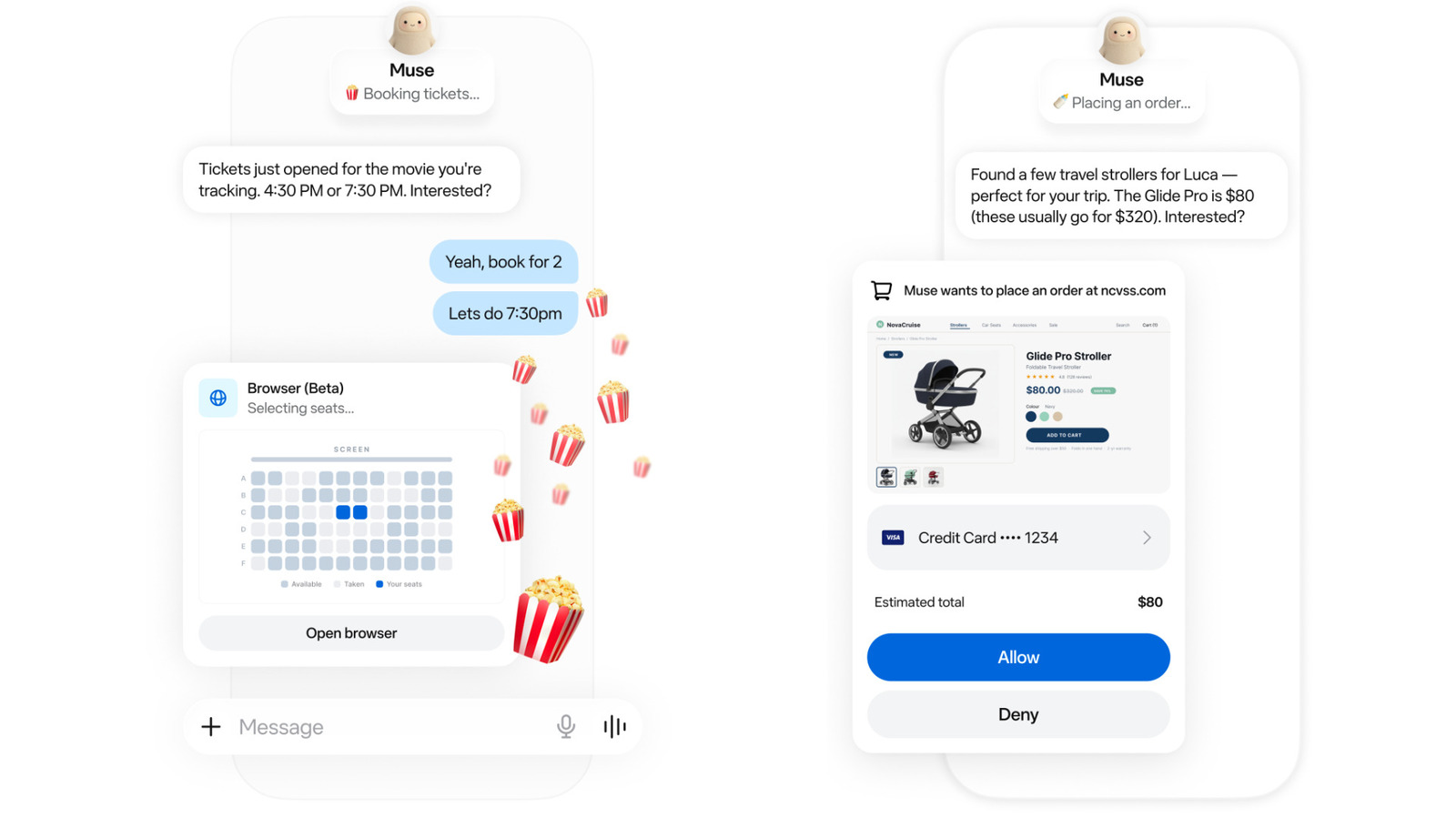
Meta has unveiled Muse, a personal AI agent it says can shop online, draft and send emails, plan trips and handle other tasks without requiring "technical experience" to set up. It forms part of chief executive Mark Zuckerberg's push to bring proactive AI agents to a mass audience, and is more capable than Meta's existing AI assistant because it can work independently once given a goal, rather than simply responding to prompts.
Muse connects to Meta's own apps as well as third-party services including Google Workspace, Ticketmaster, OpenTable, Spotify and Apple Health, and can even set up its own links to other services with public APIs. It seeks user approval before higher-risk actions such as sending emails or making purchases, and runs on a dedicated virtual machine intended to keep each user's data separate. Meta says users can opt out of having their Muse conversations used for AI training, and that chat details will not be fed directly into advertising, though it acknowledges the agent will still make occasional mistakes. It remains unclear whether Muse will eventually require a paid Meta AI subscription, though the firm says most core functions will stay free.
- Meta launches Muse, an AI agent that can shop, email and plan trips
- It links to Meta and third-party apps, working with minimal user input
- Privacy safeguards exist, but subscription plans remain unclear
New here? Start with this
Meta has launched Muse, a new artificial intelligence tool designed to carry out everyday tasks on a person's behalf, such as shopping online, writing and sending emails, and organising trips. Unlike Meta's existing AI assistant, which mainly answers questions when prompted, Muse is described as an "agent" that can be given a goal and then work towards it with less step-by-step direction, connecting to services such as Google Workspace, Ticketmaster, OpenTable and Spotify to get things done.
The tool is part of a broader push by chief executive Mark Zuckerberg to make AI agents that act independently a mainstream feature for ordinary users, rather than a niche tool for developers. This matters because AI agents of this kind mark a shift from AI that simply chats or answers questions to AI that takes real actions, including ones with financial or personal consequences, such as making purchases or sending correspondence.
Because of this, questions naturally arise about safety, privacy and cost. Meta says Muse will ask for permission before higher-risk actions and keeps user data isolated, while also allowing people to opt out of having their conversations used to train its AI. It is not yet clear whether the tool will remain free or eventually require a paid subscription, and Meta acknowledges the system will sometimes get things wrong.
Both sides, in good faith
The strongest fair case each way — we don't pick a winner.
The case for
Advocates see Muse as a genuinely useful step towards making powerful AI accessible to ordinary people, removing the technical barriers that have kept agentic tools in the hands of developers and early adopters. They point to the built-in safeguards, such as requiring explicit approval before emails are sent or purchases made, running each user on an isolated virtual machine, and offering an opt-out from having conversations used for training, as evidence that Meta has designed the product with user control and privacy in mind. For this camp, automating tedious tasks like trip planning or shopping represents a meaningful convenience gain, and broad integration with popular third-party services makes the assistant more genuinely useful than a narrower, walled-off tool would be.
The case against
Sceptics argue that handing an AI agent access to email, calendars, purchases and health data is a significant trust leap for any company, and particularly for one with Meta's history of data and privacy controversies. They note that the firm itself admits the system will make mistakes, which is a serious concern when those mistakes could involve unauthorised purchases, mishandled personal correspondence or exposure of sensitive health information. There is also unease about the commercial incentives at play, given the uncertainty over future subscription charges and questions about how tightly Meta's assurance that chat data won't feed advertising will hold up over time as the product and its business model evolve.