Meta unveils MTIA 400 chip for AI training and ads
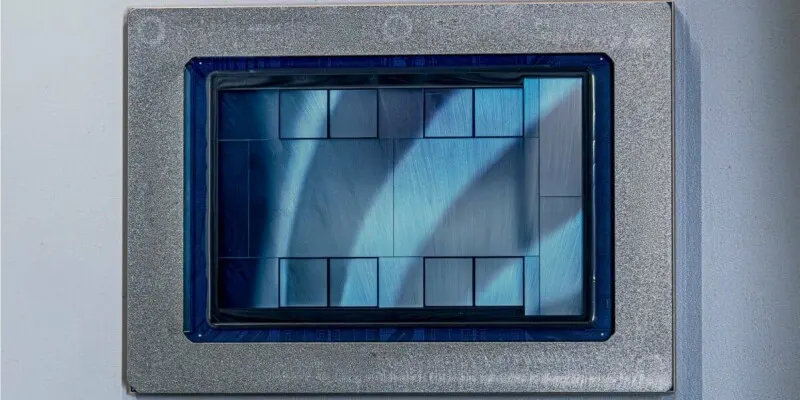
Meta has unveiled its MTIA 400, a custom accelerator designed both to train large language models and to run the advertising recommendation systems that underpin its revenue. The combination is unusual because training models requires vast computing power, while ad recommendations are mainly limited by memory performance, but it could help Meta make more use of costly in-house hardware.
The chip uses a multi-die design with two 3nm compute dies, two I/O dies and a system-on-chip component, apparently drawing on Broadcom technology. Meta says it can deliver 12 petaFLOPS of MXFP4 performance at 1.7GHz, around 20% faster than Nvidia’s highest-specification Blackwell parts at certain training precisions with similar power use; however, it remains roughly three to 3.3 times slower than newer Nvidia Rubin and AMD MI455X accelerators, so is unlikely to replace their GPUs for frontier AI work soon.
- Meta’s MTIA 400 combines AI training with ad-serving duties.
- It beats Blackwell in one measure but trails newer rivals.
- Nvidia and AMD hardware remains central for frontier AI.
New here? Start with this
Meta is a technology company that owns Facebook, Instagram and WhatsApp. It earns much of its revenue from advertising, using computer systems to decide which adverts to show people. It is also developing large language models, the technology behind AI chatbots.
To run these systems, Meta relies on powerful chips, including graphics processors from companies such as Nvidia. It is also designing its own chips, known as accelerators, to handle particular computing tasks and make better use of its data centres.
Training an AI model and choosing adverts place different demands on hardware: training needs substantial computing power, while ad recommendations rely heavily on moving data quickly. A chip intended for both could give Meta more flexibility, though the fastest specialist chips remain important for the most demanding AI work.
Both sides, in good faith
The strongest fair case each way — we don't pick a winner.
The case for
Meta's MTIA 400 represents sensible vertical integration: by designing unified hardware that handles both AI training and ad recommendations—Meta's two most compute-intensive workloads—the company maximises utilisation of expensive silicon. At 20% faster than Nvidia's Blackwell in certain training precisions with similar power use, it competes meaningfully with incumbent vendors for Meta's specific needs. For a company spending billions on AI infrastructure, this approach could yield significant cost advantages over purchasing separate specialised solutions.
The case against
Meta's dual-purpose approach represents a fundamental compromise that optimises neither task effectively. Training frontier AI models demands maximum performance—yet this chip lags 3–3.3 times behind newer Nvidia and AMD accelerators—whilst ad recommendations are memory-bound, not compute-bound, making over-engineered unified hardware wasteful. By creating generalist hardware instead of specialised solutions, and betting against Nvidia's overwhelming ecosystem advantage, Meta may have made a costlier, riskier choice.
Read the full article at the source →
Originally published by The Register as “Meta’s new MTIA 400 chip has a split personality: Training AI and serving ads”.