Video games news, releases, esports and culture — all the biggest gaming stories in one place.
Microsoft’s SideWinder Strategic Commander was a failed attempt to reimagine RTS controls. 23 years later, why are some players still using it?
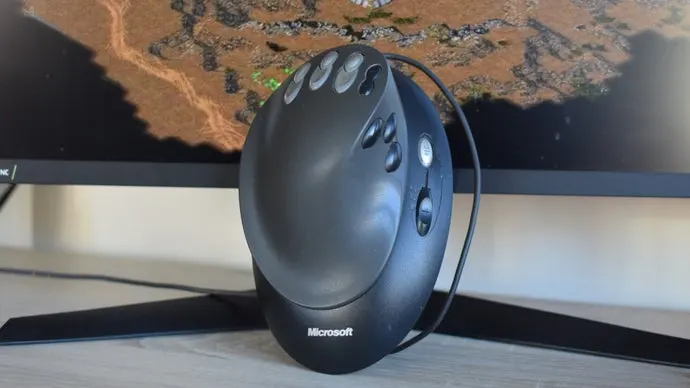
Microsoft’s SideWinder Strategic Commander tried to rethink how players controlled real-time strategy games, pairing a left-handed controller with the familiar right-hand mouse. Though it was praised for originality, it did not displace keyboard-and-mouse controls and was discontinued in 2003; a dedicated following has kept it in use.
Introduced in 2000 at $64.95, the device combined mouse, joystick and gamepad features, with six programmable buttons, three shift buttons and a three-position profile switch. These offered up to 72 key combinations and let players change profiles during a match. The article attributes the device’s continued appeal to its software and operating-system compatibility as well as its hardware, though the supplied text ends before explaining those details.
In short
- Microsoft launched the Strategic Commander in 2000 for $64.95.
- It offered 72 possible key combinations for RTS controls.
- Discontinued in 2003, it still has a dedicated user base.
Explained simply
Real-time strategy games ask players to manage units and resources while responding to events as they happen. For years, the standard setup has been a mouse in one hand and a keyboard in the other, giving players ways to select, move and command many units quickly.
Microsoft’s SideWinder Strategic Commander, released in 2000, was designed to change that arrangement. It put a programmable controller in the left hand and kept the mouse in the right, with buttons and switchable profiles for different commands.
Microsoft stopped making it in 2003, but some players have continued using it. Its story reflects a broader challenge for new gaming controls: an inventive design can offer different ways to play, yet still struggle to replace a familiar setup.