Migrant crisis pushes Italy to restore border checks with Spain, testing Europe’s open-border system
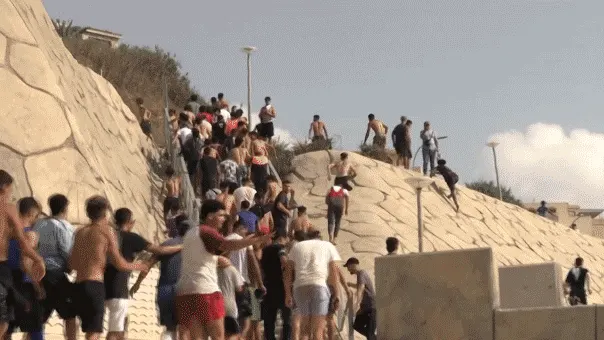
Italy temporarily reintroduced border checks for travellers arriving from Spain as a large migrant crossing into Spain’s North African enclave of Ceuta intensified. The move tests Europe’s Schengen open-border system and underlines concerns that pressure at one external border could prompt wider restrictions on free movement.
The article says Spain deployed military forces after more than 49,000 migrants reportedly crossed into Ceuta in a single day. Italy’s checks were introduced on Friday and described as temporary, amid growing political and security concern over the scale of the arrivals.
In short
- Italy restored temporary checks on travellers from Spain.
- A mass migrant crossing overwhelmed Spain’s Ceuta enclave.
- The crisis is testing Europe’s passport-free Schengen area.
Steelman: both sides, in good faith
The strongest fair case each way — we don't pick a winner.
The case for
Italy's temporary border checks reflect legitimate concerns about managing large migratory pressures and ensuring security screening capacity when neighbouring states face sudden surges. Reintroducing border controls during acute crises allows a country to coordinate with partners, verify arrivals, and address genuine public safety and administrative capacity constraints, whilst remaining compatible with the broader Schengen framework and principles of cooperation.
The case against
Reintroducing border checks, however temporarily, sets a corrosive precedent that undermines the Schengen system's foundational principle of free movement. Each invocation during a crisis normalises bilateral controls further, gradually fragmenting European integration and returning to pre-unity approaches. The proper solution requires collective EU responsibility for external border management and burden-sharing migration policy, not unilateral national closures that pit member states against one another.
Explained simply
Ceuta is a Spanish territory on the coast of North Africa, separated from mainland Spain by the Mediterranean Sea. Its location makes it one of the routes people use to try to enter the European Union from Africa.
Italy and Spain are both members of the Schengen area, where most travellers can cross between participating countries without routine checks at internal borders. Countries can temporarily restore checks in exceptional circumstances, but doing so can affect movement across Europe.
Spain is responsible for managing its borders, while Italy and other European countries share the wider consequences of migration and rules on free movement. The issue matters because pressure at the EU’s external borders can lead governments to weigh border controls against keeping travel between European countries open.