Spain deploys troops after deadly Ceuta migrant crossing
Developed over time first seen 2 months ago
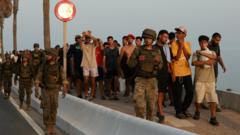
Thousands of migrants crossed from Morocco into Ceuta, Spain's North African exclave, in what officials described as an unprecedented mass migration event. The crossing left at least 67 people dead, with bodies recovered from the sea during the emergency response, prompting Spain to deploy military and police units to regain control of the border and return the majority of migrants to Morocco.
The episode produced significant diplomatic and political fallout. The US State Department raised its travel advisory for Ceuta to Level 3, "Reconsider Travel", reflecting international concern over the security situation, while the crisis reignited longstanding disputes across Europe over migration policy, exposing the strain placed on frontier nations such as Spain and deepening political divisions over how to manage mass border crossings.
- Mass crossing into Ceuta left at least 67 migrants dead
- Spain deployed military and police to restore border control
- US issued travel warning; crisis fuelled EU migration policy rifts
New here? Start with this
Migration into Ceuta, a small piece of Spanish territory on the North African coast, has long been a flashpoint because it shares a land border with Morocco and offers a route into the European Union without crossing open sea to mainland Spain. Ceuta's fenced perimeter is regularly the site of attempts by migrants, many from sub-Saharan Africa, to reach EU soil, and relations between Spain and Morocco over border control there have fluctuated depending on diplomatic ties between the two countries.
The key parties in this story are the migrants attempting the crossing, Spanish authorities (including police and military, who are responsible for securing the border), and the Moroccan government, which controls the territory surrounding the enclave and has a role in managing departures from its side. The European Union more broadly is also involved, since Ceuta's border is effectively an external EU frontier, and migration policy there has repeatedly exposed disagreements among member states about how responsibility should be shared.
This matters because events at Ceuta tend to have consequences well beyond the immediate area, affecting Spanish-Moroccan relations, EU-wide debates over asylum and border policy, and international perceptions of safety in the region, as reflected in changes to travel guidance from other governments.
Both sides, in good faith
The strongest fair case each way — we don't pick a winner.
The case for
Advocates of a firm border response argue that Spain has both the right and the responsibility to control its territory, and that failing to do so risks further loss of life by encouraging more people to attempt dangerous crossings. They contend that swift, organised deployment of police and military prevented chaos, protected the local population, and upheld the rule of law and the integrity of the EU's external border, which many member states depend upon. On this view, orderly, controlled migration channels are the safest and fairest system, both for host communities and for migrants themselves, and mass unauthorised crossings undermine trust in that system.
The case against
Advocates for a more humanitarian approach argue that the deaths of at least 67 people during the crossing represent a catastrophic failure that should prompt reflection on why so many were driven to risk their lives, and that militarised responses treat a human tragedy primarily as a security problem. They emphasise that many crossing are fleeing conflict, poverty or persecution, and that European nations, given their wealth and historical ties to the region, bear a moral obligation to provide safe, legal routes to asylum rather than mass pushbacks, which critics argue can violate international non-refoulement protections. On this view, genuine border security should be paired with compassion and due process, not achieved by escorting the majority of arrivals back across the border with limited individual assessment.
Coverage
- BBC World — How Spain’s migrant crisis created a political storm – whipped up by social media
- Fox News — State Department raises travel warning for part of Spain as migrant surge sparks military deployment