Miliband says UK and US are ‘closest allies’ but ducks questions on Trump criticism
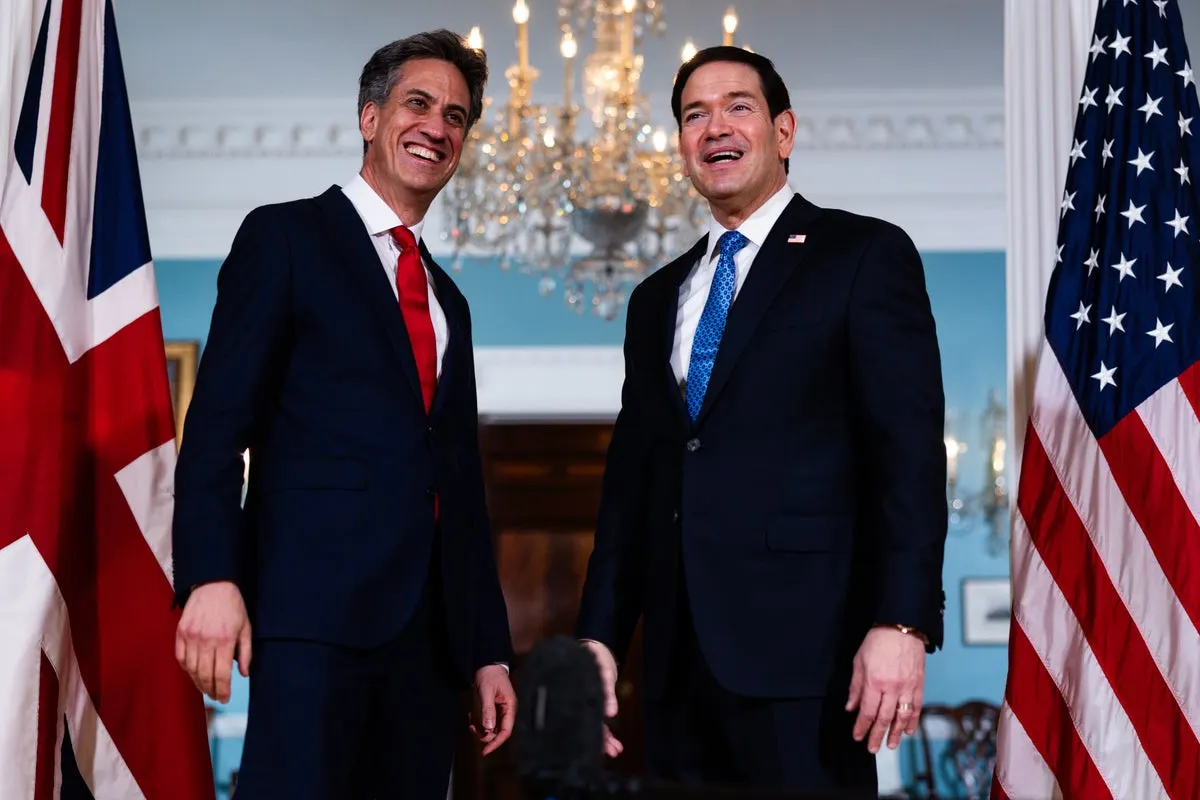
Ed Miliband held talks with US Secretary of State Marco Rubio in Washington, describing the UK and US as "the closest of allies," but avoided answering reporters' questions about his past description of Donald Trump as "an idiot, a racist and a misogynist." The meeting was closely watched given reported White House unease over Miliband's appointment as Foreign Secretary, given his record as a strong net-zero advocate clashing with Trump's pro-fossil-fuel stance, and came against a backdrop in which the US ambassador to the UK had recently said Miliband was "wrong" to have called Trump racist and misogynistic in 2016.
The two discussed reopening the Strait of Hormuz, whose disruption has driven up fuel and food prices, alongside the war in Ukraine and the situation in Gaza. Miliband's statement was warm, thanking Rubio for a "productive meeting" and stressing shared Nato commitments, but Rubio's own account was notably cooler, omitting any mention of the "special relationship" and simply listing topics discussed, including the need for Europe to take greater responsibility for its own security. Separately, Miliband is also meeting World Bank president Ajay Banga during his visit, having recently been given the UK's seat on the bank's board.
In short
- Miliband called UK-US ties "closest of allies" after meeting Rubio
- He dodged questions on past insults he'd made about Trump
- Rubio's response was cooler, omitting "special relationship" language
Steelman: both sides, in good faith
The strongest fair case each way — we don't pick a winner.
The case for
Miliband was right to focus on current cooperation rather than relitigate past comments, as effective foreign policy requires maintaining working relationships on matters of shared strategic interest, including NATO, Ukraine, and the Middle East. The UK-US relationship is vital for both nations, and dwelling on old political statements would be counterproductive when both countries face pressing shared challenges that demand practical collaboration and diplomatic pragmatism.
The case against
Miliband should have directly addressed his past remarks, as avoiding the question appears evasive and undermines political integrity. If he genuinely believed those criticisms were justified, declining to stand by them suggests that diplomatic convenience outweighs principle. Democratic accountability requires clear explanation of one's positions, and foreign relations should be conducted with transparency rather than papering over past statements to smooth relations with any administration.
Explained simply
The UK and the US are long-standing partners and both belong to Nato, the military alliance in which members pledge to support one another if attacked. Their governments often work together on security and diplomacy, though they can disagree over policies and priorities.
Ed Miliband is the UK’s foreign secretary, responsible for relations with other countries. He has also been a prominent supporter of action to cut greenhouse gas emissions, while Donald Trump has backed expanding fossil-fuel production. Marco Rubio is the US secretary of state and leads US diplomacy; the World Bank, which Miliband is also visiting, lends money to support development in countries around the world.
The Strait of Hormuz is a narrow sea route used to transport much of the world’s oil and gas. Disruption there can affect energy supplies and prices, with knock-on effects for food and other costs. Ukraine and Gaza are also major conflicts that have drawn international diplomatic attention.
Americas Art Culture Entertainment Music Politics UK World