World news and discussion on TalkFuse.
Millions of Americans face flash flood threats as rain set to pound parts of Atlantic coast
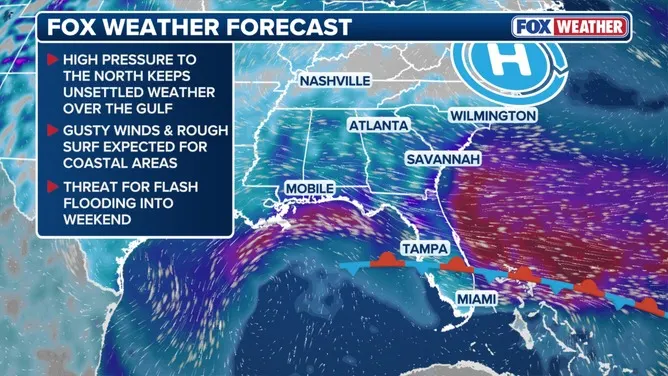
Millions of people on Florida’s Atlantic coast face a flash flood threat this week as a slow-moving weather disturbance brings repeated downpours. The risk is significant because forecasters say the atmospheric pattern resembles one that produced historic flooding in Brevard County earlier this month.
A level 2 out of 4 flood risk is in place from Jacksonville to Miami from Tuesday through Friday, with parts of Brevard County under a level 3 risk on Wednesday. Widespread rainfall of 4 to 6 inches is possible, with local totals above 8 inches; rough seas and dangerous rip currents are also expected. The system may develop into a coastal storm by Saturday, bringing further heavy rain and strong winds to parts of the Southeast coast.
In short
- Florida’s Atlantic coast faces repeated downpours and flash flood risks this week.
- Rainfall could reach 4 to 6 inches, with local totals above 8 inches.
- Rough seas and dangerous rip currents are also forecast.
Explained simply
Florida’s Atlantic coast lies between the ocean and low-lying areas that can drain slowly, so prolonged heavy rain can overwhelm roads and drainage systems. Flash floods can develop quickly, making streets unsafe and disrupting travel and daily life.
Forecasters describe flood risk on a four-level scale, with higher levels indicating a greater chance of widespread impacts. Brevard County, on Florida’s east coast, has recently experienced historic flooding; repeated downpours can raise rivers and flood areas already saturated by earlier rain.
The same weather can make coastal waters hazardous, with rough seas and rip currents that can pull swimmers away from shore. A coastal storm is a weather system near the coast that can bring heavy rain and strong winds.