Business news and discussion on TalkFuse.
Misty-eyed Burnham gambles on closer ties with EU as he throws down gauntlet to Tories and Reform
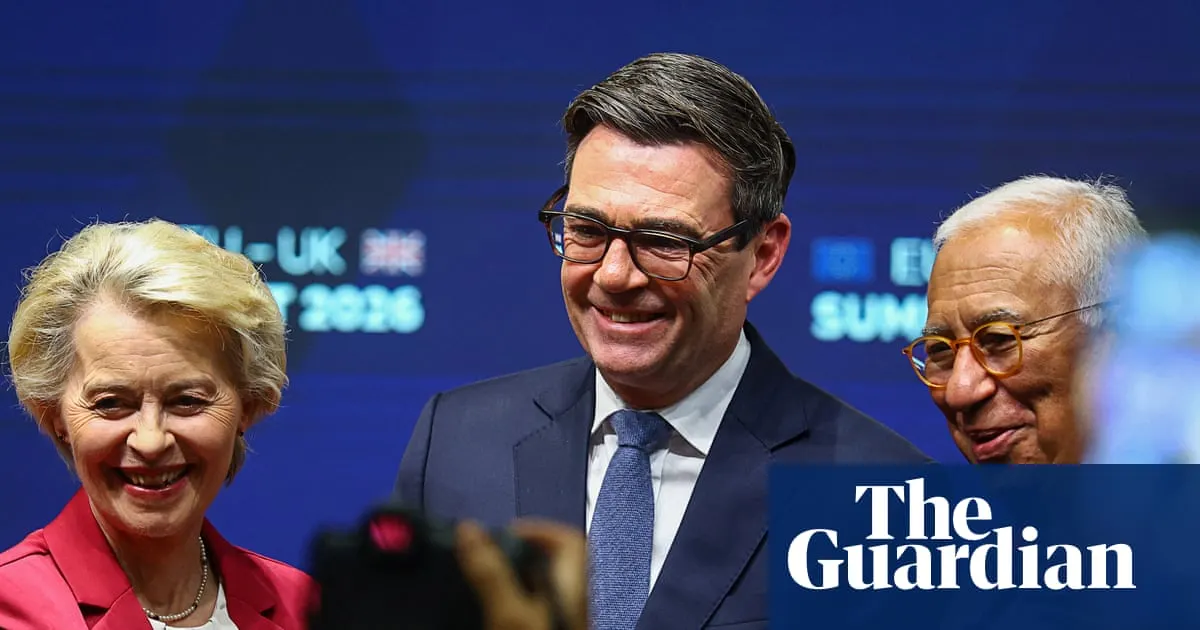
Andy Burnham used a UK-EU summit in Brussels to promote closer ties, presenting agreements on food checks, emissions trading and youth exchanges as a way to lower costs and support economic growth. He said the package could add 0.5% to annual growth in the long term and challenged the Conservatives and Reform UK to explain why they would reject it.
Burnham framed the youth scheme as offering opportunities to young people whose choices were curtailed by Brexit and Covid, while avoiding firm discussion of possible future EU membership. A constituency-level survey found that voters in 274 of the 394 seats estimated to have backed Leave in 2016 would now support rejoining. Reform leader Nigel Farage criticised the plan, and the Brexit group Stay Out claimed rejoining would cost £750m a week.
In short
- Burnham pitched closer EU ties as an economic boost.
- He said the package could add 0.5% to annual growth.
- A survey found 274 former Leave seats would back rejoining.
Steelman: both sides, in good faith
The strongest fair case each way — we don't pick a winner.
The case for
Closer practical ties with the EU could reduce trade friction, support growth and give young people more opportunities, while agreements on food checks and emissions trading may deliver benefits without reopening the full membership question. Supporters can argue that changing public opinion and the estimated economic gains justify testing whether deeper cooperation serves the national interest.
The case against
Critics can argue that closer integration risks renewing obligations and constraints associated with EU membership, and that projected growth gains may be uncertain or unevenly shared. They may also see youth exchanges and sectoral agreements as steps towards rejoining without a clear public mandate, and question whether the potential benefits justify the costs and reduced national discretion.
Explained simply
The UK left the European Union in 2020, after a 2016 referendum in which a majority of voters chose to leave. Since then, the UK and EU have agreed new arrangements for trade and cooperation, while debates continue over the costs and benefits of closer ties.
Andy Burnham is a senior Labour politician and mayor of Greater Manchester. The European Union is a political and economic union of European countries; Nigel Farage leads Reform UK, while the Conservatives are one of Britain’s main political parties. UK-EU arrangements can affect businesses, workers and young people, as well as the rules governing trade and travel.
The debate also reflects disagreement over what voters want after Brexit. Polls and estimates about public opinion can vary according to how they are conducted, and claims about the economic effects of closer ties depend on assumptions about future policy and growth.
Business Economy Europe Politics UK World