World news and discussion on TalkFuse.
Moldova outpaces Ukraine on new EU membership roadmap
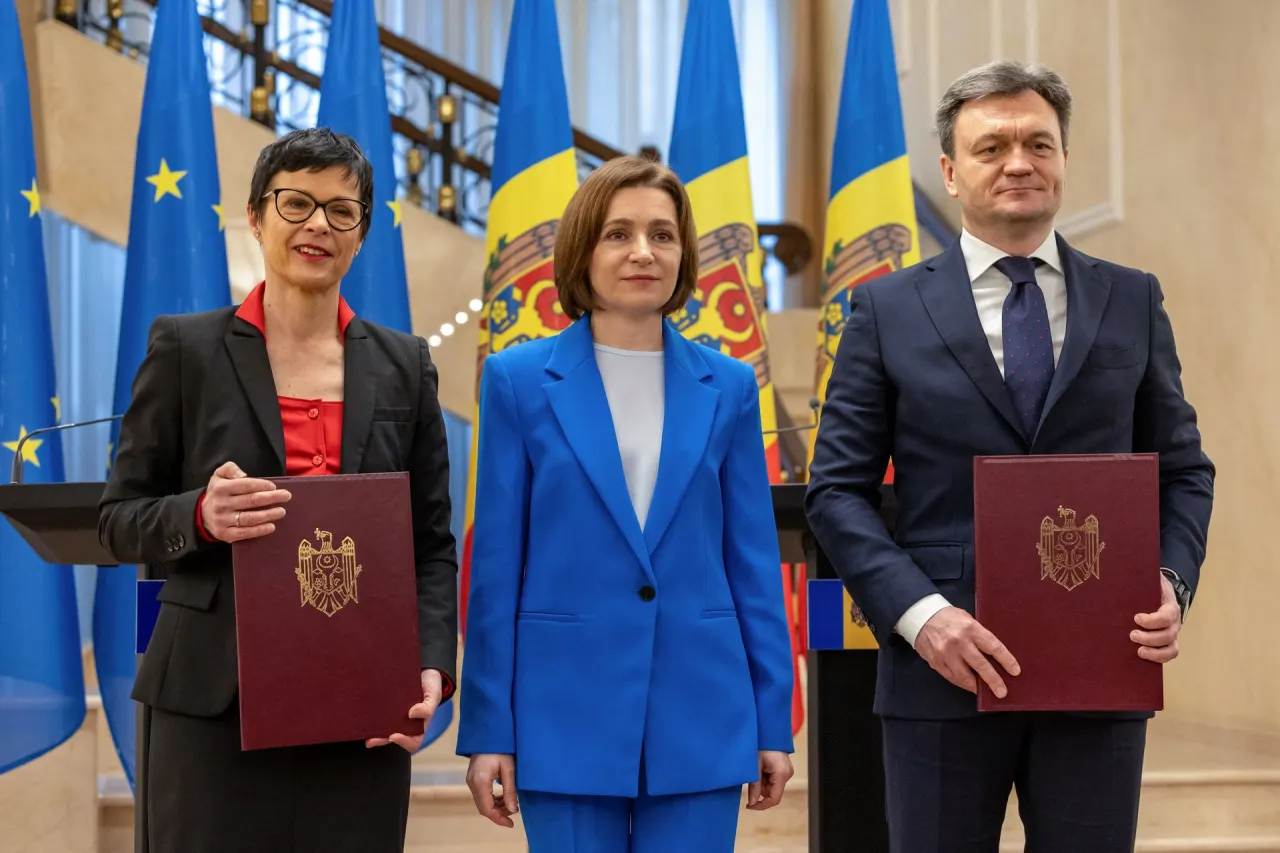
European Commission roadmaps show Moldova progressing faster than Ukraine towards EU membership, potentially ending the two countries’ practice of advancing their bids together. Moldova aims to conclude accession negotiations by early 2028, while Ukraine expects to finish by the end of that year; the Commission supports both targets but says Ukraine must speed up reforms.
Moldova began a joint rule-of-law task force in July 2026 and has made substantial progress on interim benchmarks needed before closing negotiation chapters. Ukraine launched its task force in October, and the Commission estimates it could close seven of 33 chapters in 2027, compared with 24 for Moldova. Ukraine’s reform pace slowed over the past year but has recently picked up, and the Commission says EU enlargement is advancing faster than at any point in 15 years.
In short
- Moldova is ahead of Ukraine on EU accession reforms.
- The Commission estimates Moldova could close 24 chapters in 2027.
- Ukraine could close seven, though its reform momentum has recently accelerated.
Steelman: both sides, in good faith
The strongest fair case each way — we don't pick a winner.
The case for
Separate timelines could recognise that Moldova and Ukraine have made different rates of progress and give each a clearer, merit-based path to membership. Moving Moldova’s negotiations forward as benchmarks are met may also reinforce reform incentives and show that enlargement can advance despite difficult circumstances.
The case against
Keeping the bids closely aligned could preserve a sense of shared European purpose and avoid making Ukraine’s slower progress appear to diminish its exceptional effort during wartime. A faster timetable for Moldova may also create pressure to prioritise speed over careful scrutiny, so supporters of a joint approach could favour comparable standards and close coordination for both countries.
Explained simply
Moldova and Ukraine are neighbouring countries that have both applied to join the European Union. EU membership talks assess whether a country’s laws, institutions and economy meet the bloc’s rules; the process involves negotiating many separate policy areas before members agree to admit a new country.
The European Commission assesses progress and sets out reforms each country needs to make, while EU member states must ultimately approve the steps towards membership. Rule-of-law reforms, including the independence of courts and efforts to tackle corruption, are among the issues under scrutiny.
The two countries have often been treated as a pair in their EU bids, but each is assessed on its own progress. Their paths matter to the EU’s future enlargement and to how it builds closer ties with countries on its eastern borders.