World news and discussion on TalkFuse.
Officer’s mother angered as Newsom commutes 548 death sentences
Developed over time first seen 1 day ago
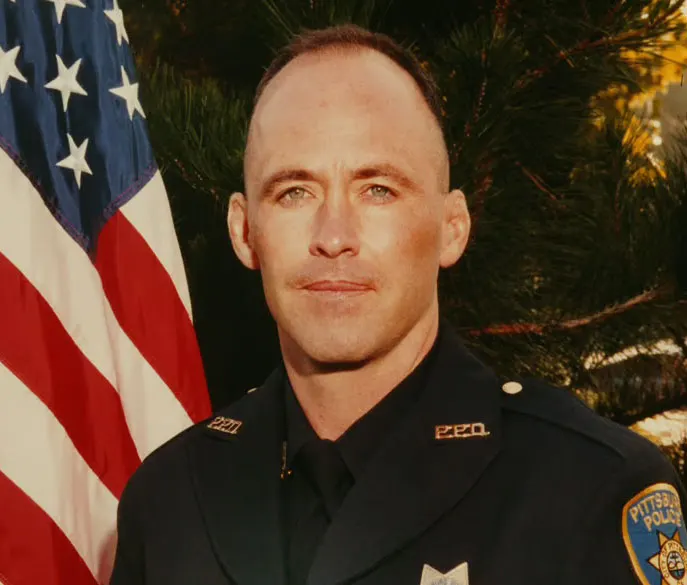
California Governor Gavin Newsom commuted the death sentences of all 548 people on the state’s death row, a decision that has deeply upset some victims’ families. Phyllis Loya, whose son was a police officer killed in 2005, said the move left her angry and retraumatised, and accused Newsom of overlooking victims’ families.
Larry Lasater was shot while trying to arrest two robbery suspects in Pittsburg, California. Alexander Rashad Hamilton was sentenced to death for the killing and will now serve life without parole; Loya said she lacks confidence that the justice system will maintain that punishment. Lasater, a Marine Corps veteran who had served with the Pittsburg Police Department for five years, died before his son was born, and Loya recalled that a sonogram was buried with him.
- Sources
- 2
- Outlets
- 2
- Left · Centre · Right
- 0 · 0 · 2
In short
- Newsom commuted all 548 California death sentences.
- Phyllis Loya says the decision reopened the pain of her son’s killing.
- Her son, officer Larry Lasater, was killed in 2005.
How this story developed
- 18 hours ago Loya said she believed Newsom was pursuing political ambitions at victims’ families’ expense, and recalled that her grandchild was born two and a half months after Lasater’s death.
- 24 hours ago Further reporting noted that Newsom had halted executions in California in 2019 and that voters had backed retaining the death penalty, while Loya questioned whether her son’s killer would remain in prison for life.
- 1 day ago Gavin Newsom commuted the death sentences of all 548 people on California’s death row, drawing anger from Phyllis Loya, whose son, police officer Larry Lasater, was killed in 2005.
Full account
California Governor Gavin Newsom has moved to commute the death sentences of all 548 people on the state’s death row, changing their punishments to life imprisonment without the possibility of parole. He said the decision reflected his belief that the state should not carry out executions. The scale of the action has drawn national attention: California has the largest death row in the Western Hemisphere, and the move is described in one report as the biggest mass clemency of its kind in the United States.
For Phyllis Loya, whose son Larry Lasater was killed while serving as a police officer in Pittsburg in 2005, the announcement brought anger and renewed grief. Lasater was shot while pursuing suspects linked to robberies; Alexander Rashad Hamilton, whom police said had hidden in a bush, was convicted of his killing and sentenced to death. Loya said she learnt of the commutation while leaving a gym with friends and described the news as devastating. The account focuses on the impact on her family and her sense that victims’ relatives had been overlooked.
Loya questioned Newsom’s explanation for the decision and suggested it was politically timed, pointing to his national ambitions and the recent midterm elections. She also recalled that he had said during his first campaign for governor that he would respect voters’ wishes on capital punishment. California voters have retained the death penalty in ballot measures, while Newsom imposed a moratorium on executions in 2019. Loya said the clemency decision compounded the distress of years of court appearances connected with her son’s case.
Newsom’s stated position is that the state should not kill, even where a prisoner has committed a brutal crime; under the commutations, those prisoners would remain in prison for life. The broader report also notes that the death penalty remains part of California law and that future administrations could resume executions unless the law changes. It cites a Los Angeles County prosecutor’s commitment to continuing to assess eligible cases, and places Newsom’s decision within a wider pattern of governors granting large-scale clemency.
Where outlets differ
From the full account, which is AI-written from the sources:
The California Post report centres on Loya’s personal response, her criticism of Newsom and the lasting effects of her son’s killing. GB News gives more space to the policy and political setting, including Newsom’s stated moral objection, California’s death-penalty history, the prosecutor’s response and comparisons with other states.
The reports describe the legal effect differently in emphasis: GB News presents the commutations as covering all 548 condemned prisoners, while the Associated Press account says the state Supreme Court must approve clemency in hundreds of cases. The source reports supplied here do not address that qualification.
GB News adds discussion of a failed execution in Tennessee as part of the wider debate over capital punishment. The California Post account instead concentrates on Loya’s grief and her allegations about the governor’s motives. The supplied California Post text ends mid-sentence, so it does not provide a complete account of her comments about the killer’s future sentence.
Steelman: both sides, in good faith
The strongest fair case each way — we don't pick a winner.
The case for
Supporters of the commutations can argue that replacing death sentences with life without parole preserves severe punishment while avoiding executions, which they regard as irreversible and unjustly applied. They may see the decision as a principled use of executive power, consistent with Newsom’s longstanding opposition to capital punishment, while recognising the profound grief and fear it causes victims’ families.
The case against
Opponents can argue that commuting every sentence disregards the seriousness of the crimes and the judgments reached in individual cases, as well as California voters’ past decisions to retain capital punishment. For families such as Loya’s, the change may reopen trauma and weaken confidence that a sentence of life without parole will be honoured; they may also see a blanket decision as failing to give victims’ families meaningful consideration.
Explained simply
California has the largest death row in the United States, though the state has not carried out an execution since 2006. In 2019, Governor Gavin Newsom halted executions; a commutation changes a death sentence to a lesser sentence but does not release the prisoner.
Larry Lasater was a California police officer killed in 2005 while trying to arrest two robbery suspects. Alexander Rashad Hamilton was convicted of his killing and sentenced to death; after the commutation, his sentence is life in prison without the possibility of parole.
The case sits within a long-running debate over capital punishment in California, where voters have previously chosen to keep the death penalty. For families of people killed by those on death row, a change in sentence can carry personal as well as legal significance.
Coverage · 2 sources
Bias meters
From 2 rated sources.
Read the full article at the source →
Originally published by New York Post as “Mom of slain cop breaks down over Gavin Newsom’s mass commutation of death row killers”.