Moment dozens of migrants wade ashore on packed Spanish island beach after arriving on ‘taxi’ boat
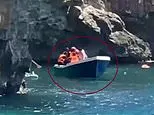
A boat carrying 26 migrants landed in broad daylight at the popular tourist beach of Cala Santanyí in Mallorca on Friday, prompting lifeguards and Guardia Civil officers to intervene as sunbathers looked on. The arrival was one of four such landings in Mallorca and Formentera within a few hours, highlighting the scale and frequency of irregular migration reaching the Balearic Islands via small boats, often described locally as "taxi" boats. Officials warn the islands are struggling to cope with the volume of arrivals, which is placing growing strain on local resources and emergency services.
The boat, carrying 20 men and six women, reached the beach at around 1.55pm, with some passengers wading ashore and others scrambling over rocks before being helped by lifeguards; all 26 were reported to be in good health. The four boats that day brought the total to 75 arrivals on Friday alone, followed by a further 72 migrants across five boats on Saturday, and roughly 100 more in the preceding 24 hours, according to the Mallorca Island Council. Figures from Spain's Interior Ministry show 274 small boats carrying 5,095 migrants have reached the Balearic archipelago so far this year, prompting council president Llorenç Galmés to warn that Mallorca "cannot continue dealing alone" with a situation exceeding its capacity. The report also referenced the wider migration crisis in the Spanish enclave of Ceuta, where tens of thousands crossed in July and ongoing tensions have led to violence, sexual assaults and clashes with residents.
In short
- Boat of 26 migrants landed at busy Mallorca tourist beach on Friday
- Four boats, 75 migrants arrived in Mallorca/Formentera that day alone
- Over 5,000 migrants have reached the Balearics by small boat this year
Steelman: both sides, in good faith
The strongest fair case each way — we don't pick a winner.
The case for
Those arguing for a stronger, coordinated response say repeated arrivals are placing real pressure on island services and can create safety risks for migrants, residents and beachgoers. They argue that Spain and the wider European Union should share responsibility, improve reception capacity and enforce migration rules so that local communities are not left to manage the situation alone.
The case against
Those cautioning against a primarily restrictive response argue that people arriving by boat may be fleeing danger or seeking a safer life, and should receive humane treatment and a fair assessment of their circumstances. They say the strain on Mallorca is a reason to expand reception support and share responsibility across regions, while avoiding language or policies that treat migrants as a threat or overlook their rights.
Explained simply
The Balearic Islands are a Spanish archipelago in the Mediterranean, including Mallorca and Formentera. Migrants reach them in small boats, sometimes called “taxi boats” because they carry people across the sea; the term does not mean they are licensed taxis.
Spain’s Interior Ministry records arrivals, while local authorities such as the Mallorca Island Council deal with needs on the islands. The Guardia Civil is Spain’s national police force, and lifeguards may also assist when boats reach beaches.
The issue matters because the crossings require emergency responses and support for people arriving, putting pressure on local services. It also raises questions about how responsibility and resources are shared between island, regional and national authorities.