Politics news and discussion on TalkFuse.
Moment Putin warship opens fire off Plymouth as Royal Navy ups its campaign against the Russians menacing British waters
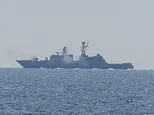
Newly released images show the Russian frigate Neustrashimy firing its guns during a live-fire exercise 40 miles off Plymouth on 20 July, prompting the Royal Navy to step up monitoring of Russian naval activity in UK waters. The drill took place a day after Andy Burnham became Prime Minister and is thought to have been intended as a signal to him, though it occurred in international waters and was pre-notified to the shadowing British patrol vessel. The incident is part of a wider pattern of Russian naval movements near Britain linked to escorting Moscow's "shadow fleet" oil tankers, which the Royal Navy says it is responding to with increased surveillance.
Neustrashimy was shadowed throughout by the offshore patrol vessel HMS Tyne, which moved to a five-nautical-mile distance after being warned of the gunnery exercise, while a French military aircraft and French naval assets also tracked the frigate. The roughly 30-minute exercise involved around 20 shots from the ship's 100mm gun and its 30mm battery. It followed a June incident in which Royal Marine Commandos boarded the Russian shadow fleet tanker Smyrtos off Dorset, the first such UK operation. The Royal Navy said its monitoring activity has risen 25% in the first seven months of 2026 compared with 2025, with vessels including HMS Tyne, HMS Somerset, HMS Mersey and HMS Severn, alongside Wildcat and Merlin helicopters, spending three weeks tracking Russian movements last month.
In short
- Russian frigate fired live rounds 40 miles off Plymouth on 20 July.
- Royal Navy shadowed the ship and says it's increasing Russian-tracking operations.
- Follows June boarding of a Russian "shadow fleet" oil tanker off Dorset.
Steelman: both sides, in good faith
The strongest fair case each way — we don't pick a winner.
The case for
Russia is conducting deliberate military operations in proximity to British waters whilst supporting sanctions-busting through its shadow fleet, creating a pattern of coordinated pressure designed to test British resolve and regional stability. The exercise's timing—announced just after a new Prime Minister took office—suggests strategic messaging intent. Britain's escalated monitoring represents a justified defensive response to sustained Russian activity that blends military signalling with economic sanctions evasion.
The case against
The Russian frigate performed a standard military exercise in international waters with proper advance notification to the shadowing British patrol vessel, which maintained safe distance throughout. All major navies conduct routine gunnery drills, and Russia's lawful operations in international waters reflect legitimate security interests unrelated to any hostile intent. Portraying such exercises as 'menacing' represents Cold War-era threat inflation rather than objective security analysis of actual deliberate hostile conduct.
Explained simply
Russia’s navy operates in international waters close to Britain, where its ships can conduct exercises while being watched by British and allied forces. The Royal Navy uses patrol ships and aircraft to track these movements and keep a record of activity around UK waters.
The Neustrashimy is a Russian frigate, a type of warship, and HMS Tyne is a British offshore patrol vessel. Russian naval ships have also been linked to escorting oil tankers known as the “shadow fleet”, which carry Russian oil under complex ownership or registration arrangements.
The activity matters because Britain and its allies are monitoring Russian military movements and the ships connected to Russian oil exports. In June, Royal Marines boarded one such tanker off Dorset, in the first operation of its kind by the UK.
Elections Europe Fitness Government Health Politics UK World