Business news and discussion on TalkFuse.
More than 800,000 have applied for citizenship to new microstate aiming to become ‘utopia’ for crypto billionaires, founder claims
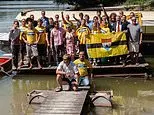
A Czech libertarian politician, Vit Jedlicka, says more than 800,000 people have applied for citizenship of "Liberland", a self-declared crypto micronation on an uninhabited stretch of disputed floodplain along the Danube River, between Serbia and Croatia. Founded in 2015 on the principle that unclaimed land belongs to whoever occupies it first, the project aims to build a blockchain-based libertarian state free of tax and government regulation, positioning itself as a haven for crypto entrepreneurs and billionaires.
The seven-square-kilometre territory currently has around 1,200 citizens, its own language, passports and a small navy, and is due to hold a congressional election later this month. Rather than taxation, residents make voluntary contributions using two cryptocurrency tokens, the Liberland Dollar and Liberland Merit, with donors ranked publicly via a badge system from Bronze to Diamond. Liberland remains unrecognised by other states, has limited infrastructure and around 200 registered companies, and joins a wider trend of wealthy figures backing micro-states and special economic zones, such as Peter Thiel-backed Prospera in Honduras.
In short
- Crypto micronation Liberland claims 804,000 citizenship applications
- Unrecognised territory on Serbia-Croatia border, founded 2015
- Aims to be tax-free, blockchain-run "utopia" for crypto wealthy
Steelman: both sides, in good faith
The strongest fair case each way — we don't pick a winner.
The case for
Supporters could argue that Liberland is a voluntary experiment in self-government, giving people a chance to test whether low taxes, limited regulation and blockchain tools can attract enterprise and enable new forms of public participation. They may see voluntary contributions and transparent donor recognition as alternatives to compulsory taxation, while valuing the freedom to build a community around shared principles.
The case against
Critics could argue that a state cannot offer meaningful self-rule without recognised sovereignty, secure rights and functioning public services, and that Liberland’s disputed territory and limited infrastructure leave those claims unresolved. They may also worry that replacing taxation with voluntary crypto contributions and donor rankings risks giving wealthy participants outsized influence, while a lightly regulated haven could shift costs or risks onto neighbouring states and less powerful residents.
Explained simply
Liberland is a self-declared state founded in 2015 by Czech politician Vít Jedlička on a small, disputed floodplain by the Danube, between Serbia and Croatia. Its founders say the land was unclaimed, but Liberland is not recognised as a country by other states.
Jedlička and his supporters want to build a state with little government regulation, funded by voluntary contributions rather than taxes. The project uses its own cryptocurrency tokens and has attracted people interested in crypto and libertarian ideas, though it has limited infrastructure and about 1,200 citizens.
Liberland is part of a broader interest among wealthy investors and entrepreneurs in creating small jurisdictions with different rules for business and government. How such projects operate matters because they raise questions about who can claim territory and how a state functions without recognition from other countries.