Technology news and discussion on TalkFuse.
Mathematician claims AI-assisted proof of Riemann Hypothesis, awaiting expert review
Developed over time first seen 24 hours ago
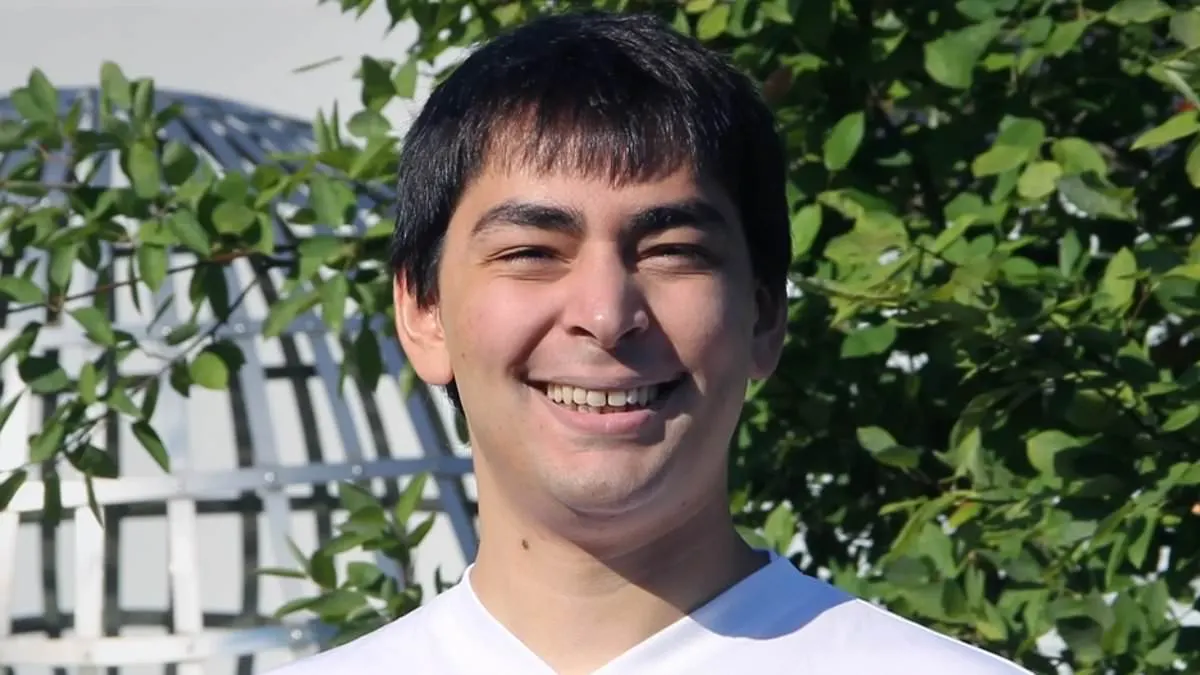
Dr Levent Alpöge says he has proved the Riemann Hypothesis with help from Anthropic’s Claude chatbot, a claim that could resolve one of mathematics’ most famous unsolved problems. The argument has not been independently verified, and experts must assess whether it is a valid proof.
Proposed by Bernhard Riemann in 1859, the hypothesis concerns a precise pattern in the distribution of prime numbers. Alpöge, 34, has published a version of his argument in Lean, software used to check mathematical proofs; the Clay Mathematics Institute has offered a $1 million prize for a solution since 2000. In July, Alpöge also attracted attention after claiming to find a counterexample to the Jacobian Conjecture.
- Sources
- 2
- Outlets
- 2
- Left · Centre · Right
- 1 · 0 · 1
In short
- Alpöge claims Claude helped him prove the Riemann Hypothesis.
- Experts have yet to verify the argument.
- A solution could claim a $1 million prize.
How this story developed
- 17 hours ago The latest account said experts would now assess whether Alpöge’s argument amounted to a valid proof.
- 23 hours ago The claim was reported as potentially resolving a problem open since 1859, with experts still to judge the Lean-encoded argument’s validity.
- 23 hours ago Dr Levent Alpöge said he had proved the Riemann Hypothesis with help from Anthropic’s Claude, though his claim had not been independently checked.
Where outlets differ
Left-leaning outlets 1
Only here: anthropic, solve, help, claude
Right-leaning outlets 1
Only here: assisted, proof, awaiting, expert, review
Every side used: mathematician, claims, riemann, hypothesis
Headline columns compared word for word; nothing in them is AI-written.
Steelman: both sides, in good faith
The strongest fair case each way — we don't pick a winner.
The case for
If Alpöge’s proof survives expert review, it would be a remarkable mathematical achievement, and using Claude to help develop it would show how AI can support difficult research. Encoding the argument in Lean could also make its steps more open to checking, while the claim merits serious examination given the hypothesis’s importance.
The case against
A Lean formalisation and AI assistance do not by themselves establish that the argument proves the Riemann Hypothesis; experts must verify both the reasoning and the formalisation. Caution is especially warranted before treating the claim as a breakthrough, since Alpöge has previously publicised a claimed counterexample to another longstanding conjecture and this proof has not yet been assessed.
Explained simply
The Riemann Hypothesis is a statement about the zeros of a function studied by mathematicians, and it is closely connected to how prime numbers are distributed. Prime numbers are numbers greater than one that cannot be divided exactly by any smaller whole number except one. The hypothesis has been open since 1859.
Dr Levent Alpöge is a mathematician who says he used Anthropic’s Claude chatbot while developing an argument for the hypothesis. He has written a version of the argument in Lean, software that can check whether formal mathematical steps follow from one another. A computer check can help verify the written proof, but experts still need to assess whether it establishes the full claim.
The Clay Mathematics Institute has offered a $1 million prize for a solution since 2000. A valid proof would settle a major question in number theory and could deepen mathematicians’ understanding of prime numbers.
Coverage · 2 sources
Bias meters
From 2 rated sources.
Read the full article at the source →
Originally published by Daily Mail as “Most famous unsolved maths riddle solved by AI giant Anthropic after 167 years”.