Politics news and discussion on TalkFuse.
Most sewage spills in England may be illegal, new research suggests
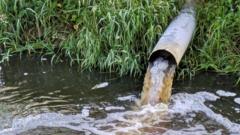
New analysis suggests that the majority of raw sewage discharges into England's rivers, lakes and seas over the past two years may have been illegal, despite going unpunished. Under UK law, sewage should not be released during "normal" weather conditions, but the Environment Agency has never publicly clarified what that threshold means, leaving campaigners to argue that water companies have been able to spill routinely without consequence. Water companies and the regulator have rejected the findings and say they are working to cut spill numbers.
The analysis, by retired academic and campaigner Prof Peter Hammond, drew on a definition of "heavy rain" contained in previously undisclosed court documents from a case against Southern Water. Applying this to data from more than 350 storm overflow outlets across all nine English water companies, serving over 30 million people, Hammond found that around 86% of sewage-spilling hours occurred without heavy rain, meaning those discharges could be unlawful; even the best-performing company had a potential illegality rate above 70%. The Environment Agency said the "heavy rain" definition applied only to Southern Water's sites and that rainfall thresholds vary regionally, though Hammond said adjusting for regional rainfall did not significantly alter his findings.
In short
- Analysis suggests 86% of sewage spill hours occurred without heavy rain
- Findings imply most spills may be illegal despite no punishment
- Water firms and Environment Agency dispute the analysis's validity
Steelman: both sides, in good faith
The strongest fair case each way — we don't pick a winner.
The case for
The analysis reveals that across all nine English water companies serving over 30 million people, approximately 86% of sewage discharges lacked the heavy rainfall that law permits as an exception, suggesting systematic illegality. If water companies can release sewage unlawfully without facing enforcement action, this represents a failure to uphold environmental protections and raises serious questions about corporate accountability for widespread pollution.
The case against
The Environment Agency and water companies argue that applying a definition from a single legal case to all regions and companies is methodologically flawed, as rainfall thresholds appropriately vary by geography and local conditions. They contend that regulatory compliance cannot be assessed through uniform statistical analysis, and that expert regulatory judgment—not academic re-analysis of court documents—provides the proper basis for determining whether discharges comply with the law.
Explained simply
England's nine water companies operate storm overflows that discharge raw sewage into rivers, lakes and seas when heavy rainfall overwhelms treatment systems. UK law allows these discharges during heavy rain but forbids them under normal weather conditions. However, the Environment Agency has never publicly defined what constitutes "heavy rain" or "normal" conditions, creating ambiguity about which discharges are lawful.
These storm overflows serve over 30 million people across more than 350 sites. Campaigners have raised concerns that the lack of clear definitions allows water companies to discharge sewage without facing enforcement action, while the Environment Agency has not publicly specified what rainfall levels qualify as heavy rain.
This matters because England's waterways are used for swimming, recreation and wildlife habitats. Clarifying what counts as heavy rain would make it possible to determine which current discharges are lawful and which may be illegal. The outcome affects public health, environmental protection and regulatory accountability.
Elections Politics Science UK World