World news and discussion on TalkFuse.
Moyes defiant as absent Friedkin leaves Everton in turmoil
Developed over time first seen 3 months ago
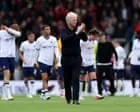
David Moyes has revealed he has never spoken to or met Everton's owner, Dan Friedkin, in the 20 months since returning as manager, an admission that exposed a striking disconnect at boardroom level just as the club's transfer window collapsed into disarray. The revelation intensified scrutiny of The Friedkin Group's commitment to Everton, amid claims the American ownership group is seeking fresh investment or even a sale, and capped a chaotic deadline-day saga that left Moyes with a significantly weakened squad heading into the season. Despite this, Moyes struck a defiant tone, insisting the turmoil could galvanise players and fans to achieve "something special".
Moyes said his main point of contact at the club is chief executive Angus Kinnear rather than Friedkin himself, though he expressed hope relations would improve "if we get to know each other more". The upheaval began when TFG moved to sell Harrison Armstrong to Nottingham Forest, a deal reversed only after a furious fan backlash, but the club went on to sell Iliman Ndiaye, Beto, Tim Iroegbunam and Nathan Patterson regardless, leaving Moyes's squad significantly thinner. TFG president Marc Watts serves as Everton's executive chair and Friedkin's son-in-law, Rishi Majithia, acts as the owner's day-to-day representative, underlining how removed Friedkin himself remains from daily club affairs. Moyes said he would only have returned to manage Everton, calling on supporters' anger to be channelled into backing the team through a weakened campaign.
- Sources
- 2
- Outlets
- 2
- Left · Centre · Right
- 1 · 1 · 0
In short
- Moyes has never spoken to or met Everton owner Dan Friedkin.
- Club sold several first-team players late in the transfer window.
- Moyes vows squad can still achieve "something special" this season.
How this story developed
- 3 months ago The story was restated with Moyes's rift with Friedkin reframed as him vowing to turn supporters' fury over the deadline-day exodus into a rallying force behind his depleted squad.
- 3 months ago David Moyes disclosed that in 20 months back in charge at Everton he has never once spoken to or met owner Dan Friedkin, a gap laid bare as the club's transfer deadline unravelled with the losses of Ndiaye, Beto, Iroegbunam and Patterson after an aborted Armstrong sale, though he vowed his weakened side could still do "something special".
Where outlets differ
Left-leaning outlets 1
Only here: defiant, absent, leaves, turmoil
Centre outlets 1
Only here: never, spoken, owner
Every side used: moyes, friedkin, everton
Headline columns compared word for word; nothing in them is AI-written.
Steelman: both sides, in good faith
The strongest fair case each way — we don't pick a winner.
The case for
Those sympathetic to Friedkin's arrangement would argue that modern football ownership does not require the owner to be a visible, hands-on presence, and that delegating day-to-day dealings to an experienced chief executive like Angus Kinnear is a legitimate, even sensible, governance structure. On this view, an owner's job is to set strategy, provide financial backing and appoint capable executives, not to personally manage relationships with the head coach, and judging commitment purely by personal contact overlooks the substantial investment already made in the stadium and squad rebuild. Fans and pundits demanding more visible engagement, they might add, risk conflating communication style with genuine intent, and a period of financial recalibration after heavy stadium spending is a prudent business decision rather than neglect.
The case against
Critics would counter that a manager going 20 months without a single conversation with his own club's owner, especially during a transfer window that saw key players sold and deals nearly collapse amid fan fury, reveals a troubling absence of accountability and care at the top. From this perspective, football clubs are community institutions as much as businesses, and an owner's detachment from the manager charged with delivering results sends a demoralising signal to players, staff and supporters who have invested emotionally and financially in the club. They would argue that speculation about fresh investment or a sale only compounds the concern, since it suggests the turmoil stems not from careful long-term planning but from disengaged or conflicted ownership prioritising financial manoeuvring over the football operation's stability.
Explained simply
David Moyes returned as Everton manager in January 2025, taking charge of a club that has struggled financially and on the pitch for several years. Everton is owned by The Friedkin Group, an American investment company led by Dan Friedkin, which bought the club from previous owner Farhad Moshiri. The club's day-to-day dealings with the manager are usually handled by chief executive Angus Kinnear.
Summer transfer windows are periods when football clubs can buy and sell players, and this year's window closed with Everton having sold several first-team players while bringing in comparatively little in return, leaving Moyes with a smaller squad than before. Any suggestion of distance between a manager and a club's owner, or of an ownership group reconsidering its investment, tends to unsettle supporters, since it raises questions about a club's direction and ambition.
This story matters because Everton are a well-supported Premier League club with a long history, and uncertainty over ownership intentions or transfer strategy can affect team performance, staff morale and fan confidence heading into a new season.
Coverage · 2 sources
Bias meters
From 2 rated sources.
Read the full article at the source →
Originally published by The Guardian as “Moyes reveals he has never spoken to Everton owner but is defiant after transfer blows”.