Musk fumbles the timetable for first Starship catch
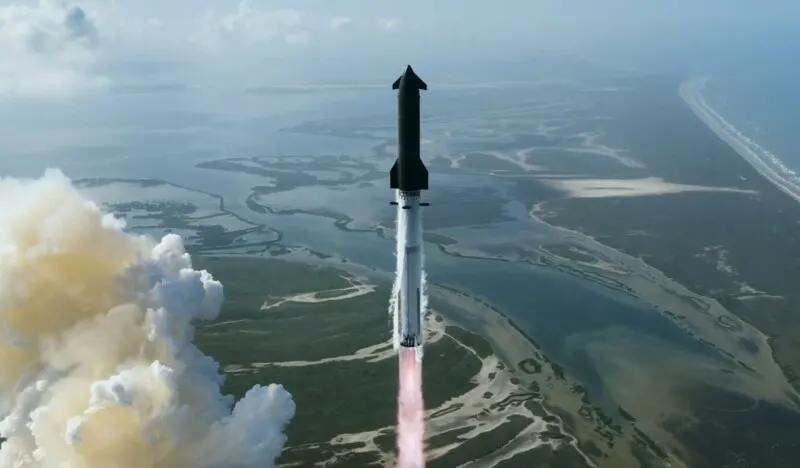
Elon Musk has scaled back his prediction for when SpaceX will first successfully catch a returning Starship upper stage, saying it will probably take "a few months" rather than happening on the next test flight as he had suggested during the company's first earnings call as a public firm. The reversal matters because catching Starship with the launch tower, rather than recovering it from the ocean, is central to the rapid, full-reuse model SpaceX has promised investors and is important for future missions requiring fast turnaround, including NASA's Artemis lunar programme.
Musk made the comments on X, noting that the ship would have been caught had a tower been waiting at sea where Starship splashed down last month; he also predicted the vehicle's first reflight would come by late this year or early next, a timeline the article notes should be treated cautiously given his track record on Starship deadlines. The update coincided with a SpaceX static-fire test of a single Raptor engine simulating a deorbit burn. On the last test flight, the Super Heavy booster made a hard splashdown while the upper stage survived an unexpectedly gentle landing in the Indian Ocean and had to be towed to port. SpaceX expects the next flight to reach operational orbit and deploy Starlink V3 satellites, with reliable orbital flights also seen as key to Artemis III, due in 2027.
- Musk delays expected timeline for first Starship catch by tower
- Earlier "next flight" prediction from earnings call now walked back
- Full reuse is central to SpaceX's investor pitch and NASA plans
New here? Start with this
SpaceX, founded by Elon Musk, is developing Starship, a large spacecraft designed to carry people and cargo beyond Earth. It has two parts: the Super Heavy booster, which lifts it off the ground, and the upper stage, called the ship, which continues into space.
SpaceX aims to recover and reuse both parts. The booster is designed to return to the launch site, while the company wants to catch the ship with the launch tower after it comes back through the atmosphere. Reusing the vehicles quickly could reduce the cost and time between launches.
Starship is also part of NASA’s plans to return astronauts to the Moon through the Artemis programme. Those missions depend on Starship becoming capable of regular, reliable flights, alongside other spacecraft and systems.
Both sides, in good faith
The strongest fair case each way — we don't pick a winner.
The case for
Advanced spaceflight development involves inherent uncertainty, and revising predictions based on actual test data reflects engineering prudence rather than failure. SpaceX continues making measurable progress—refining booster landings, improving Starship durability, and running engine tests that simulate real-world conditions. Attempting the catch before systems are fully matured could risk both vehicle and infrastructure; timeline adjustments are normal in developmental programmes and do not negate fundamental progress toward a fully reusable system.
The case against
SpaceX's repeated timeline revisions on core capabilities like the tower catch undermine credibility with public shareholders and government partners reliant on schedule commitments. The company explicitly promised investors that rapid reusability would commence on an accelerated timetable, and casual public revisions through informal channels raise questions about forecast quality and management discipline. Whilst technical iteration is expected, revising capability milestones suggests either unrealistic initial assessments or communication problems that could affect other critical commitments, including NASA contracts where schedule reliability is contractually significant.