World news and discussion on TalkFuse.
‘My grandmother subjected my baby to female genital mutilation behind my back’
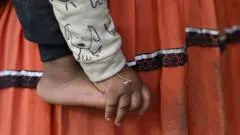
Colombia has become the first country in Latin America to outlaw female genital mutilation (FGM), after a bill banning the practice was passed unanimously by Congress last week. The move marks a milestone for campaigners, including activist Carla Quiñonez, whose own daughter was subjected to FGM as a baby by a family member without her knowledge, and who has since worked to end the secretive practice within her Emberá Indigenous community.
Quiñonez says her six-month-old daughter was left feverish, swollen and bleeding after the procedure, and that relatives insisted it was normal and should not be disclosed. She believes the practice, which is still carried out within parts of the Emberá community, has also been linked to unexplained infant deaths previously attributed to an "ancestral illness". Official figures recorded 240 cases of FGM in Colombia between 2020 and June 2026, mostly involving girls under six, though paediatrician Diana Ramos Mosquera, who has treated affected children in the Pereira region, believes this represents only "the tip of the iceberg" and is calling for better medical training to recognise and respond to it.
In short
- Colombia becomes first Latin American country to ban FGM
- Activist Carla Quiñonez's baby was cut without her consent
- Doctors say recorded cases likely understate the true scale
Explained simply
Female genital mutilation (FGM) means cutting or injuring a girl’s genitals for reasons that are not medical. It is usually carried out on children and can cause serious harm. In Colombia, the practice has been reported in parts of the Emberá Indigenous community, where it has sometimes been treated as a private family or cultural matter.
Carla Quiñonez is an Emberá activist whose baby daughter was subjected to FGM by a relative without her knowledge. She has since worked to raise awareness in her community, alongside health workers such as paediatrician Diana Ramos Mosquera, who treats affected children. Their work has highlighted concerns about girls’ safety, possible under-reporting and whether medical staff can recognise the signs and offer care.