Science news and discussion on TalkFuse.
Mysterious Mercury is about to get a visitor – after spacecraft’s eight-year epic voyage
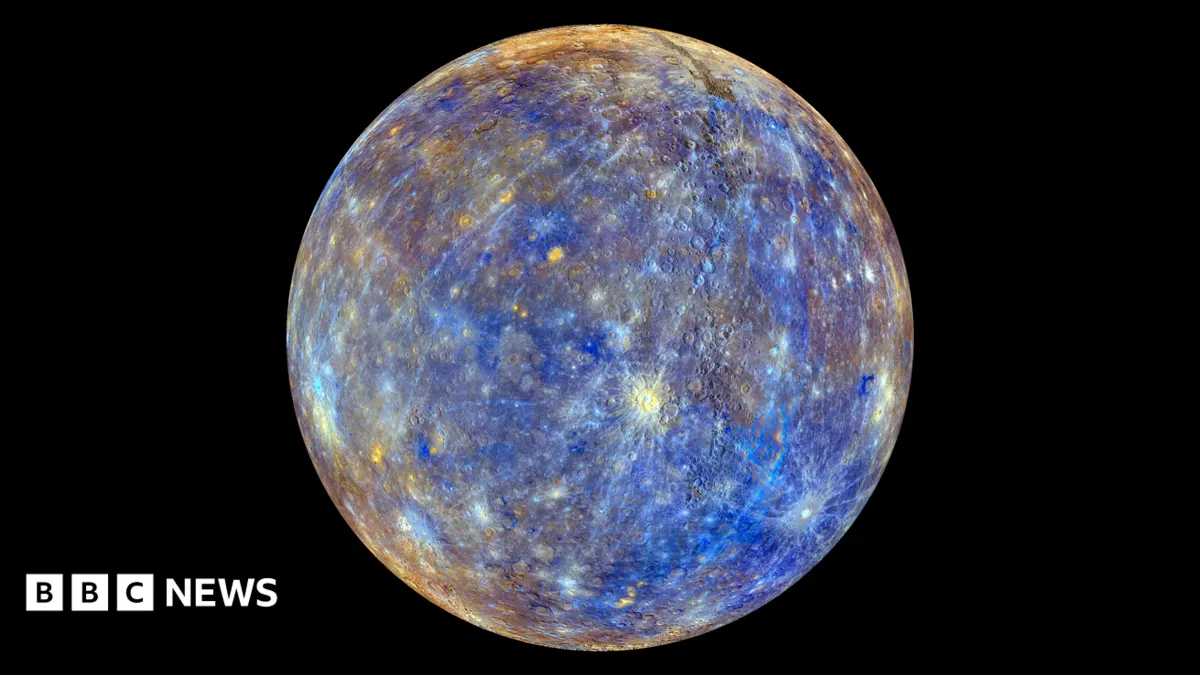
After an eight-year journey, the BepiColombo spacecraft is nearing Mercury, where it will spend at least a year investigating a planet that remains poorly understood. Its observations could help explain how Mercury formed and evolved, how it interacts with the Sun, and why it has features that challenge current understanding.
Launched in 2018, BepiColombo has travelled nearly six billion miles (10 billion kilometres), following a route that looped around Earth once, Venus twice and Mercury six times to slow down. A propulsion problem extended the trip by a year; the spacecraft must now make an 11-minute manoeuvre to enter orbit. Researchers hope to study ice in polar craters, thousands of young surface hollows and Mercury’s unusually large metal core.
In short
- BepiColombo is approaching Mercury after an eight-year voyage.
- The spacecraft must complete an 11-minute manoeuvre to enter orbit.
- Its observations may help explain Mercury’s ice, hollows and large core.
Explained simply
Mercury is the smallest planet in the Solar System and the closest to the Sun. It has a very large iron-rich core, an almost airless surface and extreme changes between day and night temperatures. Despite being nearby, it is difficult to study because spacecraft must cope with the Sun’s heat and gravity.
BepiColombo is a joint mission by the European and Japanese space agencies. It carries two orbiters designed to examine Mercury’s surface, interior and thin surroundings, including how the planet is affected by the solar wind, a stream of particles from the Sun.
Understanding Mercury may help scientists explain how rocky planets form and change over time. The mission will also investigate whether water ice can survive in permanently shadowed polar craters and how the planet’s unusual surface features developed.