NASA-IBM AI improves detection of lunar ice and craters
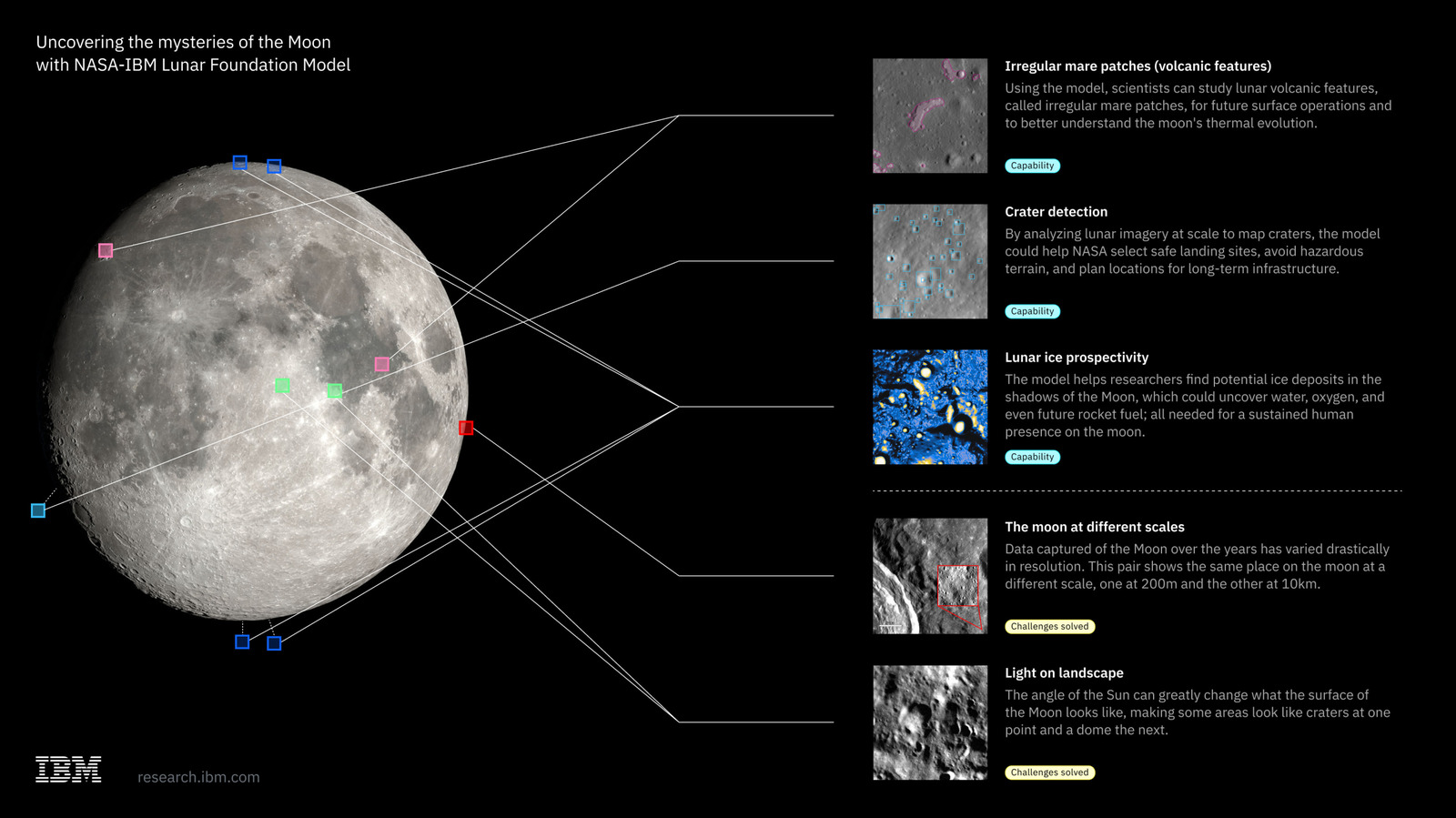
NASA and IBM have released an open-source AI system called the NASA-IBM Lunar Foundation Model, designed to help scientists study the Moon ahead of future Artemis missions. The tool, available on Hugging Face, is particularly effective at spotting potential ice deposits on the lunar surface and identifying and classifying craters, offering researchers a faster, more accurate way to analyse the Moon's terrain than existing methods.
In tests, the model cut errors in ice-detection predictions by 23% and outperformed Microsoft's SwinV2-B vision system by 19% at crater classification, while using half the training data. Its capabilities were demonstrated in practice when it correctly identified a new crater formed by a SpaceX Falcon 9 rocket that crashed into the Moon on 5 August, despite the crash site overlapping with an existing crater. Training the model proved difficult due to the Moon's harsh, shadow-heavy lighting conditions and the similarity between craters, problems IBM overcame by dividing the lunar surface into "wedges" to separate training and testing data. Alongside the model, NASA and IBM have published a large open-source dataset, drawn from tens of thousands of images and instrument readings from NASA's Lunar Reconnaissance Orbiter, for other researchers to build their own tools.
- NASA and IBM released an open-source lunar AI model
- It excels at spotting ice and classifying craters accurately
- Model correctly identified a new crater from a rocket crash
AI Art Culture Space Technology
Read the full article at the source →
Originally published by Engadget as “NASA and IBM made an AI model for exploring the Moon”.