Technology news and discussion on TalkFuse.
NASA asks Earthlings to wave as Voyager 1 reaches a light-day away
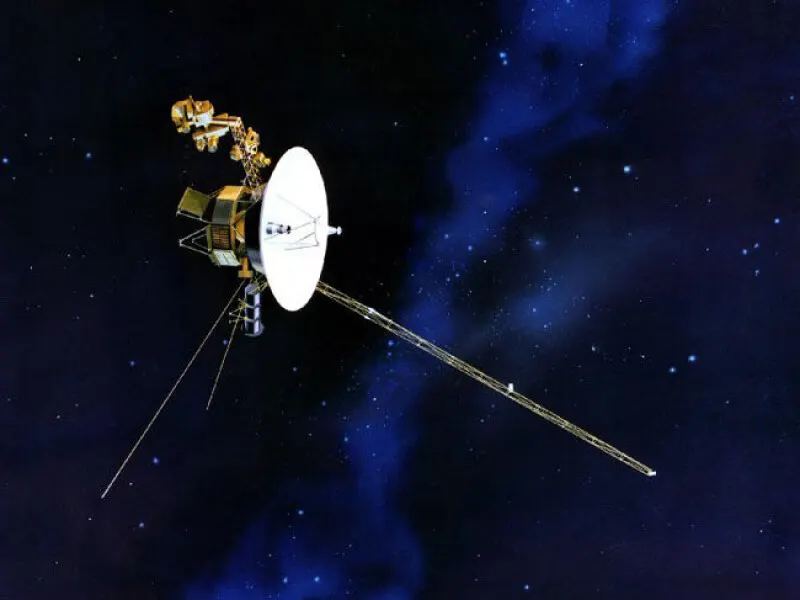
Voyager 1 is set to become the first human-made object to travel one light-day from Earth, a milestone NASA plans to mark with a public light display. The event highlights the probe’s remarkable longevity and its status as the most distant human-made object.
NASA expects the crossing at 10:16:07 UTC on 18 November, when Voyager 1 will be about 16.1 billion miles (25.9 billion kilometres) away. People are invited to flash “VGR” in Morse code after sunset on 17 November, using a torch or NASA’s website; Voyager cannot see the display, as its cameras were switched off decades ago. Its sibling Voyager 2 is not expected to reach the milestone for another nine years.
In short
- Voyager 1 reaches one light-day from Earth on 18 November.
- NASA invites people to flash “VGR” in Morse code.
- The probe’s cameras cannot see the symbolic display.
Explained simply
Voyager 1 is a robotic probe launched by NASA in 1977 to study the outer planets. It travelled past Jupiter and Saturn, sending back observations, before continuing out of the Solar System.
A light-day is the distance light travels in 24 hours: about 16.1 billion miles. Because signals travel at the speed of light, a message from Voyager 1 takes a full day to reach Earth, and a reply would take another day.
Voyager 1 and its twin, Voyager 2, carry instruments that send data back to Earth. Their long journeys have allowed scientists to study space far beyond the planets, though the probes have limited power and some equipment has been switched off over time.