NASA seeks industry bids for private stations to replace ISS
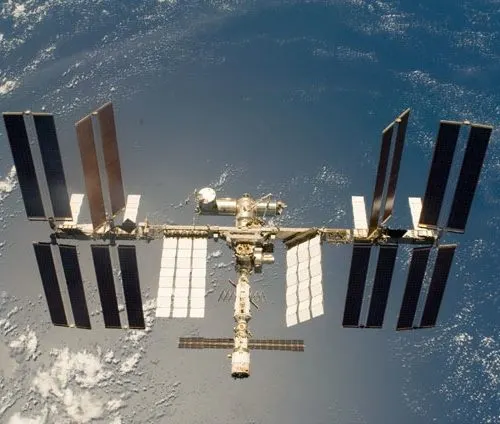
NASA has released a long-awaited request for proposals inviting the US commercial space industry to develop private space stations that could replace the International Space Station from 2030 onwards. The move reflects NASA's commitment to maintaining a human presence in low-Earth orbit for research, training, and preparation for lunar and Martian missions, whilst allowing the space agency to redirect resources towards more ambitious exploration goals. NASA Administrator Jared Isaacman emphasised that this transition is critical for American industry and space exploration.
The solicitation outlines a multi-phase competition with major players including Axiom Space, Voyager Space, and Vast Space expected to bid for Phase 1 funding of at least $100 million each. Recognising that SpaceX plans to retire its Crew Dragon when the ISS deorbits in 2030, NASA has taken the significant step of offering to fund crew transportation for the first four private station missions, estimated at $325 million per crew flight and $300 million per cargo flight. The space agency has also allocated $359 million to support Boeing's Starliner spacecraft certification to provide an additional transportation option. Industry responses are due 8 December, with final contractor selection in April.
- NASA seeks commercial partners to operate private space stations from 2030 onwards.
- Phase 1 winners will receive at least $100 million in initial funding.
- NASA will help fund crew transportation to ease the transition from the ISS.
New here? Start with this
The International Space Station is an orbiting laboratory where astronauts and cosmonauts have lived and worked continuously since 2000. It serves as a platform for scientific research, testing new technologies, and training crews for future missions to the Moon and Mars.
The ISS was designed to operate only until around 2030, and the ageing spacecraft cannot maintain operations indefinitely. NASA wants to keep a human presence in low-Earth orbit beyond that date for ongoing research and training, but operating the station is increasingly costly.
Private space companies, including several backed by experienced aerospace firms, are now developing their own commercial space stations. NASA's plan is to support this transition by funding transportation costs, allowing private companies to operate orbital stations whilst the space agency redirects resources towards ambitious deep space exploration.
Both sides, in good faith
The strongest fair case each way — we don't pick a winner.
The case for
The commercial space industry has demonstrated remarkable innovation and cost reduction capability, and this transition leverages that proven track record to maintain American leadership in space whilst directing NASA's resources toward ambitious exploration goals beyond Earth orbit. By establishing a competitive market for low-Earth orbit infrastructure, NASA reduces its operational burden and encourages multiple providers to develop sustainable business models, creating redundancy and reducing single-point-of-failure risks whilst freeing the agency to focus on missions to the Moon and Mars.
The case against
Transitioning critical space infrastructure to private operators introduces significant risks around long-term reliability, mission continuity, and scientific priorities that may be subordinated to profit motives. The substantial public investment required—including hundreds of millions in annual crew transportation subsidies—raises questions about whether this approach genuinely reduces costs to taxpayers or simply redistributes public funding to private enterprises, whilst potentially undermining the long-standing international scientific cooperation model represented by the ISS.
Read the full article at the source →
Originally published by Ars Technica as “NASA issues long-awaited call to industry for private space stations”.