Technology news and discussion on TalkFuse.
NASA puts astronauts’ lives in the hands of Tesla’s flaky Cybertruck
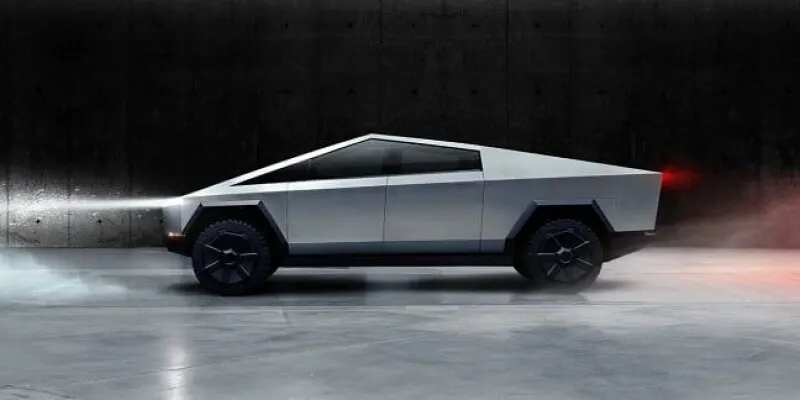
NASA has decided that a Tesla Cybertruck will replace the armoured military vehicle traditionally used to evacuate astronauts from the launchpad in an emergency, despite the vehicle's history of reliability issues. The change applies to SpaceX's Crew-13 mission, scheduled for no earlier than 12 September 2026, and marks a shift away from the heavily protected Mine Resistant Ambush Protected (MRAP) vehicle NASA has long relied on for rapid escapes during rocket launches.
The Cybertruck has been recalled 11 times over problems including detaching trim panels and a sticking accelerator pedal, yet NASA officials said they were unaware of any modifications made to the vehicles for this role. Joel Montalbano of NASA's Human Spaceflight Mission Directorate said the switch was chosen because Cybertrucks are faster than MRAPs, easier to drive while wearing gloves, and avoid the need to bring in a separate MRAP crew, since SpaceX already uses the vehicles at its own launches. Crew-13 will carry NASA astronauts Jessica Watkins and Luke Delaney, Canadian Space Agency astronaut Joshua Kutryk, and Roscosmos cosmonaut Sergey Teteryatnikov to the ISS to join Expedition 75; SpaceX has completed 90 Falcon launches in 2026 with no failures, making it unlikely the rescue vehicle's suitability will actually be tested.
In short
- NASA will use Tesla Cybertrucks, not armoured MRAPs, for launchpad rescues
- Cybertruck has faced 11 recalls for issues like loose panels
- Change applies to SpaceX Crew-13, launching no earlier than 12 September 2026
Steelman: both sides, in good faith
The strongest fair case each way — we don't pick a winner.
The case for
The case for using the Cybertruck rests on practical efficiency and SpaceX's demonstrated safety record. With 90 successful Falcon launches in 2026 and no failures, emergency evacuation is extraordinarily unlikely, making the rescue vehicle largely a theoretical precaution. The Cybertruck offers genuine operational advantages: it is faster than the MRAP, easier to operate whilst wearing spacesuits, and eliminates the inefficiency of maintaining a separate crew when SpaceX already uses these vehicles daily. For a contingency that statistics suggest will never occur, switching to equipment that performs better in routine operations and integrates with existing infrastructure represents sensible resource allocation.
The case against
The case for retaining the MRAP centres on the principle that emergency evacuation equipment must be maximally reliable and purpose-built for protection. The Cybertruck's eleven recalls for problems including detaching trim panels and sticking accelerators demonstrate design flaws precisely unsuitable for equipment meant to save lives during launch emergencies. An MRAP is engineered for rapid evacuation under extreme stress; a consumer vehicle cannot offer equivalent assurance regardless of speed gains. NASA's apparent unfamiliarity with modifications made to these vehicles for this critical role raises serious questions about proper testing and oversight. When lives depend on absolute reliability, the improbable emergency is the wrong moment to discover whether a vehicle with known problems can deliver under pressure.
Explained simply
NASA and SpaceX send astronauts to the International Space Station aboard Falcon rockets. During launch, the crew and launch teams need a way to leave the pad quickly if an emergency makes it unsafe to remain there.
NASA has traditionally used a heavily armoured vehicle called an MRAP for this evacuation role. The change involves using a Tesla Cybertruck instead; NASA says it is quicker to drive and simpler to use during launch operations, while the truck’s record of recalls has raised questions about its reliability.
The vehicle is part of the wider safety arrangements for crewed spaceflight, where launch teams plan for emergencies even when they are unlikely. The decision matters because astronauts depend on the evacuation system working if a serious problem occurs on the ground.
Cybersecurity Space Technology