Netanyahu alliance leads Israel vote but falls short of Knesset majority
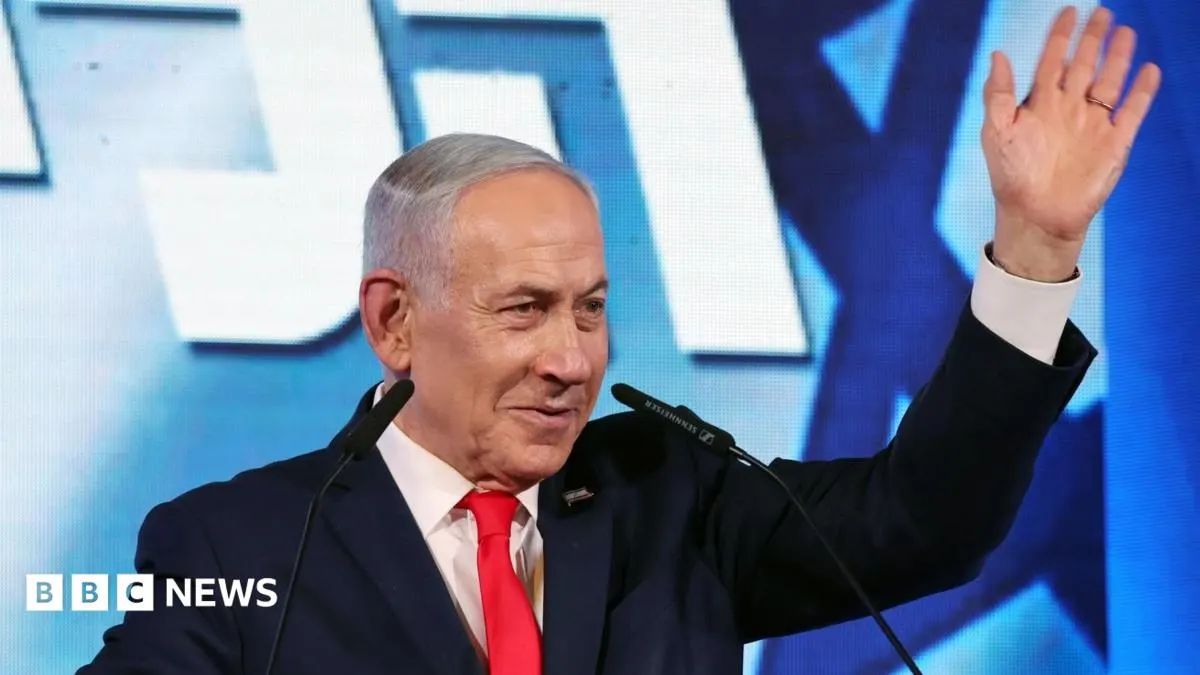
Partial results show Benjamin Netanyahu’s bloc leading Israel’s election, but without enough seats to command a majority in the 120-seat Knesset. His Likud party and far-right and ultra-Orthodox allies are projected to win 53 seats, while Gadi Eisenkot’s opposition bloc is set for 48, leaving both sides needing partners to form a government.
Arab-led parties are projected to win a record 19 seats and could prove decisive, although most Jewish parties have ruled out working with them. With 85% of ballots counted and up to 480,000 absentee votes still outstanding, the final tally may take a day or two; President Isaac Herzog will then consult the parties and choose who gets the first chance to form a coalition, a process that could take weeks.
In short
- Netanyahu’s bloc leads but lacks a parliamentary majority.
- Arab-led parties could hold the balance of power.
- Absentee ballots and coalition talks will decide what comes next.
Steelman: both sides, in good faith
The strongest fair case each way — we don't pick a winner.
The case for
Netanyahu’s supporters can argue that his bloc has emerged as the largest grouping and that voters should be given a serious chance to form a government. A coalition with parties sharing its security, religious or economic priorities could offer a clearer programme and more decisive leadership, provided it can command a parliamentary majority.
The case against
Opponents can argue that leading the count is not the same as having a governing mandate when the bloc remains short of a majority and the final tally is incomplete. They may favour a coalition that broadens representation and avoids reliance on far-right partners, while arguing that Arab-led parties should not be excluded from coalition talks solely because of their identity.
Explained simply
Israel’s parliament, the Knesset, has 120 seats, and a government needs the support of at least 61 members. Because no single party usually wins that many seats, parties negotiate to form a coalition, agreeing to govern together.
Benjamin Netanyahu leads Likud, while Gadi Eisenkot is a leading figure in the opposition. Smaller parties, including Arab-led and ultra-Orthodox parties, can hold significant influence because their seats may help a larger bloc reach a majority.
The president formally gives a party leader the first chance to form a government after consulting political parties. Coalition talks can take weeks, and if they fail, another leader may be asked to try.
Art Culture Elections Middle East Politics World
Read the full article at the source →
Originally published by BBC World as “Netanyahu’s bloc leading Israel election but short of majority, partial results show”.