Netflix’s ‘East of Eden’ Adaptation Brings Fresh Perspective to Steinbeck Classic With Florence Pugh and Hoon Lee
Developing story first seen 37 minutes ago
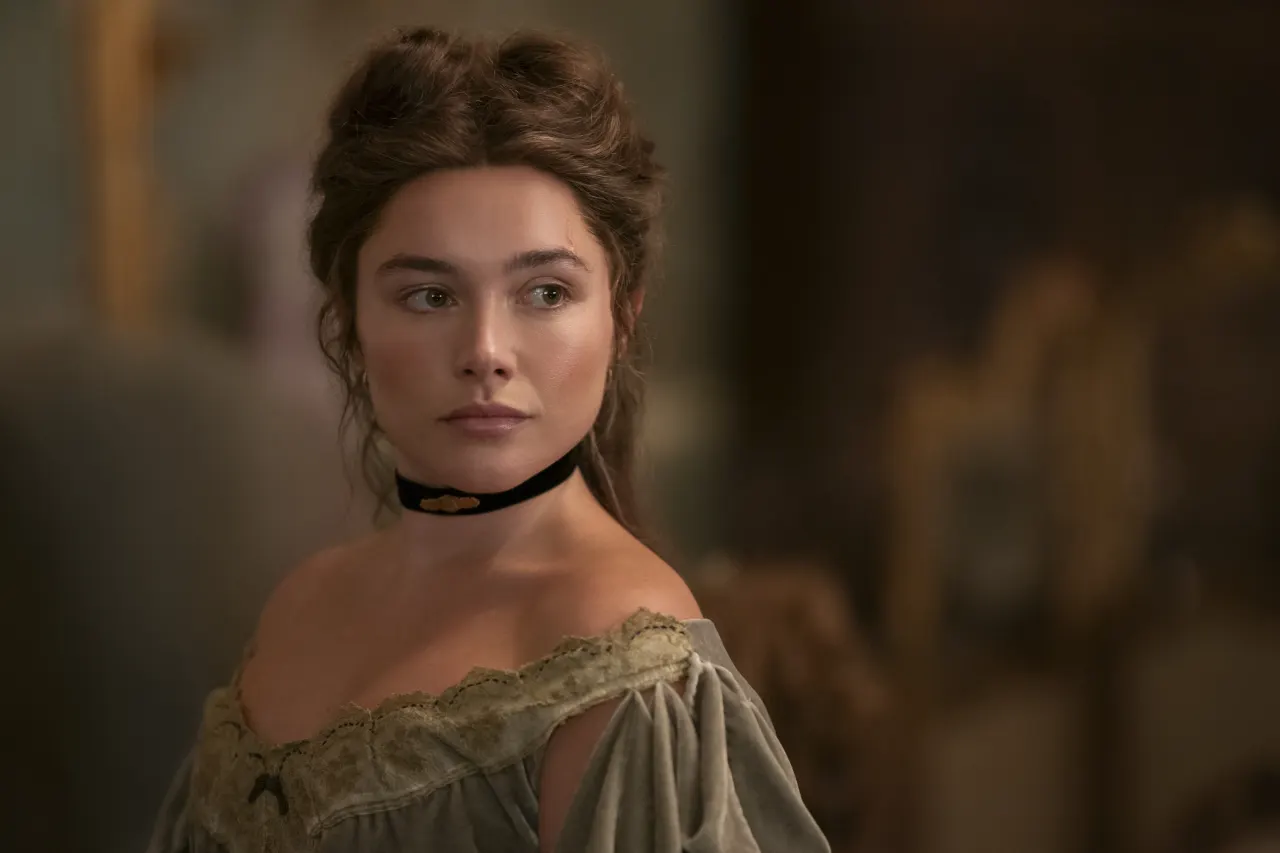
Zoe Kazan's Netflix adaptation of John Steinbeck's *East of Eden* offers a modernised reimagining of the classic novel by reframing its most controversial character through a feminist lens. Rather than presenting Cathy Ames as inherently evil as Steinbeck does, Kazan portrays her as a woman forced to embrace ruthlessness to survive in a male-dominated world—a shift that gives new psychological depth to the multigenerational saga spanning from the nineteenth century to World War I. Florence Pugh's striking performance brings nuance to Cathy: cold, calculating and manipulative yet undeniably tragic, whilst the adaptation maintains close fidelity to the source material whilst pushing boundaries for contemporary audiences.
The seven-part series features Tracy Letts as Cyrus Trask, Christopher Abbott and Mike Faist as his sons Adam and Charles, and Joseph Zada and Joe Anders as their twin brothers Aron and Cal. Hoon Lee plays Lee, the Chinese-American cook whose expanded role offers fresh perspective on the family's cycles of rivalry and moral complexity. Kazan shifts narrative viewpoints between characters to let her ensemble cast shine, with Pugh's narration particularly emphasising how women learn to navigate male attention from childhood—a modernising touch that recontextualises Cathy's behaviour as survival rather than pure malevolence. The adaptation demonstrates Kazan's willingness to depart from the novel's moral judgments whilst remaining faithful to its plot and thematic structure.
- Florence Pugh brings tragic depth to Cathy Ames in Netflix's reimagined classic.
- Kazan reframes the character from inherently evil to shaped by male-dominated society.
- Expansion of supporting character Lee adds new perspective to the family saga.
New here? Start with this
East of Eden is John Steinbeck's monumental novel, published in 1952 and set across generations in California's Salinas Valley, widely regarded as one of the greatest works of American literature. The sprawling family saga explores themes of morality, ambition and the eternal struggle between good and evil through the interconnected fates of two families. Central to the story is Cathy Ames, a woman whose cruelty and manipulation reverberate through the lives of all those around her, presented by Steinbeck himself as fundamentally and irredeemably evil.
For decades, Cathy has been a focal point of literary debate and reinterpretation, with readers and scholars questioning whether her ruthlessness should be understood as pure wickedness or whether it might instead reflect the social circumstances and gendered constraints of her era. Feminist critical approaches to the novel in particular have prompted reconsiderations of her character, exploring whether her behaviour might be read as a survival response to a male-dominated world rather than as evidence of innate depravity.
Such evolving scholarly perspectives on established works inform how filmmakers and television producers approach new adaptations in different eras. When contemporary creators undertake versions of classic novels, they inevitably engage with current critical thinking and interpretations, often bringing new lenses through which to examine familiar characters and stories. These adaptations provide opportunities for both existing readers and new audiences to encounter canonical works through fresh perspectives and updated contexts.
Coverage
- Variety — Florence Pugh and Hoon Lee Form the Beating Heart of Netflix’s Rich ‘East of Eden’ Adaptation: TV Review
- The Hollywood Reporter — ‘East of Eden’ Review: A Terrifying Florence Pugh Towers Over Zoe Kazan’s Accomplished Netflix Adaptation of the John Steinbeck Classic
- Collider — Florence Pugh’s ‘East of Eden’ Puts a Modern, Riveting Twist on the Classic American Novel | Review