Netflix’s ‘East of Eden’ Adaptation Brings Fresh Perspective to Steinbeck Classic With Florence Pugh and Hoon Lee
Developing story first seen 1 hour ago
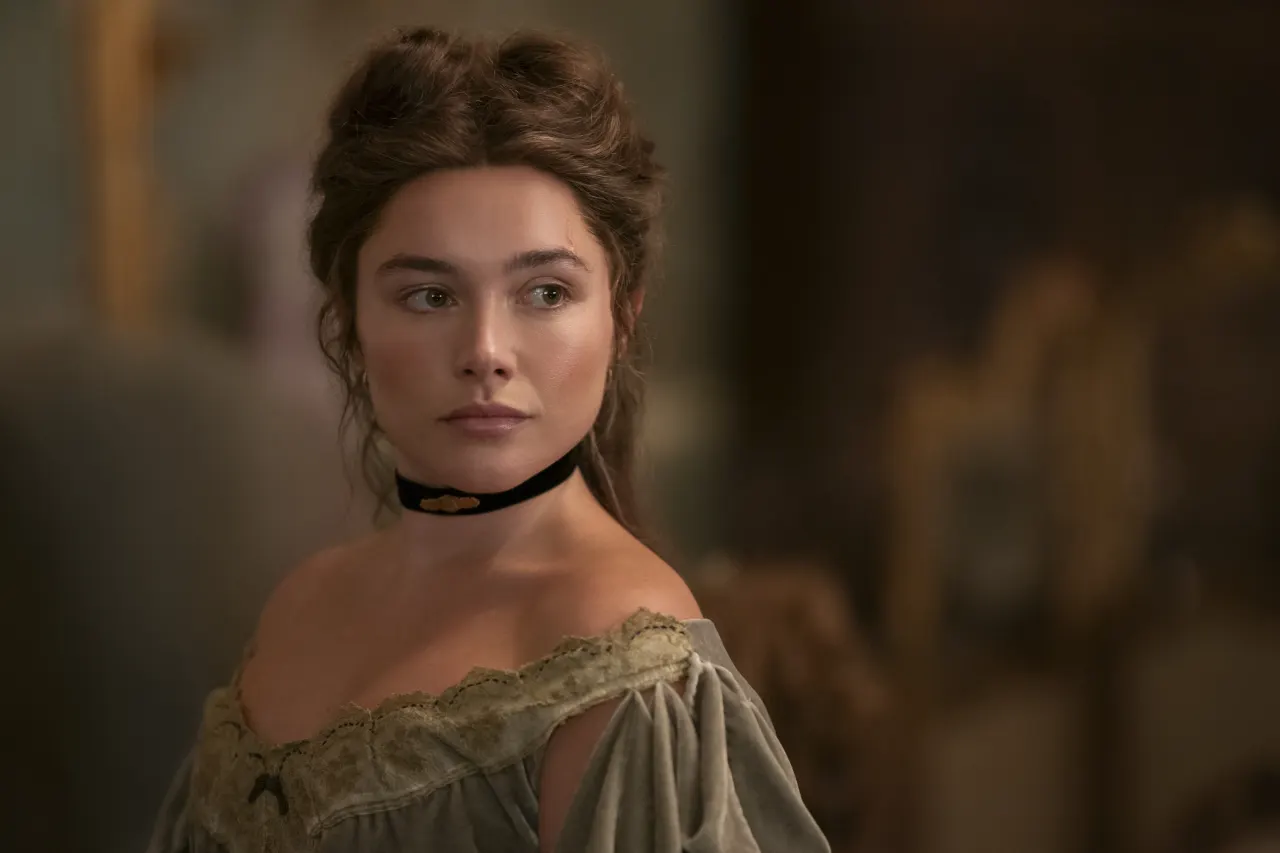
Zoe Kazan's Netflix adaptation of John Steinbeck's *East of Eden* offers a modernised reimagining of the classic novel by reframing its most controversial character through a feminist lens. Rather than presenting Cathy Ames as inherently evil as Steinbeck does, Kazan portrays her as a woman forced to embrace ruthlessness to survive in a male-dominated world—a shift that gives new psychological depth to the multigenerational saga spanning from the nineteenth century to World War I. Florence Pugh's striking performance brings nuance to Cathy: cold, calculating and manipulative yet undeniably tragic, whilst the adaptation maintains close fidelity to the source material whilst pushing boundaries for contemporary audiences.
The seven-part series features Tracy Letts as Cyrus Trask, Christopher Abbott and Mike Faist as his sons Adam and Charles, and Joseph Zada and Joe Anders as their twin brothers Aron and Cal. Hoon Lee plays Lee, the Chinese-American cook whose expanded role offers fresh perspective on the family's cycles of rivalry and moral complexity. Kazan shifts narrative viewpoints between characters to let her ensemble cast shine, with Pugh's narration particularly emphasising how women learn to navigate male attention from childhood—a modernising touch that recontextualises Cathy's behaviour as survival rather than pure malevolence. The adaptation demonstrates Kazan's willingness to depart from the novel's moral judgments whilst remaining faithful to its plot and thematic structure.
- Florence Pugh brings tragic depth to Cathy Ames in Netflix's reimagined classic.
- Kazan reframes the character from inherently evil to shaped by male-dominated society.
- Expansion of supporting character Lee adds new perspective to the family saga.
New here? Start with this
East of Eden is John Steinbeck's monumental novel, published in 1952 and set across generations in California's Salinas Valley, widely regarded as one of the greatest works of American literature. The sprawling family saga explores themes of morality, ambition and the eternal struggle between good and evil through the interconnected fates of two families. Central to the story is Cathy Ames, a woman whose cruelty and manipulation reverberate through the lives of all those around her, presented by Steinbeck himself as fundamentally and irredeemably evil.
For decades, Cathy has been a focal point of literary debate and reinterpretation, with readers and scholars questioning whether her ruthlessness should be understood as pure wickedness or whether it might instead reflect the social circumstances and gendered constraints of her era. Feminist critical approaches to the novel in particular have prompted reconsiderations of her character, exploring whether her behaviour might be read as a survival response to a male-dominated world rather than as evidence of innate depravity.
Such evolving scholarly perspectives on established works inform how filmmakers and television producers approach new adaptations in different eras. When contemporary creators undertake versions of classic novels, they inevitably engage with current critical thinking and interpretations, often bringing new lenses through which to examine familiar characters and stories. These adaptations provide opportunities for both existing readers and new audiences to encounter canonical works through fresh perspectives and updated contexts.
Full account
Netflix has released a seven-episode adaptation of John Steinbeck's monumental novel East of Eden, helmed by screenwriter and actor Zoe Kazan—granddaughter of Elia Kazan, whose 1955 film interpretation remains the most recognised cinematic treatment of the material. The new series represents a considerably more comprehensive engagement with Steinbeck's sprawling narrative than its predecessor, which famously addressed only the final third of the novel. Where the 1955 feature film constructed its story around a father-son drama, the Netflix production attempts to encompass the full multigenerational saga, beginning with Civil War veteran Cyrus Trask and his two sons from different marriages, Adam and Charles, before moving into the Californian Salinas Valley and the next generation's entanglement with catastrophe and moral ambiguity.
Developed in partnership with co-showrunner Jeb Stuart alongside director-producers Garth Davis and Laure de Clermont-Tonnerre, with additional scripting contribution from author Alexander Chee, the series boasts a production design that emphasises the period setting's tactile authenticity. The casting brings together Christopher Abbott and Mike Faist as the emotionally fractured Trask brothers, with Tracy Letts portraying their formidable father. British actress Florence Pugh, an Academy Award nominee in her twenties for her work in Greta Gerwig's Little Women, takes on the role of Cathy Ames and also serves as executive producer. Her casting appears deliberate: Pugh has maintained a robust television presence alongside her film career, having delivered notable performances in prestige projects such as Park Chan-Wook's 2018 television adaptation of John Le Carré's The Little Drummer Girl.
The adaptation demonstrates fidelity to Steinbeck's source material whilst simultaneously restructuring narrative perspectives to foreground two figures who occupy comparatively marginal positions in the original novel's emphasis. Cathy Ames, the dark antagonist embodying original sin and Satanic temptation in Steinbeck's explicit Biblical framework, emerges as a centred consciousness—the series commences with her voice articulating the author's observation that 'there are monsters born to human parents,' establishing her as the emotional and moral focal point rather than merely a catalyst for masculine tragedy. Equally significantly, Lee, the Chinese American cook at the Trask household, receives substantial character development and screen time, a role that was notably excised from the 1955 motion picture entirely. These recalibrations allow Pugh to demonstrate the psychological complexity beneath Cathy's calculated movements across decades—from injured fugitive to reluctant spouse to skilled operator in the criminal economy.
Where commentators diverge most sharply concerns the comparative assessment of this adaptation against its most famous predecessor. Whilst some observers acknowledge that even seven episodes struggle to fully capture Steinbeck's Byzantine architecture of human corruption and cyclical trauma, the Netflix version is regarded as substantially more faithful to the novel's thematic and structural ambitions than Elia Kazan's film. The 1955 production, despite yielding an undeniably arresting performance from James Dean that achieved immediate cultural resonance, is criticised for fundamentally reducing a multigenerational exploration of free will and sin to a concentrated romantic melodrama. Critics further note that this Netflix interpretation, in substantially restoring material and perspectives marginalised by the 1955 adaptation, presents Steinbeck's vision to contemporary audiences through modernised lens work and tonal sophistication whilst maintaining structural and narrative fidelity.
Where outlets differ
Source 1 emphasises Pugh's career trajectory and her prior television excellence as explanation for her selection, whilst Sources 2 and 3 focus more on her performance within the character itself.
Source 2 extensively critiques the 1955 film as reductive and incomplete, whilst Source 1 acknowledges it without extended comparison and Source 3 does not directly compare adaptations.
Source 2 uniquely mentions the 1981 ABC miniseries as an intermediary adaptation attempt and specifically names James Dean's performance, which other sources omit.
Source 3 frames the adaptation as 'modernising' and 'pushing boundaries' for new audiences, whilst Source 1 emphasises creative rearrangement of emphasis and Source 2 focuses on greater fidelity to source material.
Source 2 uniquely mentions that Hoon Lee's role 'was cut entirely from the film,' explicitly noting this as a significant restoration, whereas other sources reference his expanded role without explicitly stating prior omission.
Source 1 provides the most granular detail about Pugh's executive producer involvement and her specific prior work with auteur directors, whilst Sources 2 and 3 reference this more broadly.
Coverage
- Variety — Florence Pugh and Hoon Lee Form the Beating Heart of Netflix’s Rich ‘East of Eden’ Adaptation: TV Review
- The Hollywood Reporter — ‘East of Eden’ Review: A Terrifying Florence Pugh Towers Over Zoe Kazan’s Accomplished Netflix Adaptation of the John Steinbeck Classic
- Collider — Florence Pugh’s ‘East of Eden’ Puts a Modern, Riveting Twist on the Classic American Novel | Review