New airliner sets record flying 24 hrs nonstop from Australia to France
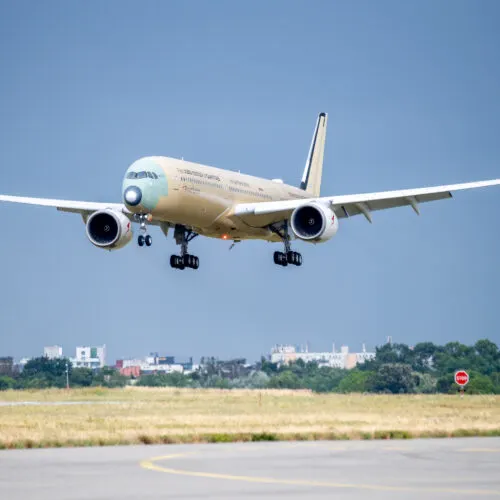
An Airbus A350-1000ULR completed a record-breaking test flight of more than 24 hours between Melbourne and Toulouse, demonstrating the technology behind Qantas's planned nonstop "Project Sunrise" services connecting Sydney with London and New York from 2027. The aircraft, built specifically for these ultra-long-haul routes, is fitted with an extra fuel tank and twin crew rest compartments to allow pilots to work in shifts, making such extreme journeys commercially viable for the first time.
The Melbourne-to-Toulouse leg took 24 hours and 25 minutes and covered 12,460 nautical miles across the Pacific and Atlantic oceans and North America, following an earlier 19-hour-13-minute outbound flight from Toulouse to Melbourne. Pilots worked staggered four-hour shifts with two-hour handover overlaps, and two Qantas pilots joined the return leg alongside Airbus crew. The flight was tracked by more than 3.6 million people on Flightradar24, second only to the tracking figures for the RAF flight carrying Queen Elizabeth II's coffin in 2022, while Singapore Airlines currently holds the official record for the longest scheduled nonstop commercial flight.
In short
- Airbus A350-1000ULR flew Melbourne to Toulouse in over 24 hours
- Built for Qantas's Sydney-London/New York nonstop routes from 2027
- Flight tracked by 3.6 million people, second-most ever on Flightradar24
Steelman: both sides, in good faith
The strongest fair case each way — we don't pick a winner.
The case for
Pursuing ultra-long-haul routes like Qantas's Project Sunrise represents valuable innovation that improves overall travel efficiency and passenger safety. By eliminating intermediate stops, these flights actually reduce total fuel consumption and emissions per passenger compared to multi-leg journeys, as they avoid multiple fuel-intensive takeoffs and landings. The technology demonstrates significant advances in crew comfort and safety, and for business and leisure travellers, the service delivers genuine value by reducing total journey time and the exhaustion of multiple connections.
The case against
Resources should not be directed toward ultra-long-haul flights when aviation urgently needs to address its environmental impact. Rather than investing in routes consuming enormous fuel quantities to save hours for wealthy passengers, the industry should prioritise decarbonisation through sustainable aviation fuels and electric propulsion research. Ultra-long-haul expansion represents a choice to enable aviation growth rather than fundamental transformation, and these resources would achieve far greater climate benefit if dedicated to making air travel more sustainable and reducing aviation's overall carbon footprint.
Explained simply
An Airbus aircraft has just completed an experimental nonstop flight lasting more than 24 hours, travelling from Melbourne, Australia to Toulouse, France. This test flight demonstrates that aircraft can now carry enough fuel and accommodate crews across such extreme distances without stopping.
The Australian airline Qantas is planning to use this technology for what it calls "Project Sunrise", aiming to offer nonstop flights from Sydney to London and New York starting in 2027. These routes would be among the world's longest scheduled commercial flights, something the airline has invested heavily in developing.
The aircraft includes special features that make such long journeys possible. It carries an extra fuel tank to extend its range, and it has dedicated rest compartments where pilots can work in rotating shifts rather than one pilot flying continuously for over 24 hours.