Science news and discussion on TalkFuse.
New draft deal aims to avert collapse of talks at climate summit
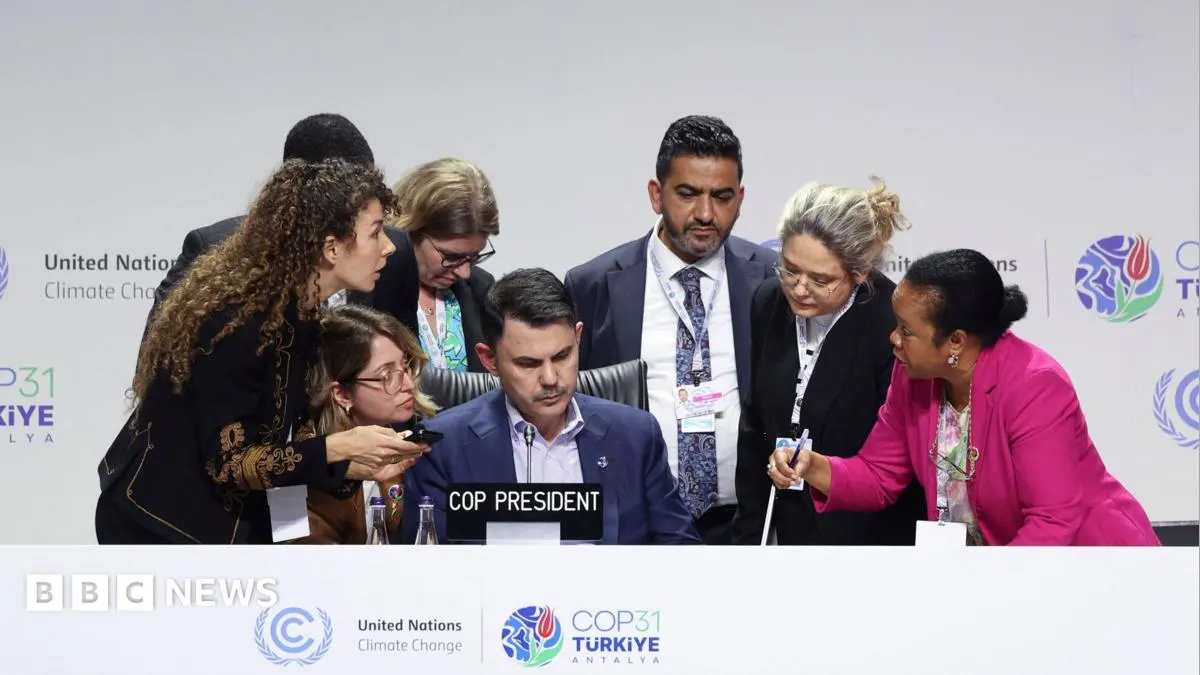
Countries at the COP31 climate summit were due to resume overtime talks after a new draft deal was published, in an effort to prevent negotiations from collapsing. The text makes no specific call to move away from fossil fuels, a key demand for the EU and Pacific states, but refers to an earlier commitment to do so and acknowledges that the world is on course to miss the 1.5C warming limit.
The draft also leaves the amount of funding for climate adaptation to future meetings, a likely disappointment for the Africa Group. Delegates were expected to reconvene at 09:00 local time on Sunday to seek consensus, which is required for a deal; without it, talks could be suspended until next year, as happened once before since COP meetings began in 1995. The summit had already passed its Friday deadline after an earlier draft’s fossil-fuel language was removed, prompting threats of walkouts.
In short
- A new draft seeks to keep COP31 talks from collapsing.
- It acknowledges the 1.5C goal is likely to be missed.
- No adaptation funding figure or specific fossil-fuel phase-out is included.
Steelman: both sides, in good faith
The strongest fair case each way — we don't pick a winner.
The case for
Supporters of the draft could argue that a compromise is preferable to a breakdown in talks, preserving a shared forum for further climate action. Referring to the earlier fossil-fuel commitment and recognising the risk of missing the 1.5C limit may keep those issues on the agenda while allowing countries with different priorities to reach consensus.
The case against
Critics could argue that omitting a specific call to move away from fossil fuels weakens the response to a central driver of warming, despite the acknowledged risk to the 1.5C limit. Leaving adaptation funding to future meetings also postpones decisions that vulnerable countries say they need, so avoiding a collapse may come at the cost of commitments they regard as essential.
Climate Geopolitics Politics Science