Culture news and discussion on TalkFuse.
New LS Lowry exhibition aims to demolish ‘naive and uncultured’ myth
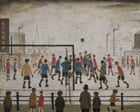
A new exhibition, LS Lowry: the Theatre of Life, opening on 24 October, sets out to challenge the enduring perception that the Manchester painter was "naive and uncultured". Co-curator Anthony Spira, director of MK Gallery in Milton Keynes, argues that Lowry has long been misinterpreted and reduced to a caricature as merely an industrial painter, when in fact he was formally trained and deeply engaged with the wider arts. The show aims to present a fuller, more balanced view of an artist best known for capturing working-class life in the industrial north-west of England.
The exhibition brings together 140 paintings and highlights that Lowry spent years at art college, frequented the opera, theatre and cinema, and collected works by the pre-Raphaelites, Jacob Epstein and Lucian Freud. Among the standout inclusions is the rarely seen 1932 work A Football Match, publicly displayed for the first time in nearly 85 years, having last appeared at the Royal Academy around a decade after it was painted. Spira notes that Lowry, a Manchester City fan, also painted leisure scenes such as seasides and festivals, and that his most famous work, Going to the Match, was bought for £7.8m in 2022 by the Lowry arts centre in Salford. The renewed interest follows a 2013 Tate Britain show of 90 works and a recent BBC film, The Unheard Tapes, featuring Sir Ian McKellen.
In short
- New exhibition challenges the myth Lowry was naive and untrained.
- 140 paintings open at MK Gallery on 24 October.
- Rare 1932 work A Football Match shown after nearly 85 years.
Steelman: both sides, in good faith
The strongest fair case each way — we don't pick a winner.
The case for
Lowry has been unfairly characterised as naive and uncultured, reduced primarily to the identity of an industrial painter, when evidence shows he was formally trained, deeply engaged with opera, theatre, cinema and contemporary art, and painted diverse subjects throughout his career. This fuller understanding, acknowledging his sophistication and range, rightly corrects a limiting perception and allows for more complete appreciation of his artistic achievement and intellectual engagement.
The case against
Lowry's particular cultural significance rests precisely on his distinctive, relatively unmediated approach to capturing industrial working-class life, and overemphasising his formal training and cultural credentials risks suggesting he should be valued for reasons other than what made him genuinely important. The focus on him as an industrial painter is not a caricature but an appropriate recognition of where his authentic artistic voice and unique contribution actually lie, independent of academic credentials or cultural sophistication.
Explained simply
LS Lowry was a Manchester-based painter whose striking images of industrial life in north-west England made him one of the most recognisable figures in British art. His paintings of factories, mills and crowds of ordinary working people are celebrated for their warmth and their capture of a vanished way of life.
Yet this very fame has created a persistent misconception. Because his best-known works depict working-class subjects, many people have dismissed him as an untrained, unsophisticated artist with little formal education or engagement with high culture. This reputation as "naive and uncultured" has stuck for decades, despite being fundamentally at odds with the facts of his life.
Lowry actually trained formally at art college and spent his life deeply engaged with high culture, visiting opera, theatre and cinema and collecting works by major artists. A new exhibition opening this month aims to demonstrate the full breadth of his artistic practice and show that his celebrated industrial scenes were the product of a sophisticated, well-educated artist.
Art Culture Entertainment Music