Culture news and discussion on TalkFuse.
‘New MS treatment could be like starting a new life’
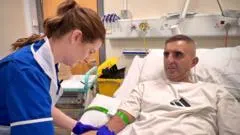
A man from Rotherham with progressive multiple sclerosis (MS) has become the first patient in Sheffield, and the seventh worldwide, to receive an experimental CAR T cell therapy as part of an international clinical trial. Doctors and charities say the treatment, adapted from a cancer therapy, could be a "gamechanger" for MS if it proves safe and effective, offering hope to patients for whom existing drugs are not working.
CAR T cell therapy involves removing a patient's T cells, genetically modifying them in a laboratory to target the specific immune cells that damage nerve fibres in MS, then reintroducing them into the body as a one-off "immune system reset". It has already produced long-term remission in some blood cancer patients, and researchers are now testing whether it can work similarly for autoimmune conditions such as MS and lupus. The trial, running at four UK centres including Sheffield's Royal Hallamshire Hospital, is open to those aged 18 to 60 with worsening progressive MS who have not responded to standard treatment, and aims to recruit up to 18 patients globally, with this early phase focused on assessing safety.
In short
- Rotherham man is first Sheffield patient in global MS CAR T trial
- Therapy reprograms immune cells to target MS-causing cells
- Experts call it a potential "gamechanger", but trial is still early-stage
Steelman: both sides, in good faith
The strongest fair case each way — we don't pick a winner.
The case for
This represents legitimate scientific progress adapting an established technology that has produced long-term remission in blood cancer patients. For people with progressive MS who have failed standard treatments, the potential for disease stabilisation or reversal offers genuine hope where few options existed. The trial appropriately prioritises safety with rigorous oversight, and the tolerance shown by seven patients worldwide justifies continued careful investigation of this genuinely novel approach.
The case against
Characterising an early-stage treatment affecting only seven patients as a potential gamechanger risks creating false hope among vulnerable people with MS. CAR T therapy carries substantial risks including severe immune activation and potential off-target effects that warrant scepticism rather than premature enthusiasm, particularly since MS patients may live decades and experience long-term complications. Responsible communication of medical research requires restraint about early promise; careful evaluation without overselling is essential before making claims about transformative benefits.
Explained simply
Multiple sclerosis (MS) is a condition in which the immune system mistakenly attacks the protective covering around nerves. This can disrupt messages between the brain and the body, and symptoms may worsen over time; current treatments do not work for everyone.
CAR T cell therapy is an experimental approach adapted from treatment for some blood cancers. Doctors take a patient’s immune cells, alter them to target particular cells involved in the attack on nerves, then return them to the body.
Researchers are studying whether this approach can help people with progressive MS when standard treatments have not worked. The early trial is small and is mainly assessing safety, so its results will be needed before doctors know whether the treatment is safe and effective for MS.
Art Culture Health Medicine Mental Health Sheffield